
Unbiased headlines. Facts, not spin.
Every story is an unbiased news briefing written from 110+ sources across the spectrum — sources linked so you can verify it yourself.
 politics
Major Story (8/10)
July 7, 2026 at 10:26 AM
politics
Major Story (8/10)
July 7, 2026 at 10:26 AM
Trump's Africa Health Deals: 17 Countries Have Signed, Zimbabwe Refused, and Congress Says the Spending May Be Illegal
The New Model
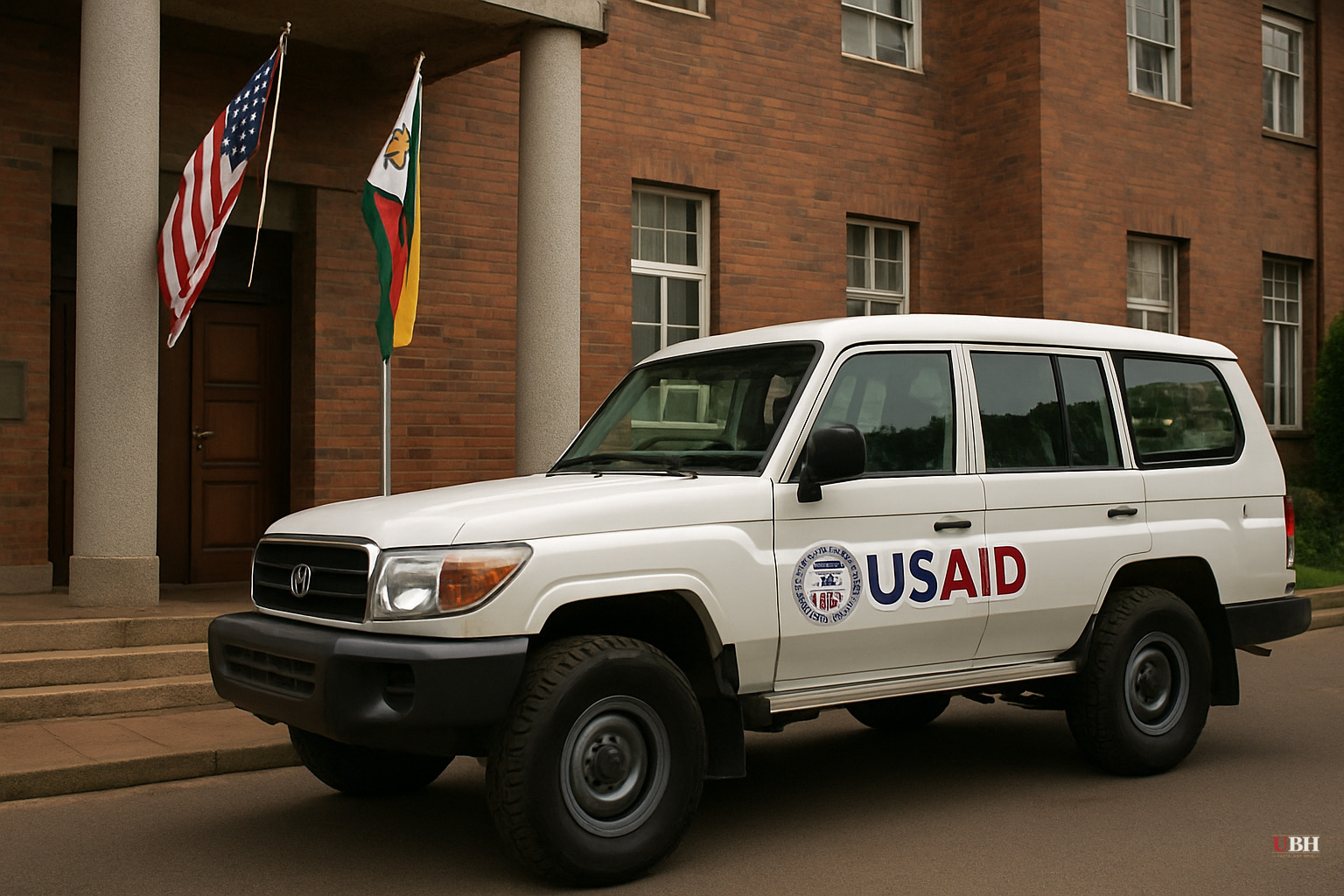
After shutting down USAID early in his second term, President Donald Trump's State Department began negotiating a new generation of bilateral health agreements directly with African governments. As of July 7, 2026, at least 17 countries have signed deals collectively worth $11.3 billion, according to The Guardian.
The flagship agreement is with Kenya. Secretary of State Marco Rubio signed it with President William Ruto in Washington in December and called Kenya "the perfect partner," expressing hope the deal would be the first of 30 to 50. The Kenya agreement is valued at $2.5 billion total, with the U.S. contributing $1.6 billion and Kenya committing $850 million of its own money over five years, according to BBC News. Kenya's cabinet approved the deal last month after activists filed a court challenge to block it over data-sharing concerns.
Zimbabwe is NOT signing. A letter from Zimbabwe's Secretary for Foreign Affairs Albert Chimbindi, made public after being sent in December, states that President Emmerson Mnangagwa "directed that Zimbabwe must discontinue any negotiation" over what he called a "clearly lop-sided" memorandum of understanding that "blatantly compromises and undermines the sovereignty and independence of Zimbabwe," according to The Guardian.
What the Deals Require
The agreements include several conditions that have generated significant pushback from recipient governments and health advocates.
Patient data. The U.S. requests patient record data, including pathogen samples, as part of the deals. Critics in Zimbabwe and Kenya specifically cited this provision.
U.S. pharmaceutical preference. The State Department's global health strategy explicitly prioritizes U.S. pharmaceutical and medical firms to develop and deliver treatments. The deals also commit African nations to rely on U.S. regulatory approval before rolling out new drugs and technologies domestically.
Linked to other interests. The deal with Zambia has been tied to a separate U.S.-Zambia agreement on "collaboration in the mining sector." Asia Russell, director of the HIV advocacy organization Health Gap, told The Guardian this amounts to "conditioning life-saving health services on plundering the mineral wealth of the country."
In Nigeria, according to The Guardian, U.S. statements suggest funding is contingent on Nigerian authorities addressing what the Trump administration describes as persecution of Christians. The U.S.-Rwanda deal explicitly includes increased U.S. private sector involvement in Rwanda's health sector.
The Administration's Argument
The strongest case for this approach deserves a fair hearing. Rubio told a congressional committee last month that traditional donor-NGO arrangements "created dependency, led to parallel delivery arrangements and sucked up aid dollars in overhead costs," according to BBC News. The goal, he said, is building health systems that can "eventually be self-reliant" rather than permanently dependent on foreign NGOs imposing programs from outside.
That critique of the old USAID model has substance. Large portions of prior U.S. foreign aid flowed through NGO intermediaries with substantial administrative overhead. Requiring recipient governments to share financial responsibility, as the Kenya deal does, is a defensible shift toward sustainability.
The argument that the U.S. should use foreign assistance to advance bilateral interests is also not new. Every major donor country does this. What is new is making it this explicit in the deal language.
The Congressional Problem
Congress, which controls federal spending under the Constitution, refused to eliminate USAID when the Trump administration asked for permission to do so. Lawmakers appropriated $9.4 billion specifically for global health programs covering HIV, tuberculosis, and malaria, plus more than $5 billion for emergency humanitarian aid, according to reporting by Anna Maria Barry-Jester in The Fulcrum. They also required regular, detailed spending reports.
The administration is now spending foreign health dollars through a State Department bilateral framework that Congress did not authorize in that form. ProPublica, whose reporting The Fulcrum drew on, described this as "a huge grab of power."
Whether that characterization holds up legally is an open question. The administration has not been charged with any violation, and no court has ruled the bilateral deal structure unconstitutional. But the tension between what Congress appropriated and what the State Department is actually doing is documented and real.
What's Unresolved
The data-sharing provisions remain the most contested issue on the ground. Critics, including community health organizations in multiple countries, say there has been little consultation with the groups that actually deliver healthcare in African nations, according to The Guardian. The prioritization of faith-based healthcare providers in the deal structures is also drawing scrutiny.
Zambia's deal remains unsigned as of today. The linkage between health funding and mining collaboration has not been publicly explained by the State Department.
The core unresolved question: Congress told the executive branch how much to spend on global health and through what general framework. The administration is doing something structurally different with that money. Whether any court will force the issue and which branch prevails has yet to be determined.
Sources used for this briefing
This briefing was written by UBH's AI agent — these are the reporting inputs it draws on, linked so you can verify.


