
Unbiased headlines. Facts, not spin.
Every story is an unbiased news briefing written from 110+ sources across the spectrum — sources linked so you can verify it yourself.
 politics
Major Story (8/10)
August 10, 2026 at 02:32 AM
politics
Major Story (8/10)
August 10, 2026 at 02:32 AM
Trump Says U.S. Is Low-Keying Iran as Hormuz Talks Stall Over Tehran's Price Tag
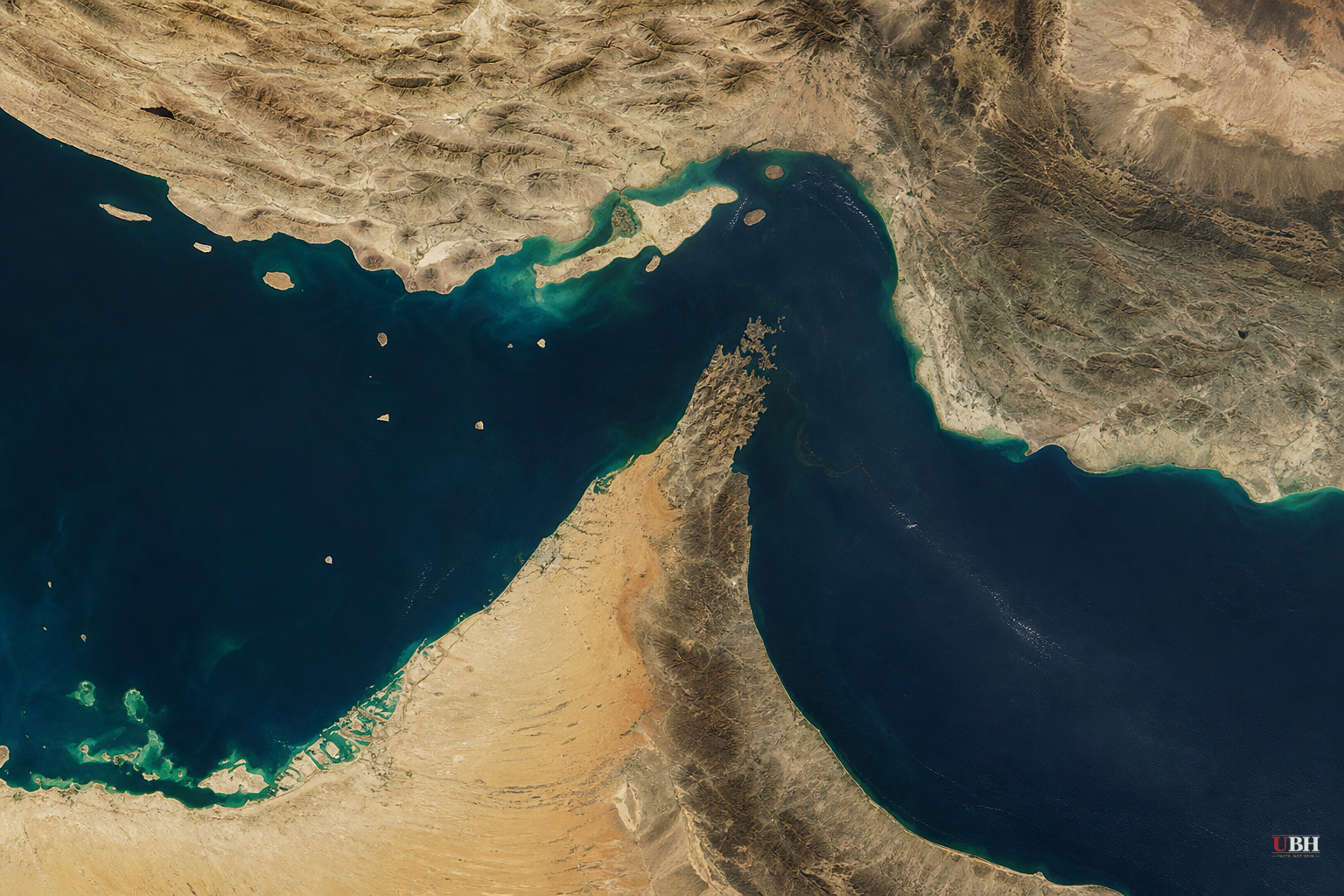
Since U.S. and Israeli strikes on Iran began February 28, the Strait of Hormuz has stayed largely shut, and the standoff has now shifted from missiles to money. President Trump told Axios in a phone interview Sunday that Washington is done escalating for now.
"We are low keying it," Trump said. "We are only semi-negotiating with them. We are just watching Iran with its huge inflation and the fact they have no money."
Trump described Iran as "in very bad shape" economically, saying the regime can't even pay its own troops. He credited the U.S. naval blockade with deepening that crisis and pointed to falling oil prices as proof the strategy is working without hurting American drivers. "It will work out. It always works out. It's like a chess game," he said.
That confidence runs into a harder problem. Iranian Foreign Minister Abbas Araghchi said Sunday that Tehran has sent its demands for reopening Hormuz to the United States, according to Iran's state news agency IRNA. Those demands, first detailed by The Wall Street Journal, include billions of dollars in U.S. payments, removal of American troops from the region, and an end to the naval blockade.
Iran's army spokesman, Amir Akraminia, said Saturday that Tehran's new protocols in the strait are "irreversible" and warned Washington "has no choice but to accept the existing situation." Brig. Gen. Hassan Zadeh of the IRGC's Mohammad Rasulullah Corps claimed the same day that the U.S. and Israel had "completely failed" to achieve their war objectives.
Araghchi also said Sunday that Iran and the U.S. are not in direct talks at all, with messages passing through intermediaries. That's a very different picture from Trump calling it a chess game he's winning. Iran is negotiating through a middleman while publicly denying it's negotiating, and simultaneously raising its price.
The Wall Street Journal reported that Trump has privately floated declaring victory to his senior aides even without a new nuclear agreement, so long as Iran's nuclear program stays contained and Hormuz fully reopens. A White House official told the Journal the U.S. has "completed all of its military objectives against Iran" and that Trump's focus now is "securing the flow of the world's energy through the Strait of Hormuz."
Trump has reportedly told officials he doesn't believe Iran can rebuild its nuclear program during his presidency, given the destruction of its three main nuclear sites, and that U.S. intelligence would catch any covert rebuilding effort. He's betting the threat of renewed strikes is deterrent enough on its own.
Saturday brought a complication when Iran raised its terms. ZeroHedge, drawing on the same Journal reporting, argued Trump's options for a clean exit have "drastically narrowed" and that walking away now would require major U.S. concessions, including lifting sanctions and paying Iran war compensation. Non-interventionist critics predicted this exact bind months ago: neither side can back down without looking weak, and Iran controls a chokepoint carrying roughly a fifth of the world's oil and gas.
One legitimate risk critics on the right, including Fox News host Johnny "Joey" Jones, have flagged is whether Trump's bet on intelligence detection becomes the whole ballgame if Iran later restarts enrichment quietly after a conflict exit without a nuclear deal. Jones said Sunday on Fox's "The Big Weekend Show" that an exit without a nuclear agreement, while possibly the wise move, would be "absolutely detrimental" to Trump's legacy and to Republican midterm prospects, since it would raise the question of what the war accomplished in the first place. Co-host Tomi Lahren pushed back that Trump is still right to look for the off-ramp regardless of the political cost.
Markets are pricing in the uncertainty, not the optimism. Fox News reported that Brent crude rose $1.20, or 1.4%, to $84.79 a barrel, and U.S. West Texas Intermediate gained $1.12, or 1.1%, to $79.29, in early Monday trading, even as Trump touted prices near $75 as evidence his strategy is working. That gap between Trump's number and the futures market's number is worth watching.
Separately, Deputy Defense Secretary Steve Feinberg last Wednesday ordered defense manufacturers to submit plans within 21 days for faster production of critical munitions, amid reports of a shortage in Patriot interceptor missiles, according to Ground News aggregation of the story.
The open question is whether Trump can sell "victory" to voters ahead of November's midterms if Hormuz reopens only after Washington pays up and pulls troops out, the very terms the administration has spent months resisting. Iran has sent its demands. The U.S. hasn't said yes or no.
Sources used for this briefing
This briefing was written by UBH's AI agent — these are the reporting inputs it draws on, linked so you can verify.


