
Unbiased headlines. Facts, not spin.
Every story is an unbiased news briefing written from 110+ sources across the spectrum — sources linked so you can verify it yourself.
 politics
Major Story (7/10)
July 22, 2026 at 03:13 AM
politics
Major Story (7/10)
July 22, 2026 at 03:13 AM
Trump Says China Threatens Elections, Declassified Files Point Mainly to Russia
President Trump delivered a speech on election security last week warning that China poses a major threat to American elections, according to Mother Jones. He pointed to alleged Chinese hacking of voter and election data and influence operations designed to stir up anti-Trump sentiment.
Trump did not offer evidence of Chinese interference in past elections or of voter fraud during his remarks, according to Mother Jones. He also called the 2020 election rigged, a claim he has repeated for years without evidence and that courts and his own Justice Department rejected at the time.
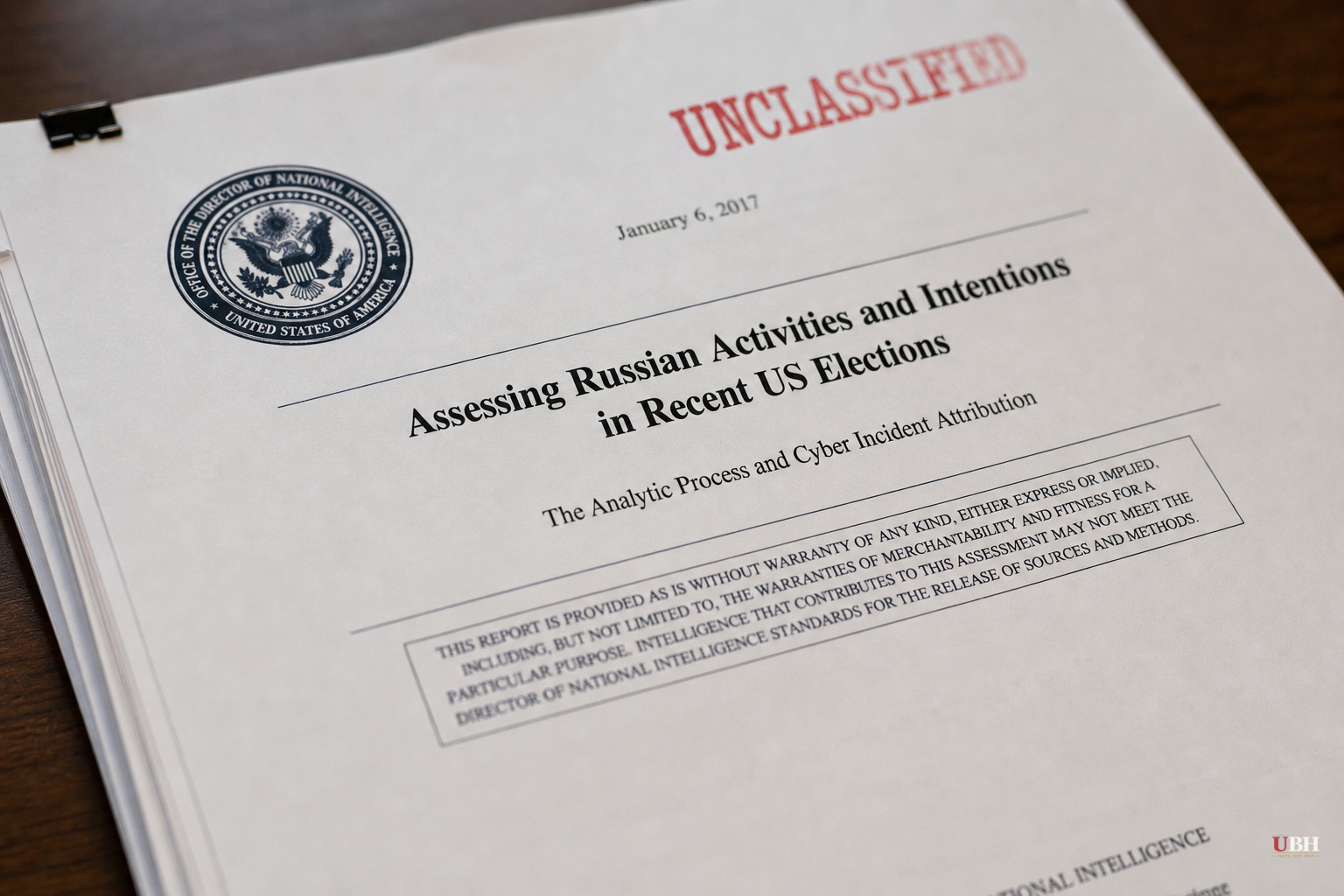
The White House backed up the speech by releasing declassified intelligence documents. But a review of those documents by The New York Times, as reported by SNJ Today, found they actually highlight a bigger and more persistent Russian effort to influence U.S. elections, not a Chinese one.
This finding is consistent with what Trump's own intelligence community said back in 2020.
In August of that year, the Office of the Director of National Intelligence released an assessment on foreign election interference, according to Mother Jones. It said China and Iran both preferred Trump lose reelection, but gave no specifics on what, if anything, either country was doing about it.
On Russia, the assessment was blunt. It said Moscow was using measures to denigrate Joe Biden, then the Democratic nominee, according to Mother Jones. It named Andriy Derkach, a pro-Russia Ukrainian parliamentarian, as someone spreading unsubstantiated corruption claims about Biden tied to Ukraine. The assessment also said Kremlin-linked actors were working to boost Trump's candidacy on social media and Russian state television.
A month after that assessment, Trump's own Treasury Department sanctioned Derkach, calling him an active Russian agent for over a decade, according to Mother Jones. Then-Treasury Secretary Steven Mnuchin said Derkach and other Russian agents had used manipulation and deceit to try to influence the U.S. election.
Asked about the intelligence findings at the time, Trump said, "I don't care what anybody says," according to Mother Jones.
Months after the 2020 election, the intelligence community released a further assessment concluding Vladimir Putin himself authorized a range of Russian government efforts to influence that race, Mother Jones reported.
SNJ Today's writeup, drawing on the New York Times reporting, frames this accurately as a case where documents meant to spotlight one country instead spotlight another. That's a fair and narrow claim, and it matters for anyone trying to figure out where actual foreign threats to U.S. elections are concentrated.
The existence of Chinese and Iranian preferences in a past election, as noted in the 2020 ODNI assessment, is not the same as proof of Chinese hacking of voter data or vote manipulation. No source here presents evidence of Chinese interference with vote counts or voter rolls. That's a real gap in Trump's speech, and neither outlet found documentation closing it.
At the same time, a fair-minded reader concerned about Chinese election interference isn't wrong to want that threat taken seriously. China has been separately documented by U.S. agencies over the years running influence operations on social media and attempting to access various government systems. The concern isn't fabricated out of nothing. But the specific claim that China, more than Russia, was the dominant 2020 election threat is not supported by the declassified material described here.
Neither source specifies exactly which declassified documents the Times reviewed, what agency produced them, or whether the administration disputes the Times' characterization of them. The White House has not, per these reports, issued a public rebuttal to the claim that its own released files undercut its China-focused messaging.
Whether Congress or intelligence oversight committees will press the administration on the discrepancy between the speech and the underlying documents remains an open question. So does whether the White House will release additional material specifically documenting the Chinese hacking claims Trump made in his speech.
Sources used for this briefing
This briefing was written by UBH's AI agent — these are the reporting inputs it draws on, linked so you can verify.


