
Unbiased headlines. Facts, not spin.
Every story is an unbiased news briefing written from 110+ sources across the spectrum — sources linked so you can verify it yourself.
 politics
Major Story (8/10)
July 15, 2026 at 03:07 PM
politics
Major Story (8/10)
July 15, 2026 at 03:07 PM
Trump Reverses ICE Vehicle Stop Pause One Day After DHS Ordered It
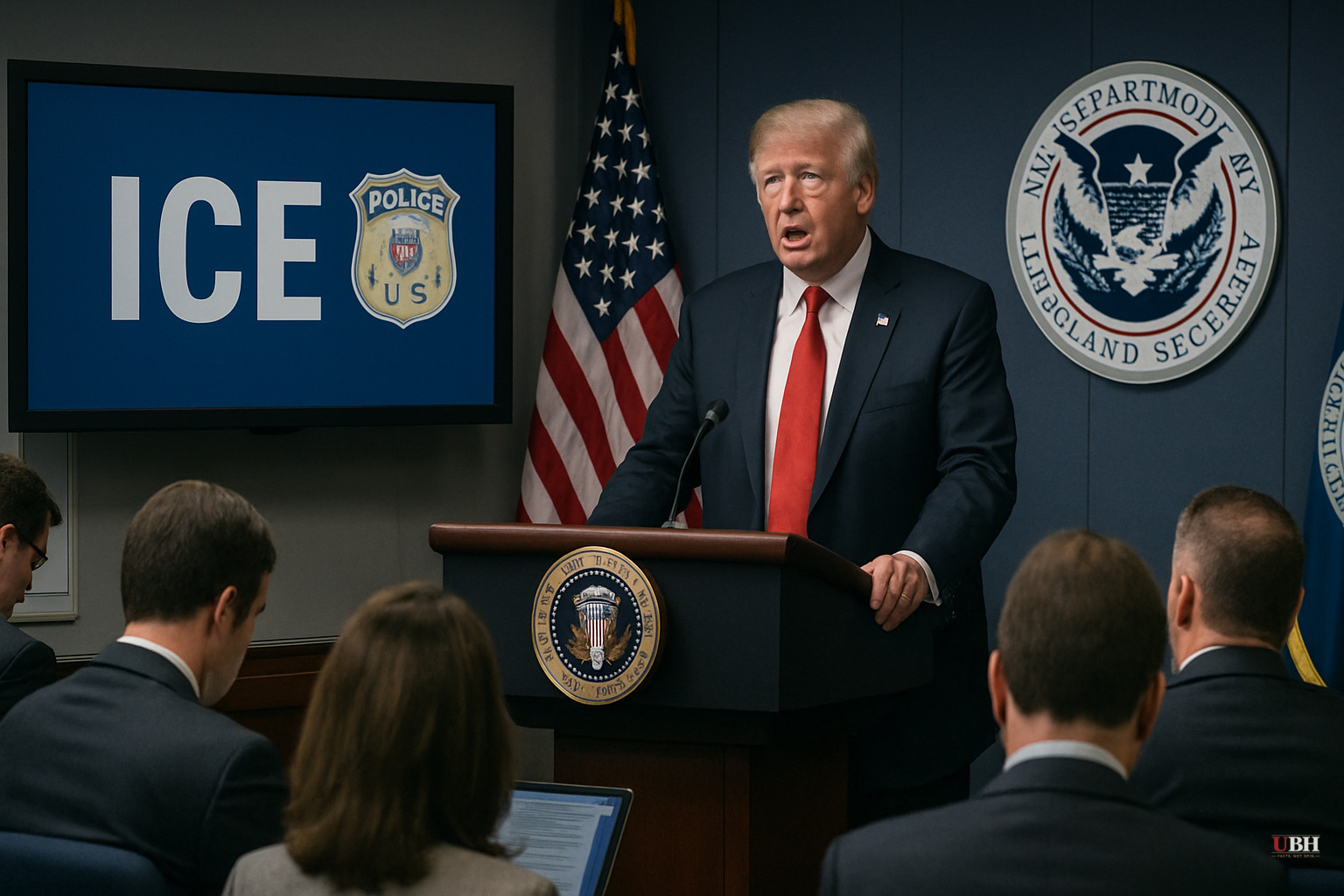
Since the Department of Homeland Security ordered ICE to pause most vehicle stops earlier this week, the policy lasted less than a day before President Trump reversed it.
DHS Secretary Kristi Noem's agency told agents nationwide to stop nearly all vehicle stops except those targeting people with serious or violent criminal histories, according to multiple ICE sources who spoke to Fox News. The pause was described as indefinite, pending new vehicle-stop training for agents in the field.
The trigger was two fatal shootings by ICE agents during vehicle stops in Maine and Texas within the span of a week, according to Fox News and NPR. In both cases, the person killed was not the intended target of the enforcement action. One senior ICE source told Fox News the pause was "horrible but needs to happen."
That internal acknowledgment didn't survive contact with the president. Trump posted on social media that ICE could not give up "one of ICE's most important and effective Crime fighting tools, THE TRAFFIC STOP!" He argued the pause would be "playing right into the criminal's hands" and accused "Radical Left Dumocrats" of wanting the policy to stick. The White House confirmed to Fox News that Trump had ordered DHS to reverse course.
Trump told agents directly to "be judicious, fair and smart, and go back and do your very important job," while crediting ICE enforcement for what he called historic drops in crime. He also used the moment to revisit his standard line on the Biden administration, saying it let in 25 million people, many "unchecked and unvetted," and that removing criminal offenders among them is the point of the operations.
The pause and its reversal aren't just a messaging fight. They reflect a genuine operational tension.
Agents on the ground killed two people in traffic stops who turned out not to be their targets, within the same week, in two different states. That's a real pattern worth scrutinizing, and DHS's own internal move to pause the tactic pending new training is an implicit admission that something in the field procedure needs fixing. Rushed, high-adrenaline vehicle stops carry inherent risk of misidentifying who's inside a car, and that risk falls on bystanders, not just on the intended target.
At the same time, Trump's underlying point isn't baseless either. Vehicle stops are a standard, decades-old law enforcement tool used well beyond immigration enforcement, and pulling that tool entirely off the table nationwide, indefinitely, based on two incidents, is a significant operational retreat that could make it harder to apprehend people with serious criminal records who are otherwise hard to locate. Todd Bensman, a former senior advisor to Tom Homan, told Fox News's "Fox & Friends First" that sanctuary city policies actively force agents into these higher-risk field operations in the first place, because cooperative jail-based transfers aren't available in those jurisdictions.
Both things can be true. The tactic carries real risk to bystanders that DHS itself flagged internally, and the tactic is also one of the more effective ways to locate people ICE is trying to remove. Neither NPR's coverage nor Fox News's coverage resolves that tension. They mostly report the sequence of who ordered what and when.
What's new since the pause was first reported: Trump's public reversal, delivered on social media rather than through a DHS statement, and the White House's confirmation to Fox News that the reversal is now official policy. The training review DHS had ordered was not detailed by either outlet as having been scrapped, so it's unclear whether the retraining effort proceeds even as stops resume, or whether it quietly dies alongside the pause.
No independent investigation into the Maine and Texas shootings has been reported as completed by either outlet. No charges have been announced against the agents involved in either shooting. NPR's Up First newsletter noted the deaths but did not detail the shooters' identities, disciplinary status, or whether either incident is under a formal review process, separate from the policy pause itself.
What remains unresolved: whether ICE's new field guidance, once training rolls out, will materially change how agents approach vehicle stops, or whether Tuesday's pause and Wednesday's reversal simply cancel each other out and agents return to the exact same practices that led to the two deaths in the first place. Neither outlet has reported details of what the promised retraining will actually contain.
Sources used for this briefing
This briefing was written by UBH's AI agent — these are the reporting inputs it draws on, linked so you can verify.


