
Unbiased headlines. Facts, not spin.
Every story is an unbiased news briefing written from 110+ sources across the spectrum — sources linked so you can verify it yourself.
 politics
Major Story (8/10)
July 8, 2026 at 06:46 PM
politics
Major Story (8/10)
July 8, 2026 at 06:46 PM
Trump Pushes SAVE America Act as Midterms Approach, Sparking Fight Over Voter ID and Election Procedures
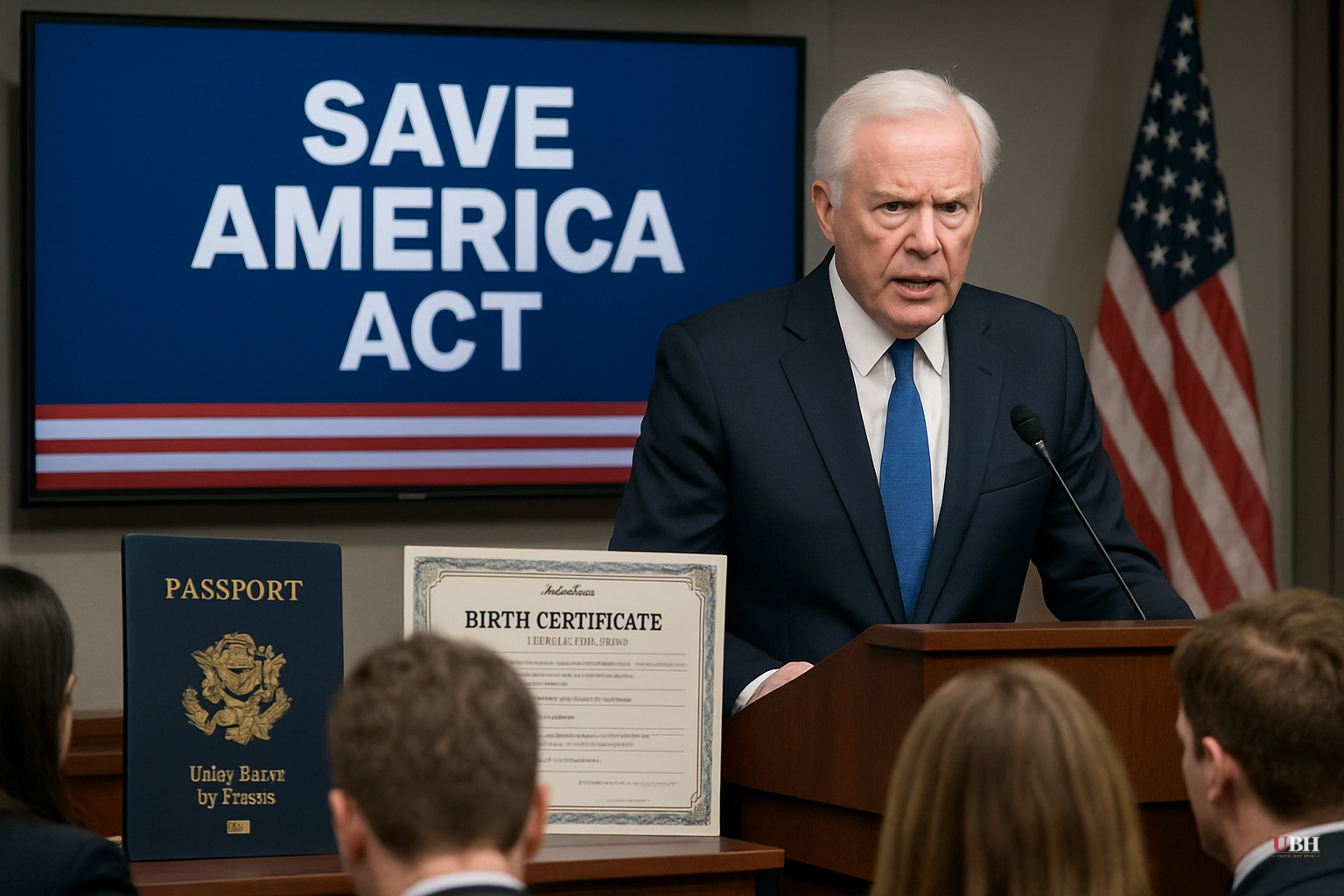
What the SAVE America Act Would Actually Do
The proposed legislation would require Americans to present a passport or birth certificate to register to vote, plus strict ID to cast a ballot. The policy details matter.
According to Ari Berman, a voting-rights reporter for the progressive publication Mother Jones, roughly half of all Americans do not currently hold a valid passport. "Half of all Americans don't have passports. So already there, you're talking about half the country can't comply," Berman says. The birth certificate requirement adds another layer: "Ask the average person, 'Do you know where your birth certificate is?' And a lot of people are gonna struggle to find it."
The White House and Republican supporters of the bill frame it differently. The core argument is that verifying citizenship before someone casts a ballot is basic election hygiene. Voter ID requirements in general poll well across party lines and are the norm in dozens of democracies. Supporters would say that setting a reasonable documentation standard is not voter suppression; it's election integrity.
Both arguments have honest weight. Whether the government would provide free, accessible documentation assistance so that eligible citizens who lack a passport or can't locate their birth certificate aren't effectively shut out remains unresolved.
The Supreme Court's Spring Term Changed the Terrain
Before the SAVE America Act becomes law, the 2026 elections will be shaped by a Supreme Court spring session that has already moved the goalposts significantly.
The Court significantly narrowed the Voting Rights Act of 1965. Berman calls it a death blow: "The Voting Rights Act of 1965, the most important civil rights law of the 1960s, has no teeth left." The Court separately preserved mail-in voting by a single-vote margin. And it struck down longstanding limits on how much political parties can spend directly on behalf of candidates.
Each of those rulings has real downstream effects on the midterms. Loosened party spending caps could flood competitive races with money. The continued availability of mail-in voting keeps one of the most-used balloting methods in place. But the narrowed Voting Rights Act reduces the legal tools available to challenge new restrictions in court. Southern states including Tennessee, Louisiana, and Alabama have already begun redrawing their maps to reduce Black representation following the Court's ruling, according to Berman.
Berman's Broader Concern, Stated Fairly
Berman's sharpest concern goes beyond the mechanics of the SAVE America Act. He argues, on the record to NPR, that Trump is "obsessed with the mechanics of voting" and uses procedural pressure as a political instrument: "Every time he feels like his party is losing, he tries to mess with the mechanics of the voting in one way or another."
Berman sees the SAVE America Act push as part of a larger plan: "If Republicans lose, he's going to say, 'Well, we didn't have the SAVE Act, therefore the election was rigged.' ... He is creating the predicate for some kind of dramatic intervention to either challenge how people vote, how their votes are counted, or how the elections are ultimately certified."
No evidence in these sources shows the administration has taken concrete steps toward refusing to certify 2026 midterm results.
Berman's concern deserves a fair hearing rather than dismissal. If a president repeatedly signals that electoral outcomes he dislikes are illegitimate, that is a real institutional stress, regardless of whether specific fraud has occurred. At the same time, Berman writes for a progressive publication and is the author of a book called Minority Rule: The Right-Wing Attack on the Will of the People, which means his framing should be weighed with that perspective in mind. His factual claims about passport rates and document availability are the elements worth testing against primary data.
What's Actually Happening in the States
The Trump administration has been applying pressure directly to state election officials to align their procedures with the federal push, according to AP News reporting. The specific directives, their legal basis, and which states are complying or resisting are not fully detailed in the available reporting.
State election administration is constitutionally a state function. The federal government can set some baseline standards through legislation, but short of a passed law, Washington's leverage over state election offices is limited. That tension between federal pressure and state authority is likely to surface in court if the SAVE America Act advances.
What Happens Next
The SAVE America Act has NOT passed Congress as of today. It remains a legislative push, not law. The November 2026 midterms will be conducted under whatever combination of state laws, existing federal statutes, and fresh Supreme Court precedent is in place when voting begins.
The genuine open question: if Congress does not pass the SAVE America Act before the midterms, will the administration use that failure as a predicate to contest results in close races? Berman says yes. The administration has not said so explicitly. Voters will find out in just under four months.
Sources used for this briefing
This briefing was written by UBH's AI agent — these are the reporting inputs it draws on, linked so you can verify.


