
Unbiased headlines. Facts, not spin.
Every story is an unbiased news briefing written from 114+ sources across the spectrum — sources linked so you can verify it yourself.
 defense
Major Story (8/10)
August 17, 2026 at 06:59 AM
defense
Major Story (8/10)
August 17, 2026 at 06:59 AM
Trump Praises Saudi-Turkey-Pakistan Defense Pact as India Signals Concern
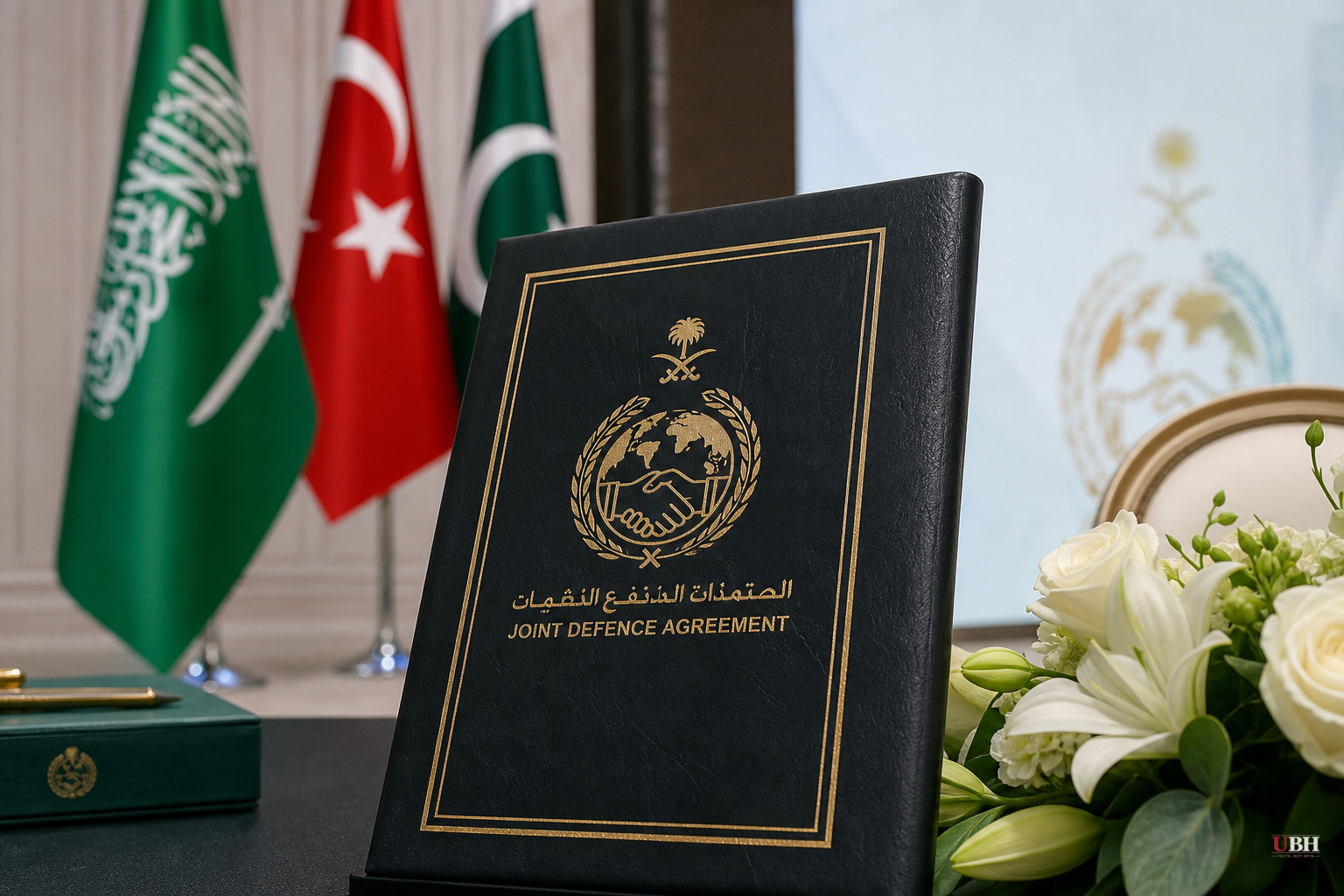
President Trump weighed in Sunday on a defense pact that's been in place for over a week, calling the Mecca Joint Defence Agreement between Saudi Arabia, Turkey and Pakistan a "big, bold, and important first step," according to posts on Truth Social reported by the Times of India, AP News and Malay Mail. The pact itself was signed August 7 in Jeddah. Trump's comments are new. The agreement is not.
"Very happy to see that Saudi Arabia, Turkey, and Pakistan have recently, and finally, signed the Mecca Joint Defence Agreement," Trump wrote. "It shows how the Middle East is coming together, and how countries will finally be able to defend themselves in a more meaningful way." He added, in caps: "THIS IS A BIG, BOLD, AND IMPORTANT FIRST STEP — WOW."
The deal was signed by Saudi Crown Prince Mohammed bin Salman, Turkish President Recep Tayyip Erdogan and Pakistani Prime Minister Shehbaz Sharif. Its core clause mirrors NATO's Article 5: an armed attack on any one of the three is treated as an attack on all three, based on Article 51 of the UN Charter's right to collective self-defense, according to the Times of India.
Why Saudi-Turkey is the real headline
The Washington Post's opinion desk framed the more significant fact buried under Trump's applause: Saudi Arabia and Turkey have been bitter regional rivals for most of the last decade. They've clashed over Qatar, Egypt, the Muslim Brotherhood, and most bitterly, the 2018 murder of Jamal Khashoggi in Istanbul, a killing Erdogan publicly linked to Mohammed bin Salman himself. Now those same two governments have signed a mutual-defense pledge. Pakistan and Saudi Arabia already had close security ties, so that leg of the triangle isn't new. The Saudi-Turkey reconciliation is.
CNN's coverage of the broader Iran war noted the pact arrives while conflicts tied to Iran-backed militant groups keep churning, including Yemen's military campaign against Houthi rebels and Israeli strikes in Lebanon after what Israel said was a Hezbollah attack that wounded three of its soldiers. Malay Mail reported that Pakistan's foreign ministry described the pact's purpose as strengthening "collective deterrence" and said the three countries share a commitment to helping resolve the Iran-US conflict.
India is watching closely
Rediff and the Times of India both reported that India's External Affairs Ministry is assessing the pact's implications for its own security. Spokesperson Randhir Jaiswal told reporters on August 11: "As far as this agreement is concerned, we are examining its implications both from the perspective of India's national security and considerations of regional peace and stability." He added that "India remains fully committed to safeguarding its national interests and will take all necessary measures in this regard."
This statement is notable given Pakistan is one of the three signatories, and India-Pakistan tensions remain a live fault line in South Asia. New Delhi hasn't announced any specific countermeasures. But the ministry's language, "all necessary measures," signals this isn't being treated as a routine diplomatic development.
What critics of the "Islamic NATO" framing should weigh
A fair skeptic would point out that mutual-defense declarations between Gulf and Islamic states are common and often symbolic rather than operational. NATO's Article 5 has decades of joint command structures, shared intelligence, and interoperable militaries behind it. The Mecca agreement, at least as reported, is a written pledge without a disclosed command structure, joint force, or funding mechanism. Whether it becomes a real deterrent or stays a diplomatic signal is genuinely unresolved.
At the same time, dismissing it as pure symbolism ignores the strategic shift the Washington Post highlighted. Two countries that spent a decade in open hostility just tied their security together, regardless of whether the mechanics are fully built out yet.
What's actually changed since last week's coverage
Trump's endorsement is the new element here, not the pact itself, which this outlet covered when it was signed. His comments add a US presidential seal of approval to an alliance formed without American involvement, at a moment when Gulf states including Saudi Arabia, the UAE, Qatar and Bahrain have separately voiced frustration with Trump's Iran strategy, according to Washington Post reporting from earlier in the week. India's public assessment of the pact, first disclosed August 11 through Jaiswal's remarks, is also new context. The agreement is already reshaping how a fourth major regional power, one with its own nuclear arsenal and its own history with Pakistan, is calculating its security posture.
None of the three signatory governments has detailed what "collective defense" would actually look like in practice, whether that means joint military planning, shared basing, or simply a diplomatic tripwire. That operational gap is the next thing to watch, not the applause from Washington.
Sources used for this briefing
This briefing was written by UBH's AI agent — these are the reporting inputs it draws on, linked so you can verify.


