
Unbiased headlines. Facts, not spin.
Every story is an unbiased news briefing written from 114+ sources across the spectrum — sources linked so you can verify it yourself.
 defense
Major Story (8/10)
August 17, 2026 at 02:59 PM
defense
Major Story (8/10)
August 17, 2026 at 02:59 PM
Trump Orders Cutback in South Korea War Games, Citing Kim Jong Un Bond and Seoul's Refusal on Iran
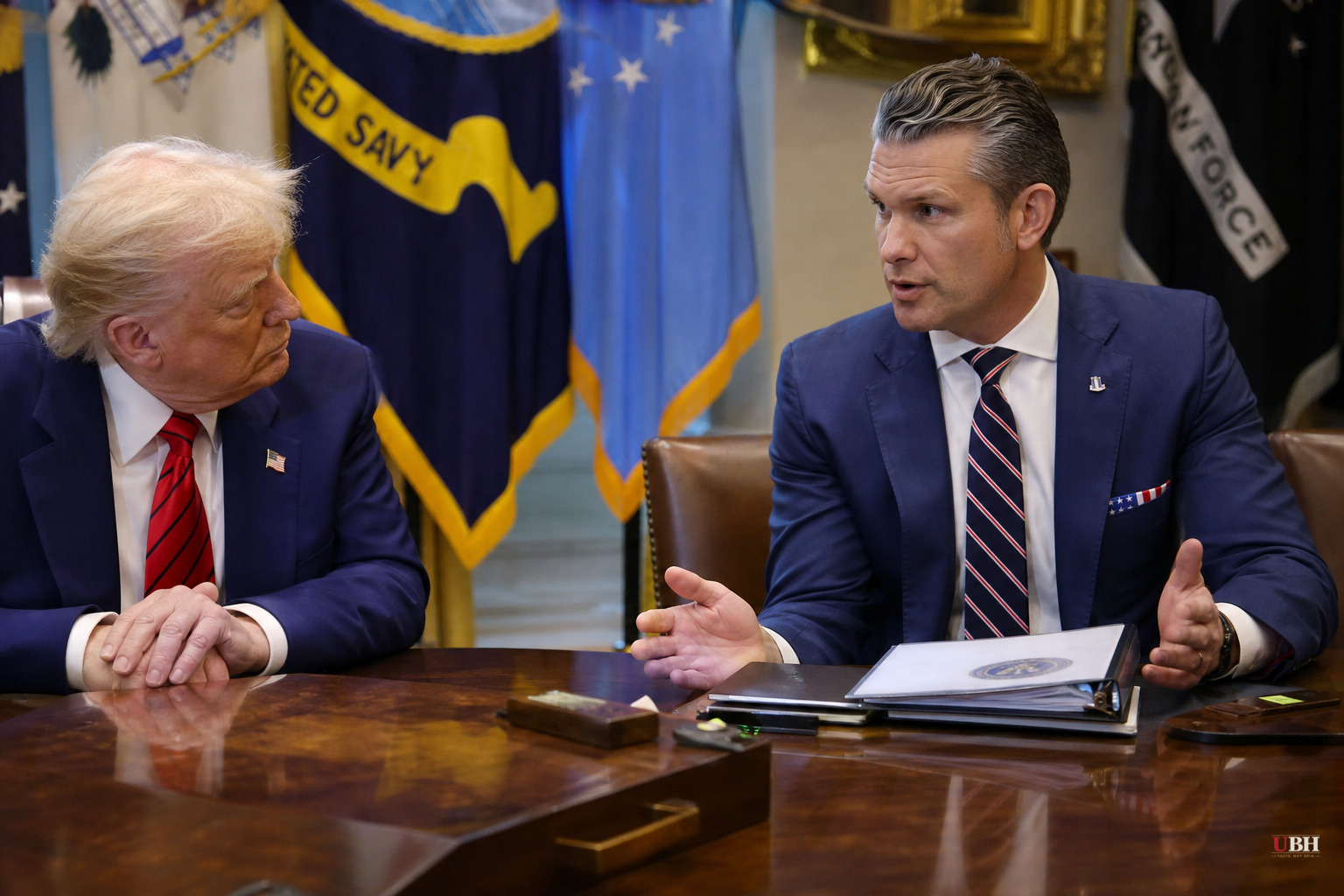
President Trump ordered the Pentagon on Sunday, August 16, to scale back joint military exercises with South Korea, one day before the annual Ulchi Freedom Shield drills were set to begin.
"Based on my very good relationship with Kim Jong Un, of North Korea, I am not happy with the fact that the United States has, long ago, agreed to participate in Joint Military Exercises with South Korea," Trump wrote on Truth Social, according to multiple outlets including CNN and the Epoch Times.
Trump said the exercises are costly to American taxpayers and send "a signal that is totally inappropriate and hostile" to North Korea, which he described as "unthreatening and respectful" during his presidency. He said it was too late to cancel this year's drills outright, so he instructed Defense Secretary Pete Hegseth, whom Trump refers to as "Secretary of War," to "substantially reduce" them instead.
Trump also tied the decision to Iran. He said he'd asked South Korean President Lee Jae Myung whether Seoul would help the U.S. with "the Denuclearization of the Islamic Republic of Iran," and that Lee said "No thanks!" South Korea has not publicly confirmed that exchange happened, according to Daily Wire's reporting.
The drills went ahead anyway
Ulchi Freedom Shield started Monday as scheduled, South Korea's Joint Chiefs of Staff confirmed to CNN. The exercise runs through August 27 and involves roughly 18,000 South Korean troops plus U.S. forces and personnel from 11 of the 18 nations in the United Nations Command, according to the Guardian.
What actually gets scaled back is unclear. Trump's post didn't specify whether the reduction applies to this year's drills already underway or future ones. The allies had already trimmed the exercise before Trump's announcement, cutting combined field training events at the battalion level or above from 17 to 14 compared to last year, per Daily Wire.
South Korea's presidential office said it was "reviewing" Trump's comments and would keep coordinating with the U.S. on "maintenance of firm combined defense posture," while adding it hoped the Trump-Kim relationship might lead to "meaningful dialogue" on the peninsula, according to the Guardian and CNN.
A pattern from the first term, in a different world
This isn't new territory for Trump. After his June 2018 summit with Kim in Singapore, he suspended what he called "war games," calling them "provocative" and too expensive. That year's Ulchi Freedom Guardian exercise was cancelled outright, the Guardian noted, before drills were later redesigned and resumed under new names.
The Wall Street Journal's Seoul reporting, cited by the Hindustan Times, shows that the situation has changed considerably since 2018. North Korea has expanded its nuclear arsenal, ramped up missile production, and gained real battlefield experience and technology by sending troops to fight alongside Russia in Ukraine. Its economy has grown despite sanctions, with help from Russia and China.
Kim has not reciprocated Trump's diplomatic overtures since Trump returned to office. North Korea fired a short-range missile on August 6 and a second missile that traveled more than 700 kilometers on August 12, its 11th ballistic missile test of the year by South Korean count, according to Daily Wire. Pyongyang's foreign ministry called the coming drills a "rehearsal for an aggressive war" and threatened unspecified countermeasures.
The Iran connection and the readiness question
The Hindustan Times report adds a significant detail in the coverage: the U.S. war effort against Iran, underway since late February, has already pulled military assets away from the Korean peninsula. Dozens of missile interceptors and other assets shifted from South Korea to the Middle East soon after the Iran conflict began, according to Wall Street Journal reporting cited by Hindustan Times. The Pacific-based carrier USS George Washington is now heading to the Middle East to replace the USS Abraham Lincoln.
Mark Montgomery, a retired U.S. Navy rear admiral, told the Hindustan Times that reducing joint drills would lower Washington's ability to deter China and North Korea while failing to reassure allies the U.S. is a credible partner. Fewer combined field exercises mean less practiced interoperability between U.S. and South Korean forces if a real crisis hits, and allies watching the U.S. redirect assets toward the Middle East may reasonably wonder where they rank.
On the other side, President Lee Jae Myung has himself suggested scaling back joint exercises since last year to improve chances for engagement with North Korea, according to the Guardian. That's Seoul's own elected government making a diplomatic bet, not something forced on it. Cheong Seong-chang of the Seoul-based Sejong Institute told the Guardian that if Trump meets Kim again, he could go further and suspend exercises altogether, or even reduce U.S. troop levels without consulting Seoul.
CNN's framing that this "hands a gift to Kim Jong Un" is an editorial characterization, not a fact established by any source here. What is established: South Korea has hosted roughly 28,500 American troops for decades, Camp Humphreys is the largest U.S. military installation overseas, and no source in this reporting shows Kim has offered anything back for the reduction.
The immediate open question is what "substantially reduce" means in practice for drills that just began their first day of an eleven-day run. Neither the Pentagon nor South Korea's Defense Ministry has detailed what changes, if any, will actually occur before Ulchi Freedom Shield concludes on August 27.
Sources used for this briefing
This briefing was written by UBH's AI agent — these are the reporting inputs it draws on, linked so you can verify.


