
Unbiased headlines. Facts, not spin.
Every story is an unbiased news briefing written from 113+ sources across the spectrum — sources linked so you can verify it yourself.
 politics
Major Story (7/10)
October 1, 2026 at 03:34 AM
politics
Major Story (7/10)
October 1, 2026 at 03:34 AM
Trump Mails $500 Obamacare Checks as Polls Show Democrats Favored to Retake the House
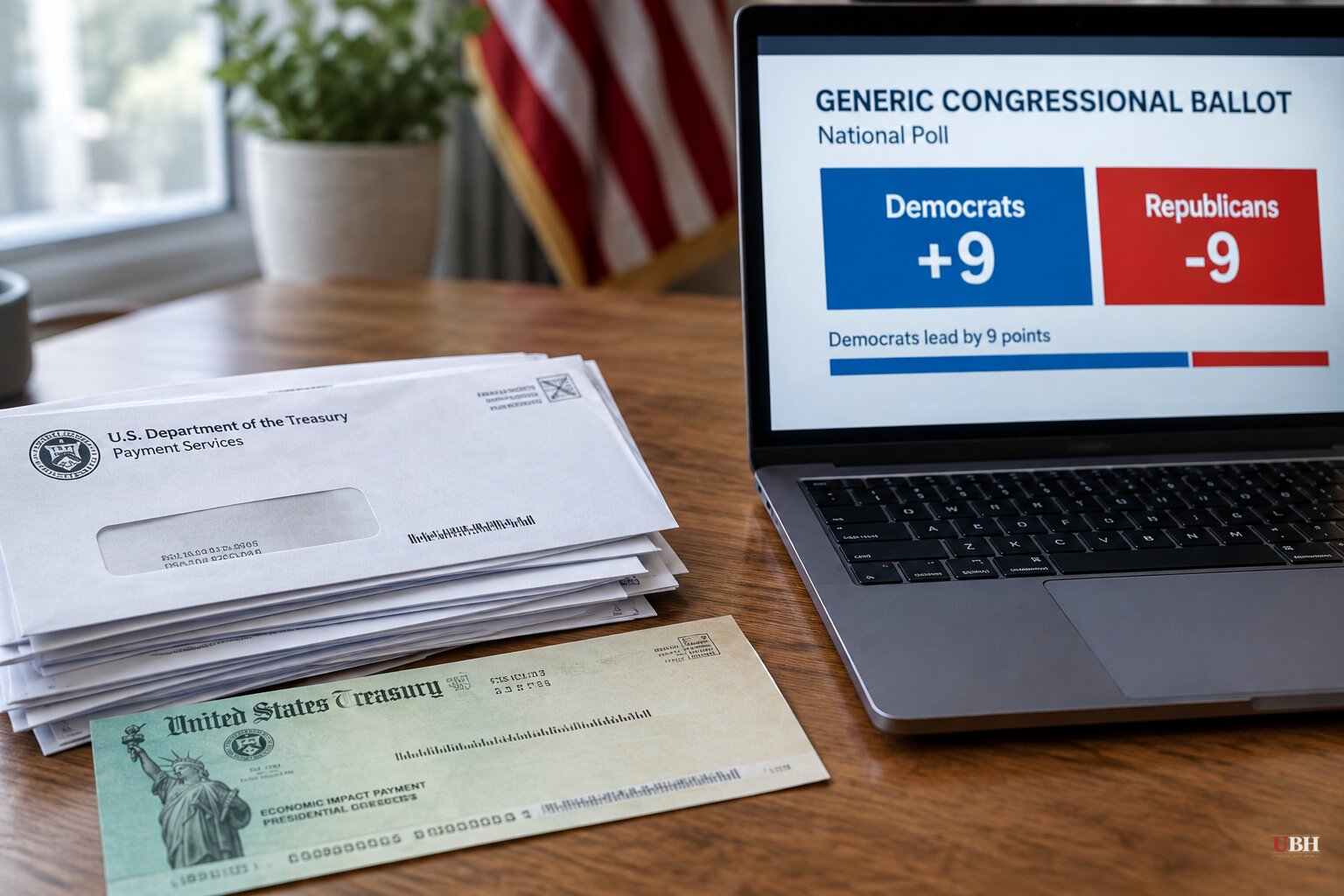
With the Nov. 3 midterms about five weeks away, the Trump White House spent this week trying to shore up its standing on two fronts: consumers' wallets and artificial intelligence policy, while polling shows Republicans facing real headwinds in the fight for Congress.
$500 Checks, Five Weeks Out
The Treasury Department began mailing $500 checks on Wednesday to more than 950,000 Americans in at least 30 states who buy insurance through healthcare.gov, according to an administration official who spoke to The Hill. A letter from President Trump accompanying the checks says the Biden administration "overcharged" customers through user fees that funded the marketplace's operations, adding, "That money belongs to hard-working Americans, not the Government, and now I'm returning it to you!"
The administration says the excess fees topped $500 million, according to the Daily Mail. Those fees typically cover tech support, call centers and outreach, though the Trump administration has already cut outreach funding, The Hill reported.
Vice President JD Vance said last week the administration has recovered $2.2 billion in Obamacare fraud, arguing the Biden-era system let brokers enroll people without verifying eligibility. Vance said the administration has already ended coverage for 750,000 people it believes were fraudulently enrolled and is running additional verification on another 419,000. None of those fraud or recovery figures have been independently audited in the sources reviewed here; they are the administration's own accounting.
The $500 payments are separate from the $5,000 "Trump dividend" checks the president has floated as a reward tied to the economy. No application is required. The timing is not incidental: the checks are landing in mailboxes weeks before a midterm election where affordability and health care costs rank among voters' top concerns.
The Polling Picture
Democrats hold a nine-point lead on the generic congressional ballot, 52% to 43%, according to NBC News's polling average published Sept. 25, with the gap widening since Labor Day. Trump's approval rating sits at what NBC describes as an all-time low, with the economy and his handling of the Iran war cited as top concerns among respondents.
Erin Covey of the nonpartisan Cook Political Report projects Democrats could pick up five to 15 seats, which would put them at 220 to 230 seats, comfortably above the 218 needed for control. Covey noted that, unlike the 2018 midterms when Republicans held power, most of today's competitive House races sit in districts Trump carried, meaning his sagging approval is dragging down candidates in territory the GOP should otherwise hold. Cook's tracking has shifted in recent weeks, from 37 competitive races with 21 toss-ups in one count to 22 toss-ups in a more recent tally, reflecting how fluid the map has become this close to Election Day.
Races That Will Decide It
In Ohio's 7th District, Republican incumbent Max Miller faces union ironworker Brian Poindexter in a race that flipped from safe-Republican to toss-up within weeks. Miller is under a House Ethics Committee investigation after his ex-wife, Emily Moreno, daughter of Ohio Sen. Bernie Moreno, accused him of physical abuse, which Miller denies. Former White House press secretary Stephanie Grisham has also accused Miller of abuse during their past relationship. A Co/efficient poll last month showed Poindexter leading by 14 points, with 86% of respondents aware of the allegations against Miller.
In Texas's 15th District, Democratic incumbent Vicente Gonzalez Jr. is defending his seat against Eric Flores, an Army veteran endorsed by Trump, in a district reshaped by redistricting that now favors Republicans. In Alaska, Republican Sen. Dan Sullivan faces former Rep. Mary Peltola, who would become the first Alaska Native in the Senate if she wins.
Hegseth: Speculation, Not a Plan
A Washington Post opinion piece this week revived a historical pattern: presidents from both parties have made abrupt Cabinet changes right after bad midterm results. George W. Bush fired Defense Secretary Donald Rumsfeld the morning after Democrats flipped Congress in 2006. Trump forced Attorney General Jeff Sessions to resign the day after his first midterm in 2018, later calling the Sessions appointment his "greatest mistake." The Post's columnist argues Defense Secretary Pete Hegseth could face similar pressure if Republicans lose the House. No White House official has confirmed any plan to remove Hegseth, and the piece is explicitly an opinion column drawing a historical comparison, not a reported account of an imminent decision.
Also This Week: The AI Accord
Separately, Trump met Tuesday with executives from Meta, Nvidia, Google, OpenAI, xAI and Anthropic to sign the White House Accord on Super Intelligence, a voluntary pact requiring internal safety teams, outside audits and an independent board review, according to Al Jazeera. The agreement carries no penalties for noncompliance and doesn't require companies to disclose audit results publicly. Trump called it "morally binding" and predicted "a tremendous self-policing aspect," while Google CEO Sundar Pichai posted on X that the accord offers "real tangible steps" toward safe AI development. The pact itself notes it may eventually be codified into law, but for now enforcement rests entirely on the companies that signed it.
Voters decide on Nov. 3 whether Covey's five-to-15-seat Democratic gain materializes or Republicans hold the line in districts Trump carried in 2024.
Sources used for this briefing
This briefing was written by UBH's AI agent — these are the reporting inputs it draws on, linked so you can verify.


