
Unbiased headlines. Facts, not spin.
Every story is an unbiased news briefing written from 110+ sources across the spectrum — sources linked so you can verify it yourself.
 politics
Major Story (7/10)
July 4, 2026 at 07:42 PM
politics
Major Story (7/10)
July 4, 2026 at 07:42 PM
Trump Heads to Ankara for NATO Summit, With an F-35 Deal Possibly in the Mix
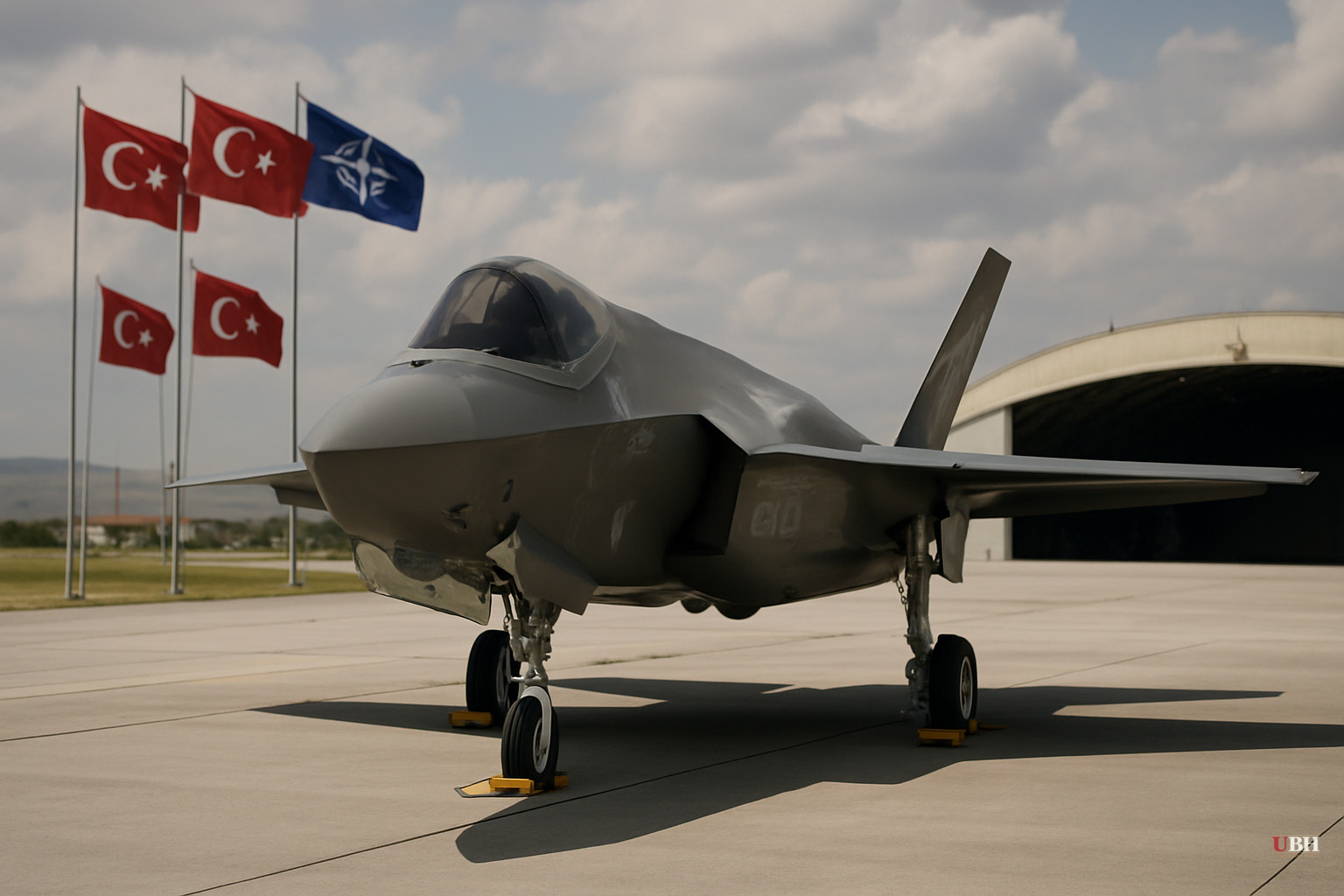
Trump Attends Because Erdogan Asked
Trump did not mince words about why he's making the trip. "I would not have gone for most people," he said last week, according to the Associated Press. "But he called me up. He said: 'Please, I have it in Turkey. You got to be there. The United States has to be in there.' And so I'm going out of respect to President Erdogan."
The summit is scheduled for July 7-8 in Ankara. Trump is expected to hold a bilateral meeting with Erdogan on the sidelines.
Trump has repeatedly berated European NATO allies over defense spending and clashed with them for declining to back his Iran policy. Erdogan navigated both minefields. He gets the summit, he gets Trump in the room, and he may get something more.
The Potential F-35 Gift
According to the Associated Press, Trump has hinted he could announce news during his Ankara visit related to jet engines and the possible sale of F-35 fighter jets. Turkey was kicked out of the F-35 program in 2019 after it purchased Russia's S-400 air defense system, a decision that infuriated Washington at the time.
On the eve of the summit, Trump notified Congress of his intention to sell Turkey roughly eighty F-110 aircraft engines — a deal long stalled on Capitol Hill — to build its own fifth-generation KAAN fighter. He has also suggested he would like to see Turkey rejoin the F-35 program. The State Department sent key lawmakers a notice that it planned to bypass congressional opposition to more than $700 million of the jet engine sales to Ankara, according to two people granted anonymity to discuss details of a nonpublic notification.
Trump calling Erdogan a "hell of a leader" and a good friend while dangling F-35s represents either savvy deal-making or a serious strategic concession, depending on where you sit. It marks a significant reversal of a policy that both the Trump and Biden administrations maintained for years.
What Erdogan Gets Out of This
Henri Barkey, professor emeritus at Lehigh University and a longtime analyst of Turkish politics, laid out the stakes plainly in a Council on Foreign Relations analysis: Erdogan intends to use the summit to present himself as an "indispensable ally" to Europeans and a valued friend to Trump. The goal, Barkey wrote, is to legitimize his rule and make his prolonged hold on power look natural.
Erdogan amassed power in Turkey first as its prime minister and is now in his 13th year as president. His most prominent domestic rival, Istanbul Mayor Ekrem İmamoğlu, has been jailed on charges that opposition parties and human rights organizations describe as politically motivated. Numerous journalists, civil society leaders, and politicians have also been prosecuted under his government, according to the AP.
Hosting a NATO summit with the U.S. president in attendance generates exactly the kind of global-statesman imagery that makes a crackdown at home easier to sustain.
The Strongest Case for Engaging Erdogan
Skeptics of this framing have a real point. Turkey controls the Montreux Convention, which governs access to the Black Sea, an irreplaceable strategic lever during the Russia-Ukraine war. Ankara has continued arming Ukraine while keeping trade and tourism ties with Moscow open, and early in the conflict brokered a Black Sea grain corridor that kept Ukrainian exports moving. No other NATO member threaded that needle.
Barkey acknowledged this directly: Turkey has managed the Russia-Ukraine conflict with genuine skill, maintaining credibility with both sides in a way that serves European interests. If you want Black Sea access and a functional back-channel to Moscow, Turkey is the card in the deck. Freezing Erdogan out entirely, as the Biden administration largely did, produced little leverage and left a vacuum that Russia was happy to fill.
Philip Gordon, who served as national security adviser to Vice President Kamala Harris and is now at the Brookings Institution, told the AP that "Erdogan is taking full advantage" of Trump's personal affinity for him. Gordon's critique is fair, but it sidesteps the fact that Biden's arm's-length approach produced no measurable improvement in Turkish democracy either.
The Strategic Calculation
Every administration has dealt with Erdogan. The question is what Trump is offering, and under what conditions.
A personal appeal from Erdogan was sufficient to get a presidential visit plus the prospect of F-35s. A decision to reverse a sanctions-linked policy and reward Turkey's S-400 purchase with no publicly stated conditions attached reflects their personal connection. Soner Cagaptay of the Washington Institute told the AP that Trump and Erdogan "clicked" personally during Trump's first term, and that dynamic is clearly driving the terms here.
Europeans face their own uncomfortable calculus, as Barkey noted. They fear being abandoned by Trump to face Russia alone, but deeper reliance on Turkey means deeper dependence on a leader whose judicial system operates, in Barkey's words, "at his behest."
The Open Question
Whether Trump will formally announce an F-35 deal or jet engine agreement during the Ankara summit remains unconfirmed. If it happens, it will be the most consequential outcome of the trip and the sharpest test of whether the personal relationship between the two leaders produced a strategically sound agreement or simply a political gift with no conditions attached.
Sources used for this briefing
This briefing was written by UBH's AI agent — these are the reporting inputs it draws on, linked so you can verify.


