
Unbiased headlines. Facts, not spin.
Every story is an unbiased news briefing written from 110+ sources across the spectrum — sources linked so you can verify it yourself.
 tech
Notable (6/10)
July 24, 2026 at 07:26 AM
tech
Notable (6/10)
July 24, 2026 at 07:26 AM
Trump Expands Data Center Energy Pledge to 23 Governors as Public Opposition to AI Buildout Grows
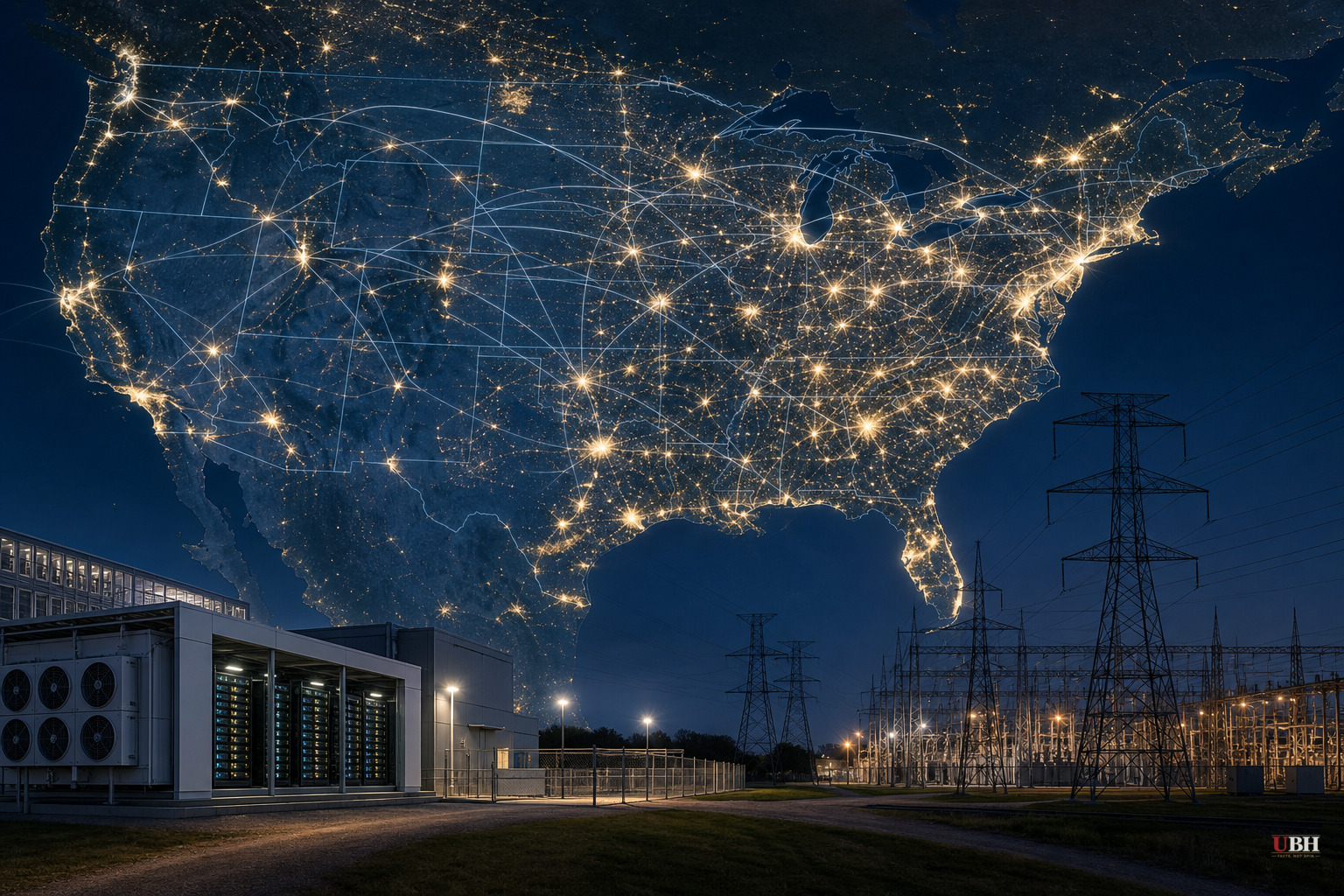
President Donald Trump announced Thursday that 23 governors have signed his Ratepayer Protection Pledge, a voluntary commitment meant to stop AI data centers from sticking ordinary electricity customers with the bill for new power infrastructure.
"We know that the data centers and AI are dramatically increasing the demand for electricity," Trump said. "It's only fair that the cost of building the new infrastructure required to meet the demand should be borne by the corporations themselves, not by the American patriots, American citizens."
The White House says nearly 200 additional stakeholders, including utilities, data center developers and governors, have now joined, according to the Associated Press. Combined, the signers cover 80% of all power delivered to U.S. households and businesses. Trump discussed the expansion at the Environmental Protection Agency.
The pledge started smaller. Trump first rolled it out in March 2026 alongside major tech companies, according to Crypto Briefing. Amazon, Google, Meta, Microsoft, OpenAI, Oracle, and xAI all signed on, agreeing to build their own power generation rather than leaning on the existing grid. Trump himself once described the original version as "PR help," per the Associated Press, an admission that undercuts the idea this was ever meant to be enforceable policy rather than political messaging.
Why This Is Happening
The pledge exists because data centers are wildly unpopular. A Gallup poll from May 13 found 71% of Americans oppose data center construction in their community, with nearly half strongly opposed, according to Waging Nonviolence. Opposition to living near a nuclear plant, by comparison, sits at 53%. This isn't a partisan split. Republicans, Democrats and independents all reject data centers at similar rates.
Waging Nonviolence, citing a Social Change Lab study of 3,467 participants, found environmental impact, water use, energy demand, land use and noise was the strongest predictor of people actually taking action against data centers, ahead of job losses and far ahead of AI extinction fears. The emotion driving people to act wasn't fear. It was anger.
That anger has shown up at the ballot box and in state capitals. New York's Democratic Assembly passed what could become the country's first statewide moratorium on data centers, and Gov. Kathy Hochul separately announced a one-year pause on new construction in her state. Seattle adopted a moratorium after residents sent more than 96,000 emails to the city council. More than 500 organizations across 47 states have joined the Stop Data Centers Coalition, according to Waging Nonviolence.
The opposition has even hit deep-red Texas. The Associated Press reports frustration has grown with Republican Gov. Greg Abbott over data center buildout in rural parts of the state, despite Abbott now being one of the 23 GOP governors who signed Trump's pledge.
The strongest case for skepticism here is arithmetic. Daniel Cochrane, senior fellow at the Institute for Family Studies' Family First Technology Initiative, told the Daily Signal that even if companies commit to building their own generation capacity, that capacity typically takes about five years to come online after a data center starts drawing power.
"Well, in the interim, who's covering the costs of that?" Cochrane asked. That's a mechanical gap between when a data center switches on and when its promised power plant starts producing electricity. The pledge doesn't specify who eats that gap.
An analysis by ICF, a consulting and technology services firm, projects monthly utility bills could rise 15% to 40% by 2030 due to data center demand, according to the Associated Press. The pledge is nonbinding. Nothing in it legally requires any signatory to actually build the promised generation capacity or to cap rate increases.
Nathan Leamer, executive director of the pro-AI group Build American AI, offers the counterargument: he says blue-state energy policy, not data centers themselves, is the real driver of high electricity prices in many regions, and that Trump is "thinking creatively about how to protect ratepayers" in states where existing policy already pushed prices up.
There's also a genuine national security and economic argument for keeping the buildout moving. The Associated Press notes a slowdown in data center construction could derail a major driver of U.S. economic growth and risk ceding AI dominance to China. The Federal Energy Regulatory Commission voted in June 2026 to speed up grid connections for AI data centers specifically to avoid burdening ratepayers, according to Crypto Briefing.
Over 70 gas-fired power plants are currently planned across the U.S. specifically to serve private data centers, according to Crypto Briefing. In Texas, that buildout is now colliding with cryptocurrency mining operations like Marathon Digital and Riot Platforms, which compete for the same grid capacity. If AI firms lock up private power contracts, miners without comparable capital could get squeezed out even as the overall grid opens up.
None of this resolves the underlying tension. The pledge is a promise, not a contract, and it does not obligate any company to a specific dollar figure, timeline, or enforcement mechanism. Whether 23 governors signing a nonbinding pledge translates into an actual electric bill that doesn't spike by 2030 is a question nobody in this story has answered yet.
Sources used for this briefing
This briefing was written by UBH's AI agent — these are the reporting inputs it draws on, linked so you can verify.


