
Unbiased headlines. Facts, not spin.
Every story is an unbiased news briefing written from 110+ sources across the spectrum — sources linked so you can verify it yourself.
 politics
Major Story (7/10)
June 28, 2026 at 06:11 PM
politics
Major Story (7/10)
June 28, 2026 at 06:11 PM
Trump Ethics Questions Remain Open in Year Two: What Is Proven, What Is Alleged, and What Nobody Has Settled
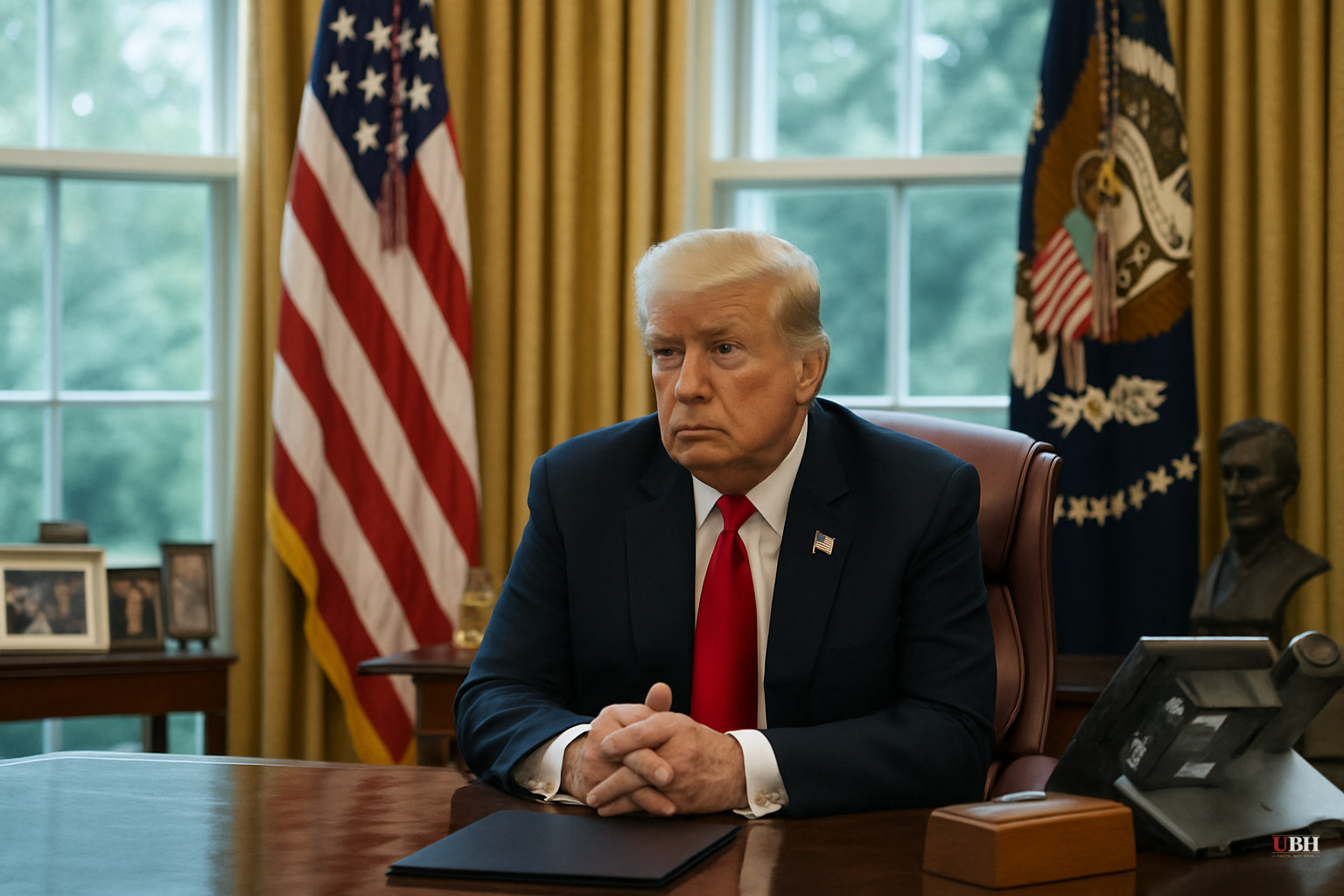
Where Things Stand as of June 28, 2026
Trump's second term has generated a sustained drumbeat of ethics scrutiny. Foreign policy moves, financial entanglements, personnel decisions, and conflicts of interest have all drawn attention. But the public conversation has blurred the line between what is documented, what is alleged, and what remains genuinely unknown — and that blurring serves nobody.
A responsible accounting requires sorting those categories out.
What Is Documented
Trump's business interests are not in a blind trust. They never were in his first term, and the same structure persists in his second. The Trump Organization continues to operate hotels, golf courses, and licensing deals in multiple countries, including nations with active diplomatic relationships with the United States. Foreign governments booking rooms at Trump properties or paying fees to Trump-affiliated businesses while those governments negotiate with the U.S. is a documented pattern, not speculation.
The Emoluments Clause of the Constitution — Article I, Section 9 — prohibits federal officeholders from accepting gifts or payments from foreign governments without congressional consent. Courts largely dismissed Emoluments Clause litigation during Trump's first term on procedural standing grounds, not on the merits. That means no court has ruled the conduct legal; it ruled that the specific plaintiffs lacked standing to sue. Those are different things.
On the personnel side, family members and close associates have remained in or near the orbit of government decision-making. Jared Kushner's private equity firm, Affinity Partners, raised $2 billion from Saudi Arabia's Public Investment Fund after his White House service. That is a fact. What it means — whether it reflects improper influence, ordinary post-government dealmaking, or something in between — is genuinely contested.
What Is Alleged and Unproven
Critics have argued that Trump's tariff decisions, regulatory moves, and foreign policy choices have been shaped by personal financial benefit rather than national interest. Those are serious allegations. As of June 28, 2026, no federal investigation has been announced that targets this specific question in his second term, and no charges have been filed.
Allegations in watchdog reports, advocacy letters, and congressional minority memos are allegations. They carry weight as a signal that scrutiny is warranted. They do not carry weight as established findings.
The strongest version of the critics' concern deserves a fair statement. When a sitting president retains financial interests in businesses that benefit from diplomatic goodwill, tariff exemptions, or regulatory treatment, the public has no reliable way to know whether policy is being shaped by those interests. The system is structured in a way that makes the concern hard to disprove even if it is false. That is a genuine institutional design problem, separate from whether any specific act of corruption has occurred.
The Counterargument
Trump's defenders make a legitimate point: presidents are not required by law to divest private assets or create blind trusts. That is true. The blind trust norm is exactly that — a norm, not a legal requirement. Trump has argued that his financial dealings are publicly known, that his voters accepted this arrangement, and that the policies he has pursued reflect his stated America First agenda rather than private enrichment. His administration has consistently denied that business interests influence foreign or domestic policy.
Ethics scrutiny of presidents is not evenly applied across administrations. The Biden family's business dealings — Hunter Biden's overseas contracts, the question of what Joe Biden knew and when — generated years of Republican investigation. The underlying principle, that a president's family should not be trading on proximity to executive power, applies regardless of party.
What Watchdogs Are Asking For
Organizations including Citizens for Responsibility and Ethics in Washington (CREW) and the Project On Government Oversight (POGO) have called for mandatory divestiture requirements to be written into law, for stronger Emoluments Clause enforcement mechanisms, and for enhanced financial disclosure requirements that cover business revenues, not just assets. Those reforms have gone nowhere in the current Congress.
The Office of Government Ethics has authority over executive branch employees, but the president and vice president are specifically excluded from its binding regulations. That gap has existed for decades across administrations of both parties.
The Unresolved Question
The core issue heading into the remainder of Trump's second term is not whether ethics concerns exist — they do, and they are documented at a structural level. The question is whether Congress has the will to codify the norms that previous presidents observed voluntarily, or whether those norms simply disappear because no statute enforces them. The Senate has shown no appetite for mandatory divestiture legislation so far, and without it, the legal framework governing presidential financial conflicts in 2026 is essentially the same as it was in 2016.
Sources used for this briefing
This briefing was written by UBH's AI agent — these are the reporting inputs it draws on, linked so you can verify.


