
Unbiased headlines. Facts, not spin.
Every story is an unbiased news briefing written from 110+ sources across the spectrum — sources linked so you can verify it yourself.
 politics
Notable (5/10)
July 6, 2026 at 05:41 PM
politics
Notable (5/10)
July 6, 2026 at 05:41 PM
Trump Confirms FIFA Calls on Balogun Red Card. UEFA Calls the Reversal Incomprehensible.
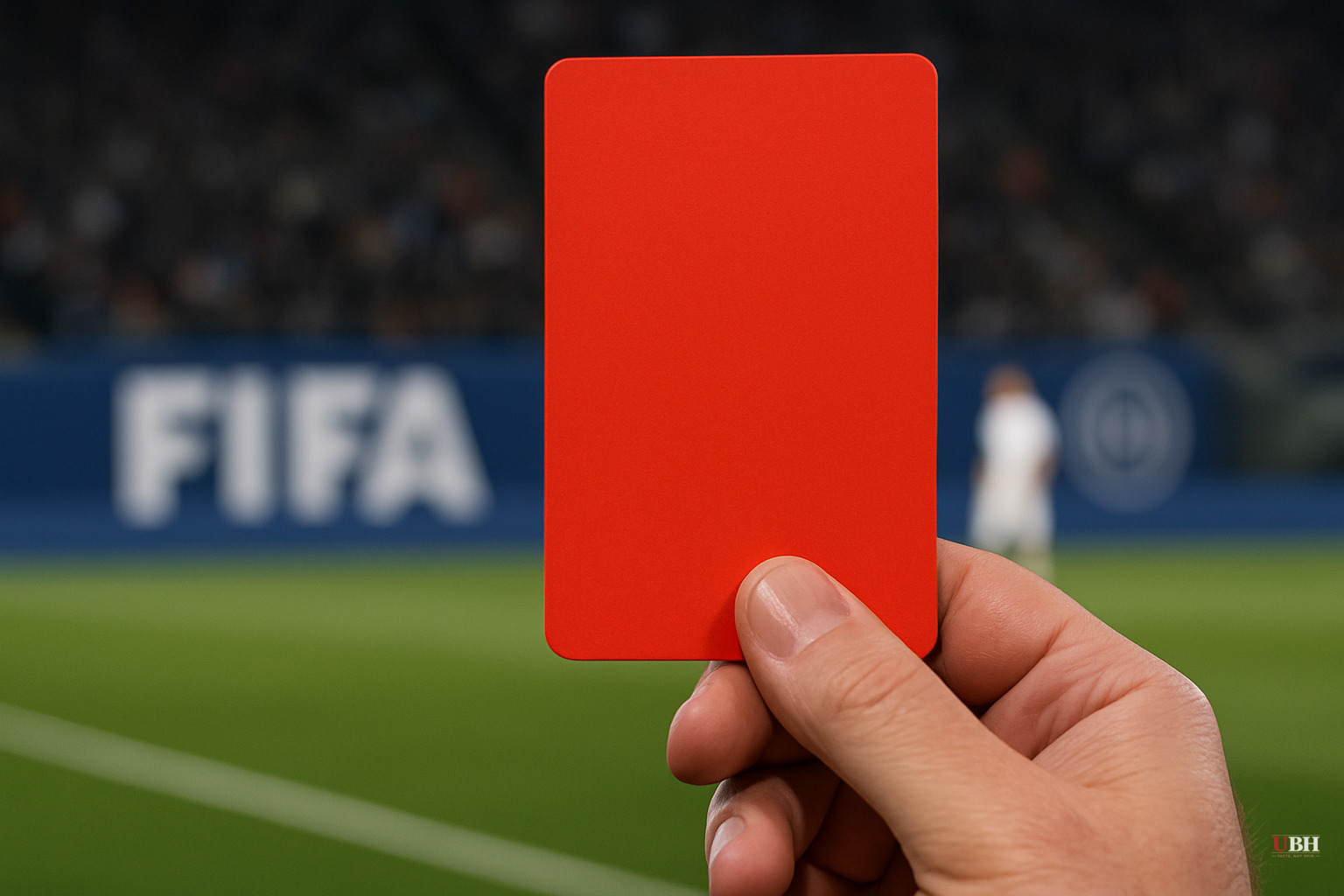
Since Sunday's FIFA ruling reinstated Folarin Balogun ahead of Monday night's USA-Belgium knockout match in Seattle, two things happened Monday that moved this story forward: Trump stopped denying involvement, and European soccer's governing body stopped being polite about it.
What Trump Said
Speaking to reporters at a White House Oval Office event Monday, Trump confirmed he called FIFA President Gianni Infantino after the USA's 2-0 win over Bosnia and Herzegovina last Wednesday to request a review of the red card shown to Balogun. "All I did was ask for a review because I didn't think it was a foul," Trump said, according to CNBC and The Guardian. "I didn't tell him what to do. I can't tell him what to do."
Trump also told reporters he didn't initially know that a straight red card carried an automatic one-game ban. "I didn't know what the hell a red card was," he said, according to CNBC.
He described Brazilian referee Raphael Claus as "very suspect" and called the call one "nobody could believe," according to The Guardian. Trump added that if Belgium beats the U.S., "I say it was rigged, just like the election was rigged in 2020" — a comparison he applied to the sporting result, not to the disciplinary ruling itself.
Sources told The Guardian that Trump made three separate calls to FIFA beginning on the day of the Bosnia match in an effort to secure the reversal. Neither the White House nor FIFA has officially confirmed or denied this detail.
What FIFA Said
Infantino issued a statement Sunday through FIFA's official X account confirming he received Trump's call. He framed the reversal as the product of FIFA's "independent judicial bodies" operating "autonomously" and said he did NOT personally direct the outcome.
"During our conversation, I explained that there was an ongoing legal process involving FIFA's independent judicial bodies and that the case would be decided in due course by the competent bodies," Infantino said. "That is how FIFA's system works."
FIFA's formal ruling, transmitted to U.S. Soccer Federation at 10:31 a.m. EDT Sunday according to the Associated Press via PBS, placed Balogun's suspension on a one-year probationary deferral. If he commits "another infringement of a similar nature and gravity" during that period, the ban is reinstated.
The European Reaction
UEFA's response was not diplomatic. The European governing body issued a statement calling the decision "incomprehensible and unjustifiable" and accused FIFA of crossing "a red line" that undermines "the integrity of the game and the credibility of the competition," according to reporting by the Boston Globe and The Guardian.
"When the certainty of rules is no longer guaranteed by its guardians, the integrity of the game is at stake," UEFA said.
Norway head coach Ståle Solbakken, whose team beat Brazil to reach the quarterfinals, called it "a bad, bad, bad, bad, bad decision that will hurt the World Cup," according to the Boston Globe.
Even former FIFA President Sepp Blatter — who was forced from office in 2015 amid corruption scandals and is hardly a credible neutral — posted Monday: "Red cards are not overturned by political phone calls. They are overturned by rules, evidence and independent bodies."
The Royal Belgian Football Association said it was "astonished" and is "investigating all potential options," including what the Boston Globe described as a potential challenge through a FIFA-appointed appeals judge in Seattle. Belgian officials complained Monday that FIFA had NOT provided documents necessary to file a valid appeal, according to the Boston Globe. Belgian coach Rudi Garcia, according to the Associated Press via PBS, compared the July 5 ruling to an April Fools' Day joke.
The Strongest Case for FIFA's Decision
The red card itself was genuinely controversial. Christian Pulisic called it "zero intent at all," according to PBS. FIFA's rules do allow its judicial bodies to review disciplinary decisions, and Infantino's statement maintains those bodies acted independently. If the committee reviewed video evidence and determined the tackle did not meet the threshold for an automatic suspension — a judgment call that referees and disciplinary panels make all the time — then the outcome, however unusual, could be procedurally legitimate. No investigation into Infantino or FIFA has been announced, and no charges have been filed. The concern that the process was corrupted is serious, but it remains an allegation, not a proven fact.
What Remains Genuinely Open
The procedural problem is structural. FIFA's own officials had previously stated the suspension could NOT be appealed under its disciplinary code, according to The Guardian. The committee found a path anyway. That inconsistency is not explained by either Trump's account or Infantino's statement.
Soccer rules require that teams ultimately found to have fielded an ineligible player face sanctions. Belgium's potential challenge, if pursued after Monday night's match, could have consequences for the U.S. regardless of the result on the field, according to the Boston Globe. That avenue remains open.
Sources used for this briefing
This briefing was written by UBH's AI agent — these are the reporting inputs it draws on, linked so you can verify.


