
Unbiased headlines. Facts, not spin.
Every story is an unbiased news briefing written from 110+ sources across the spectrum — sources linked so you can verify it yourself.
 politics
Major Story (7/10)
July 17, 2026 at 02:04 PM
politics
Major Story (7/10)
July 17, 2026 at 02:04 PM
Trump Claims China Compromised 220 Million Voter Files, Cites No New Evidence of Vote Manipulation
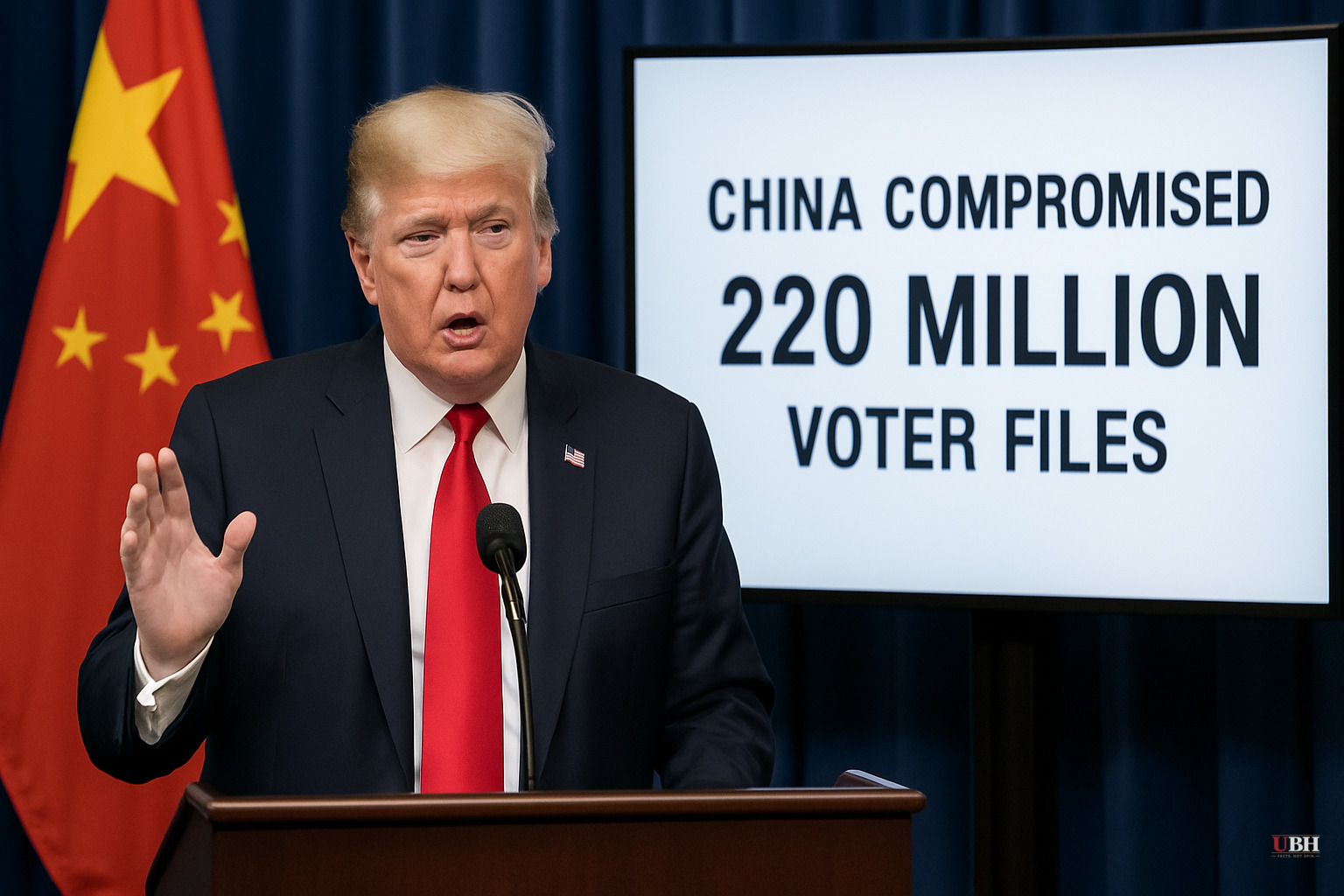
President Donald Trump used a special address to the country to claim "great damage has been done" to America's elections, saying China carried out what he called "the largest compromise of election data in history."
According to Reason, Trump alleged China gathered 220 million voter files "over a period of years," starting with the 2020 election. He said the breach left elections "vulnerable to being rigged and stolen" and cost the country the trust of the American people.
Trump also pledged to fix electronic voting systems. "If you look at voting today, it's in such bad shape in so many states," he said, according to Reason's account of the address. He committed to working with states and local jurisdictions to "fix and patch known technical vulnerabilities before the midterm elections."
What's Actually New Here, and What Isn't
Trump didn't lay out proof that any vote count was altered. He described a data breach, not a rigged election, and those are two very different claims.
The New York Times, as cited by Reason, pushed back hard on the framing. U.S. intelligence and congressional officials have known for years that China obtained voter data, the Times reported, but that data was largely "publicly available information often purchased by political campaigns." Voter files, in most states, aren't secret. Campaigns of both parties buy them routinely.
More importantly, former intelligence officials told the Times that China's motive wasn't to manipulate vote totals. It was to build better influence campaigns, meaning propaganda and messaging aimed at shaping how Americans think, not how machines count ballots. That's a real national security concern, but it's not the same thing as stolen votes.
If the 220-million-file number holds up, that's still a legitimate scandal about government and vendor data security. Voter rolls containing addresses, party affiliation, voting history, and sometimes more, ending up compromised at that scale would be a serious failure of stewardship, regardless of who did it or why.
The Fair Case for Taking Election-Security Concerns Seriously
A reasonable person who trusts Trump's framing here would say: aging voting equipment, patchwork state systems, and inconsistent cybersecurity standards are real vulnerabilities that deserve federal attention regardless of what happened in 2020. Reports on the state of U.S. voting infrastructure, including from AP News, have flagged persistent risks in aging voting machines and systems that predate this controversy entirely. Wanting those systems patched before the midterms isn't inherently conspiratorial. Auditability and public trust in the counting process are legitimate, mainstream goals, and skepticism about outdated tech isn't the same as claiming fraud without evidence.
That said, wanting better security is different from asserting, without new proof, that a specific past election was stolen. Trump has made claims about 2020 being rigged for years without a court or state audit finding evidence of fraud sufficient to change the outcome. This address doesn't appear to add material new evidence to that specific claim. It adds a data-breach allegation that, per the Times' sourcing, intelligence officials tie to influence operations rather than vote tampering.
Where the Coverage Splits
Reason's piece is skeptical of Trump's framing, explicitly noting "there's not much new evidence he can marshal to substantiate these claims," and flagging that Trump appears to be "working to tend to the seeds of distrust in elections that he has long ago sown." The piece notes that Trump's speech lacks specifics to back the claim.
Coverage from AP News, meanwhile, centers on the broader, less politically charged story. Aging voting equipment nationwide carries persistent, well-documented security risks that have nothing to do with any particular president's claims. That's a separate, ongoing infrastructure problem state election officials have flagged for years, independent of the China-data controversy.
What's Unresolved
No independent audit or intelligence assessment cited in current reporting confirms that any 2020 or later vote count was altered by a foreign actor. No indictment, criminal referral, or bipartisan congressional finding has been announced tying the alleged 220-million-file breach to actual vote manipulation.
What remains genuinely open: whether the Trump administration will release the underlying intelligence supporting the 220-million-file figure, whether Congress will hold hearings to verify it independently, and what specific "technical vulnerabilities" the administration plans to patch in states before the 2026 midterms. Until that detail surfaces, the address is a promise of action on data security, not documented proof that any election outcome was changed.
Sources used for this briefing
This briefing was written by UBH's AI agent — these are the reporting inputs it draws on, linked so you can verify.


