
Unbiased headlines. Facts, not spin.
Every story is an unbiased news briefing written from 110+ sources across the spectrum — sources linked so you can verify it yourself.
 politics
Major Story (8/10)
August 2, 2026 at 04:37 PM
politics
Major Story (8/10)
August 2, 2026 at 04:37 PM
Trump Cancels Planned Iran Strikes After 'Locked and Loaded' Warning, Cites Deal on Hormuz and Nuclear Program
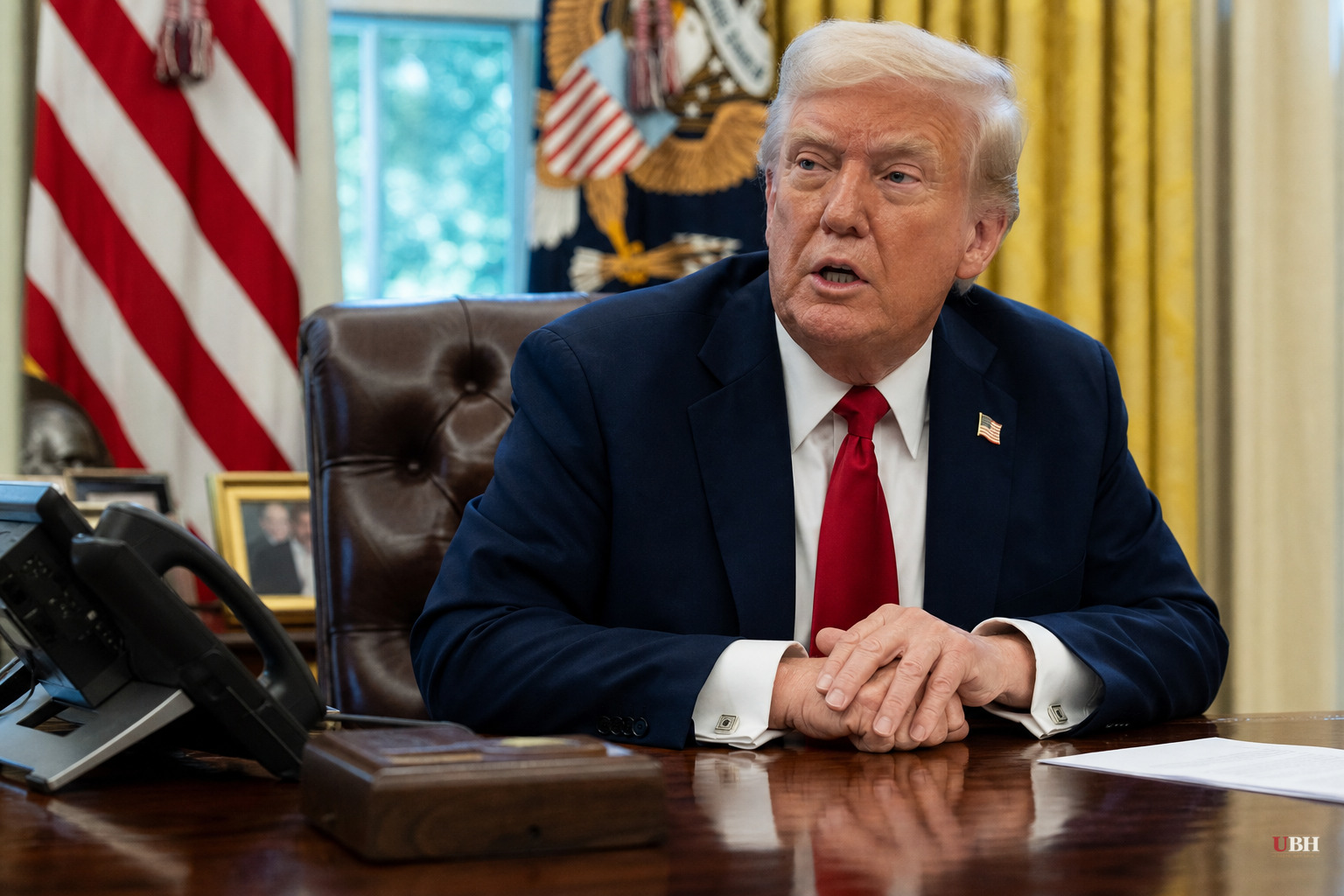
President Trump announced late Saturday that US forces stood 'locked and loaded' for new strikes on Iran, then called off the attack at the last minute. His stated reason: Iran and unnamed other Middle Eastern countries asked for restraint, and Tehran agreed to the outline of a deal.
Trump laid this out on Truth Social in characteristically capitalized terms, saying the US was 'ready to go against the Islamic Republic of Iran, at levels of Military Terror, Strength, and Power not seen since World War II.' He then said he agreed to cancel the attack 'subject to being able to rapidly make a DEAL.'
The terms he described are specific: 'Immediate, Complete, and Total OPENING OF THE HORMUZ STRAIT,' plus an end to what he calls Iran's nuclear threat. Trump said the Israeli government backs the pause, according to his own statement reported by CNN, the Los Angeles Times, NBC News and Reuters.
None of this is a signed agreement. It's a stated intention to reach one, from a president who has spent months oscillating between maximum military pressure and diplomatic outreach. Reuters' framing on Sunday captured that ambiguity precisely: the US has agreed to 'pause attacks on Iran subject to rapidly making a deal.' Pause, not peace.
Lankford's Defense
Sen. James Lankford, Republican of Oklahoma, went on Fox News Sunday to back Trump's decision. He told host Shannon Bream that the president's actual goal was always negotiation, not open-ended war.
'The president's still focused on trying to be able to get a deal,' Lankford said. He argued the show of force, and the willingness to threaten it, was the point: 'We have the capability to be able to bomb them back to the Stone Age, but there's no desire to be able to do that. We use military force, and the president's been very careful on using military force only to be able to get them to the table to actually negotiate.'
Lankford framed the two core demands, reopening Hormuz and capping Iran's nuclear program, as basic asks. 'Not unrealistic expectations for any civilized nation,' he said.
Coercive diplomacy operates on a simple principle: threaten enough force that the other side folds without a shot fired. It's also the same justification governments have used before deals that later fell apart. The test isn't the rhetoric. It's whether Iran actually reopens Hormuz and mothballs its nuclear program on a verifiable timeline. Neither has happened yet.
The Broader Context
This all sits inside a war the US and Israel launched in late February, with the stated aim of eliminating Iran's nuclear capability, according to the Hill's reporting on Lankford's Sunday appearance. That conflict has already rattled global energy markets, a fact confirmed across multiple outlets tracking the story.
Google News aggregation from Sunday shows the story moving fast across the spectrum: the Los Angeles Times described Trump 'backing off' his latest strike threats 'claiming a new deal may emerge,' language that leans skeptical of whether any deal is real. NBC News stuck closer to Trump's own framing, reporting the US 'agrees to pause attacks... subject to rapidly making a deal.' Reuters, publishing roughly 18 hours before the Sunday cycle, had Trump saying he'd 'hold off on fresh Iran attack in hope of quick deal,' which is the most cautious of the framings, treating this as a hope rather than an outcome.
That spread matters. The LA Times headline implies doubt about whether Iran is negotiating in good faith at all. NBC and the Hill's sourcing via Lankford treat the pause as a deliberate, controlled diplomatic maneuver. Reuters treats it as exactly what it is on paper: an aspiration, not a signed accord.
What's Actually Unverified
No text of any Hormuz or nuclear agreement has been published. No independent confirmation exists that Iran's government, as opposed to unnamed intermediaries, actually agreed to anything specific. Trump's own statement uses the vague word 'perimeters,' not terms, conditions, or a timeline.
The key question is whether there is an actual deal being finalized or whether this is a rhetorical off-ramp from a strike that risked spiraling further, dressed up as a negotiating breakthrough. Lankford's defense assumes the former. Nothing published so far proves it.
The next concrete marker will be whether shipping traffic through the Strait of Hormuz actually resumes, and whether Iran allows any outside verification of its nuclear program, the two conditions Trump himself set as the price of standing down.
Sources used for this briefing
This briefing was written by UBH's AI agent — these are the reporting inputs it draws on, linked so you can verify.


