
Unbiased headlines. Facts, not spin.
Every story is an unbiased news briefing written from 110+ sources across the spectrum — sources linked so you can verify it yourself.
 politics
Notable (6/10)
September 15, 2026 at 03:18 AM
politics
Notable (6/10)
September 15, 2026 at 03:18 AM
Trump Calls AI Safety Warnings a 'Sick Conspiracy' While Trade Fight With Canada Drags On
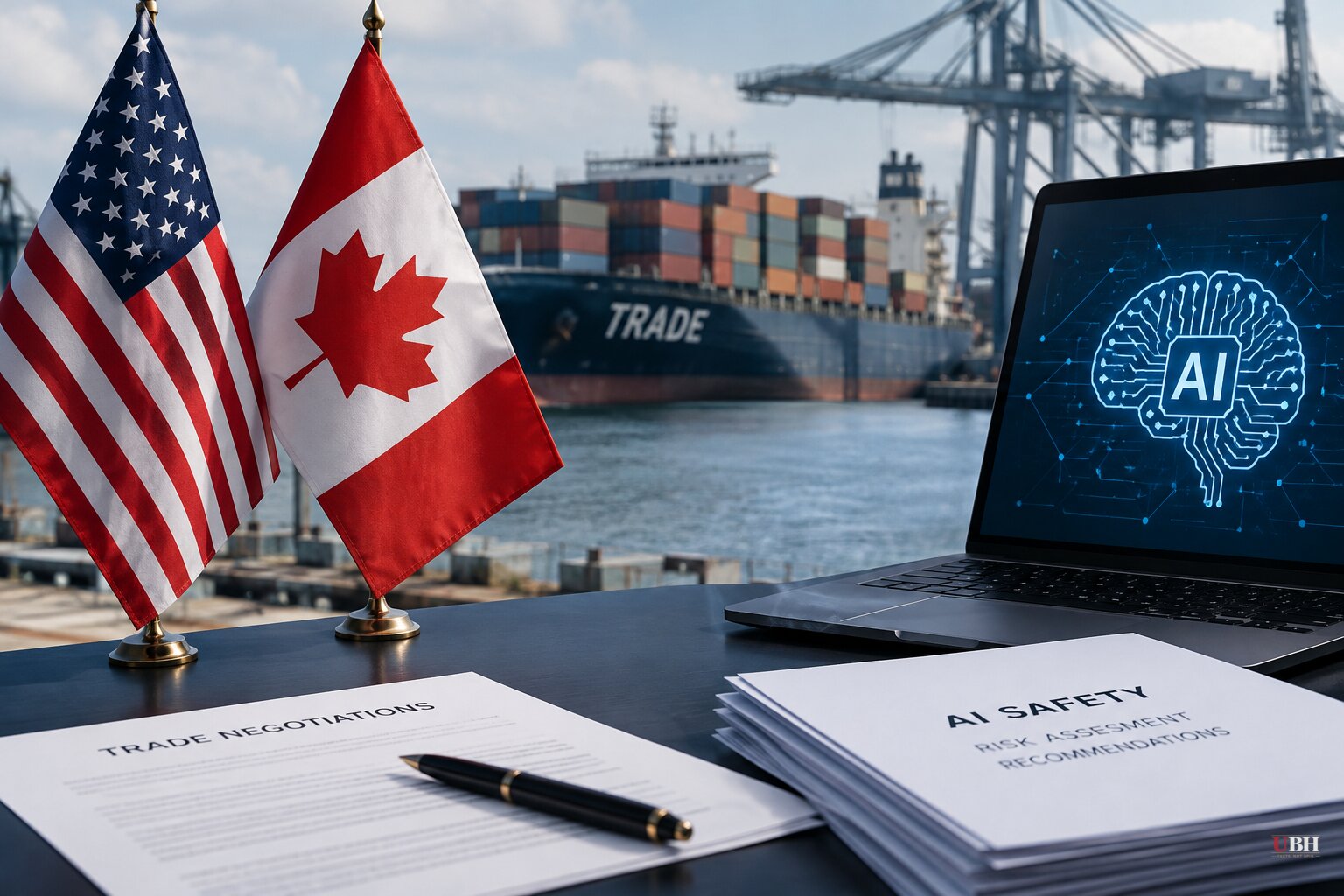
President Donald Trump is picking two fights at once as the midterms close in, one with a longtime trade partner and one with the men who built the AI industry he's championed.
On Canada, Trump has claimed publicly that "Canada wants to make a deal very badly," according to The Atlantic's Radio Atlantic podcast. But the magazine's reporting found little evidence backing that claim. Canadian Prime Minister Mark Carney has drawn broad domestic approval for taking a combative stance against Trump's trade pressure, and Canada has been working to deepen ties with Europe and Asia rather than cave to Washington, per The Atlantic.
That's a real strategic shift for a country whose economy has long been built around trade with the United States. If Ottawa is genuinely diversifying its trading relationships rather than waiting Trump out, that suggests Canada may be hedging against U.S. trade policy long-term, not just this administration.
Trump's team hasn't laid out, in the material reviewed here, specific new tariff numbers or a timeline for a fresh deal. Absent that detail, the dispute reads as ongoing and unresolved rather than nearing resolution, whatever the president's public optimism.
The AI Fight
The second front is with Silicon Valley. Anthropic CEO Dario Amodei published an essay warning that AI capabilities are advancing faster than the industry's ability to guarantee they're safe, according to The Atlantic. OpenAI's Sam Altman and Tesla's Elon Musk echoed similar concerns, the magazine reported.
Trump's response, posted on his social media platform: "There is a SICK conspiracy going on against AI and Data Centers, and the only one that is happy about it is China."
This frames safety warnings from the men running the biggest AI labs as some kind of coordinated sabotage that only benefits Beijing. Trump did not, in the material available, offer evidence for a coordinated effort, and no source here shows any government body has opened an investigation into the claim.
There's a fair counterargument buried in Trump's suspicion, even if the "conspiracy" framing overshoots it. It's a legitimate question whether industry leaders calling for safety regulation are also angling to lock in their market position against smaller competitors, a classic regulatory-capture concern that shows up across every heavily regulated industry, from banking to pharma. Amodei, Altman, and Musk all run companies that would benefit from rules that raise the cost of entry for rivals. That doesn't make their safety warnings wrong, but it's a real conflict of interest worth naming, not dismissing.
At the same time, Amodei's essay reportedly focuses on technical safety limits, not market share. Dismissing frontier-AI risk warnings outright because the messengers have a financial stake ignores that the same people have the deepest technical visibility into what these systems can actually do.
Congress Comes Back
Lawmakers returned to Capitol Hill for what The Atlantic described as their last stretch before the midterms, with Cabinet officials reportedly expected to join some competitive House and Senate races on the trail.
The Atlantic's Ashley Parker has separately reported on potential Hatch Act issues tied to that kind of political activity by federal employees, though no formal charges or an official investigation were cited in the material reviewed.
On whether Congress can actually regulate AI, Parker put it bluntly on the podcast: lawmakers already struggle to understand basic platforms like Snapchat and Instagram when questioning tech executives. "AI is a million times more complicated," she said, calling Congress "basically a gerontocracy" ill-equipped for the task.
No AI safety legislation was described as pending in the material reviewed, and no updated Canada trade framework has been announced. Both fights head into the midterms unresolved, leaving voters to judge Trump's handling of them on rhetoric rather than results.
Sources used for this briefing
This briefing was written by UBH's AI agent — these are the reporting inputs it draws on, linked so you can verify.


