
Unbiased headlines. Facts, not spin.
Every story is an unbiased news briefing written from 110+ sources across the spectrum — sources linked so you can verify it yourself.
 politics
Major Story (7/10)
June 27, 2026 at 09:38 PM
politics
Major Story (7/10)
June 27, 2026 at 09:38 PM
Trump Called Democratic Socialism Communism. Kaitlan Collins Said That Is Wrong. Here Is What the Primaries Actually Showed.
What Trump Said
President Donald Trump, reacting to a string of Democratic primary victories, characterized the rise of democratic socialism in the United States as effectively communist. He made those remarks publicly after progressive candidates posted significant wins in New York House primaries.
Trump has made this framing a recurring talking point. The argument: socialism is a gateway ideology, and its democratic branding is cosmetic cover for something more radical.
What Collins Said
CNN anchor Kaitlan Collins, on her Friday broadcast of The Source, aired Trump's remarks and pushed back directly. Her position, according to the Houston Herald's summary of the segment: democratic socialism is NOT communism, and Trump is conflating two distinct political systems.
Collins is factually correct on the definitional question. Democratic socialism, as practiced in Western Europe and as advocated by figures like Bernie Sanders and New York City Democratic mayoral candidate Zohran Mamdani, operates within electoral democracy, private property still exists in most models, and the government does not seize the means of production wholesale. Communism, as implemented historically in the Soviet Union, Cuba, and Maoist China, abolished private property, eliminated political opposition, and in several cases killed millions of people to enforce the ideology.
Those are not the same thing. Calling them the same thing is inaccurate.
The Progressive Wave That Started This
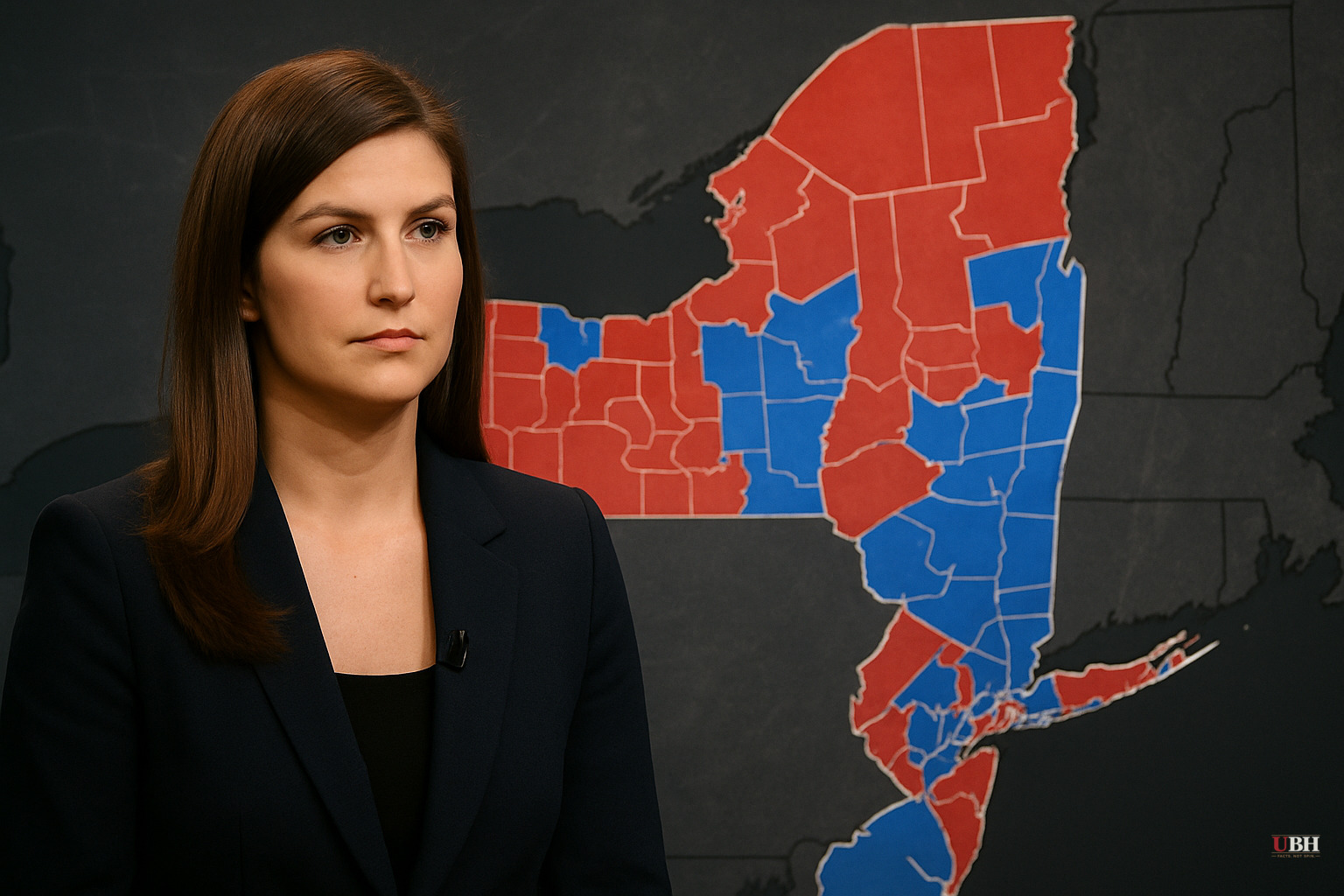
The immediate trigger for Trump's rhetoric was a round of New York Democratic primaries in which progressive, democratic-socialist-aligned candidates won. New York City Democratic mayoral candidate Zohran Mamdani, whose political star has risen sharply, responded to Republican attempts to brand him as the Democrats' communist poster child with characteristic directness. According to the Houston Herald, Mamdani's response to the label was: "Let them."
Mamdani supports policies including free public transit, universal childcare, and expanded public housing. Those are left-wing positions, some expensive, some debatable on policy merits. They are not the Gulag.
The Strongest Case for Trump's Framing
There is a legitimate concern worth taking seriously before dismissing it. Critics of democratic socialism argue that the distinction between "democratic" and "authoritarian" socialism is unstable in practice. Venezuela, which began as a democratic socialist project under Hugo Chávez, deteriorated into authoritarian collapse. Socialist economies in the 20th century repeatedly drifted toward centralized control once state power expanded sufficiently. The concern is not that Mamdani is Stalin. The concern is that the policy logic of expanding state control over housing, healthcare, and transit creates institutional dependencies that become hard to reverse.
That is a substantive policy argument, and voters deserve to hear it made honestly.
But it is a different argument from saying democratic socialism IS communism. Conflating the two does not strengthen the case against progressive policy. It weakens it, because it is demonstrably false and it lets progressives dismiss the entire critique as propaganda rather than engaging the real policy trade-offs.
What the Primaries Actually Showed
Progressives won Democratic primaries in New York. This reflects where the energy in the Democratic base is concentrated right now, at least in urban New York.
It does not tell us how those candidates perform in general elections against Republicans. Primary electorates are not general electorates. The 2025 off-cycle results showed Democrats winning in Virginia, New Jersey, and California, with Trump blaming the government shutdown for Republican losses. The pattern since then has been progressive energy within the Democratic Party increasing, not decreasing.
Whether that translates to a national governing majority is an open question. Mamdani's proposed policies will be tested against implementation reality, not just campaign rhetoric.
Where This Goes
The unresolved question here is whether the Republican messaging strategy of calling democratic socialism communism actually works with persuadable voters, or whether it backfires by appearing cartoonish to people who know the difference. Trump's own team apparently had concerns after the 2025 off-cycle losses; he told Senate Republicans that the government shutdown "was a big factor, negative for the Republicans." Rhetoric about communism did not prevent those losses. Whether sharper, more accurate policy arguments against progressive governance would perform better is something neither party has fully tested.
Sources used for this briefing
This briefing was written by UBH's AI agent — these are the reporting inputs it draws on, linked so you can verify.


