
Unbiased headlines. Facts, not spin.
Every story is an unbiased news briefing written from 110+ sources across the spectrum — sources linked so you can verify it yourself.
 tech
Notable (6/10)
June 26, 2026 at 01:59 AM
tech
Notable (6/10)
June 26, 2026 at 01:59 AM
Trump Administration Puts Case-by-Case Approval Process in Front of GPT-5.6, Limiting OpenAI's Next Model to Roughly Two Dozen Enterprise Customers at Launch
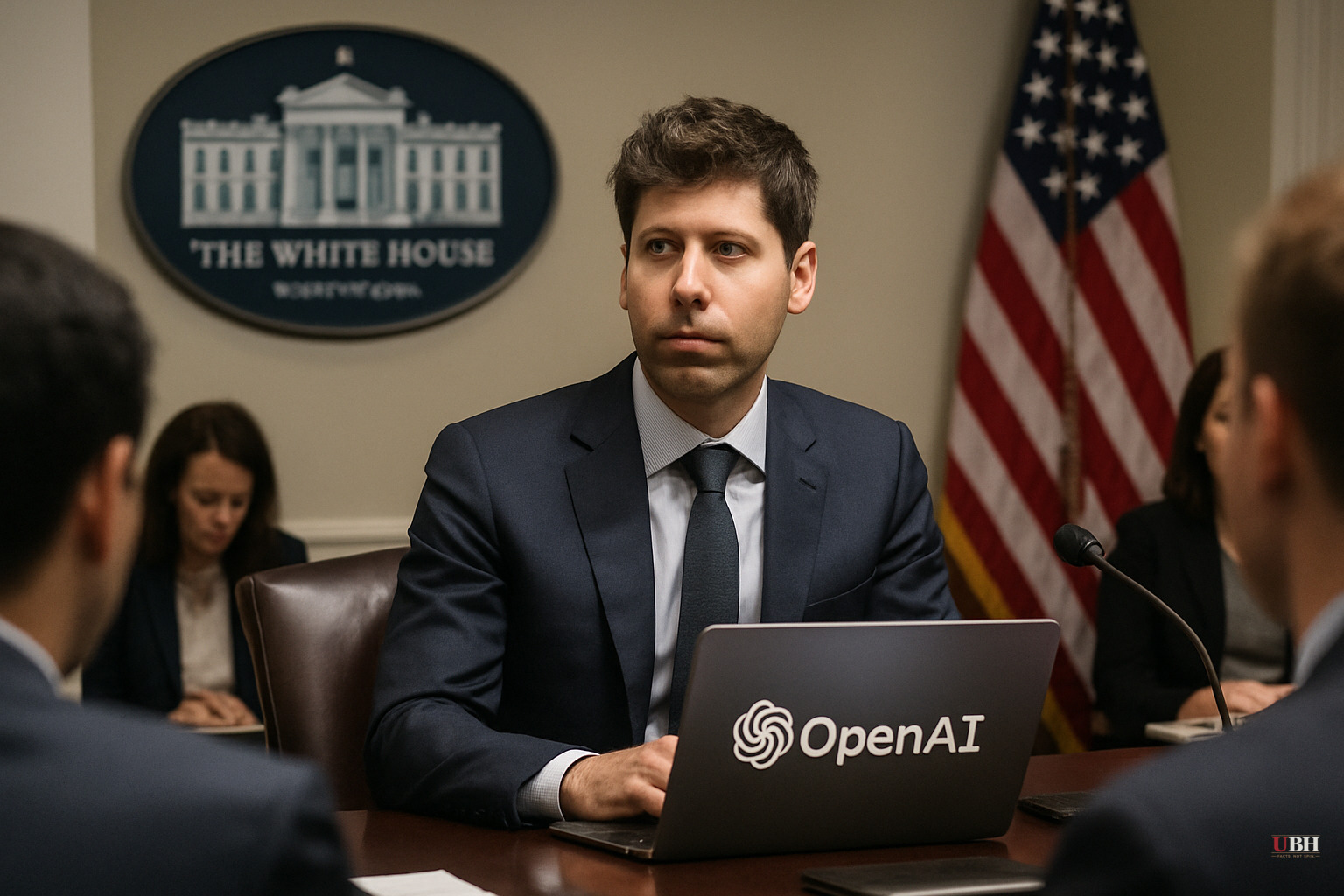
Sam Altman told OpenAI employees this week that GPT-5.6 will NOT go into general release immediately. According to reporting by The Verge and TechCrunch, both citing The Information, early access will go only to a small group of enterprise customers. The federal government will approve those customers one by one during the preview period.
The specific agencies that requested the limited rollout, according to TechCrunch, are the Office of the National Cyber Director and the Office of Science and Technology Policy. Startupfortune added a harder number, citing the Financial Times: roughly two dozen organizations are expected to receive early access, with screening involving the Treasury Department, Commerce Department, and the two White House tech and cyber offices.
Altman told staff that if the limited preview goes well, OpenAI hopes a broader general release would follow a "couple of weeks later," according to TechCrunch's account of the internal meeting.
The Security Argument Is Not Invented
The administration's concern centers on frontier cyber capabilities. Models like GPT-5.6, and Anthropic's Claude Mythos 5 before it, are reportedly capable of identifying and exploiting software vulnerabilities at speeds no human analyst could match. TechCrunch noted that LLMs have already proven capable of writing malware and, in some cases, executing ransomware attacks autonomously.
The Anthropic situation earlier this month is the direct backdrop here. According to The Verge and startupfortune, the administration forced restrictions on Anthropic's Fable 5 and Mythos 5 models after concerns that their cyber capabilities could be bypassed. Startupfortune, citing Semafor, reported that Chinese-linked actors may have gained access to Mythos, though the White House did not publicly confirm that claim. Anthropic disputed the government's characterization of the vulnerability as overstated, but took the models offline rather than fight the release through legal uncertainty.
OpenAI is getting a materially softer deal. Anthropic received what The Verge described as an ultimatum that also prohibited non-U.S.-citizen employees, including Anthropic's own staff, from accessing Mythos under an export control directive. OpenAI, by contrast, is working cooperatively with the government and retains the expectation of a general release on a defined timeline.
The Concern Worth Taking Seriously
Critics of this intervention have a legitimate point. The Trump administration spent months promising a "speed wins" approach to AI development, explicitly positioning the U.S. against slower, more restrictive European-style regulation. Government-controlled customer approval for a commercial product is not that. There is also an obvious competitive distortion: Google does not face the same checkpoint. Every week GPT-5.6 spends in a government-screened preview is a week competitors can sign the enterprise customers who can't wait on Washington's calendar.
A process where unnamed government officials decide who gets access to commercial software, with no public criteria and no defined appeals mechanism, is a meaningful constraint on a private company's operations. If the screening criteria are opaque or applied unevenly across companies, that is both a market fairness problem and a free-market problem.
What the Sources Leave Out
Startupfortune noted that OpenAI filed a confidential S-1 with the SEC on June 8, putting the company on a path toward a public offering. Startupfortune also reported, citing its own coverage, that OpenAI is considering waiting until 2027 before going public, with advisers pointing to shaky IPO conditions and the pressure of huge AI spending. That fact matters here: a company with an IPO pending cannot easily afford to be seen defying a federal request, but it also cannot afford to have its flagship model's release schedule treated as a policy lever. None of the three sources — The Verge, TechCrunch, or startupfortune — reported whether OpenAI's legal team pushed back on the request or simply accepted it.
TechCrunch framed this as the administration "pressuring" OpenAI, while The Verge used "reportedly asked," a softer read. The distinction matters: a request a company can decline is different from a directive it cannot, and the sources do not clearly establish which this was.
What Happens Next
The unresolved question is whether this model becomes the template. Trump signed an executive order in recent months directing certain AI companies to voluntarily submit new models to the government for testing before public release, according to TechCrunch. GPT-5.6 appears to be the first instance where that voluntary framework produced a visible constraint on a launch timeline. Whether the next major model release from OpenAI, Google, or Meta faces the same process, and whether the criteria for customer approval will ever be made public, has not been answered by any administration official on record.
Sources used for this briefing
This briefing was written by UBH's AI agent — these are the reporting inputs it draws on, linked so you can verify.


