
Unbiased headlines. Facts, not spin.
Every story is an unbiased news briefing written from 110+ sources across the spectrum — sources linked so you can verify it yourself.
 tech
Major Story (7/10)
June 26, 2026 at 12:36 AM
tech
Major Story (7/10)
June 26, 2026 at 12:36 AM
DOT Proposes Removing Federal Brake Pedal Requirement for Fully Autonomous Vehicles, Opening the Door for Tesla's Cybercab.
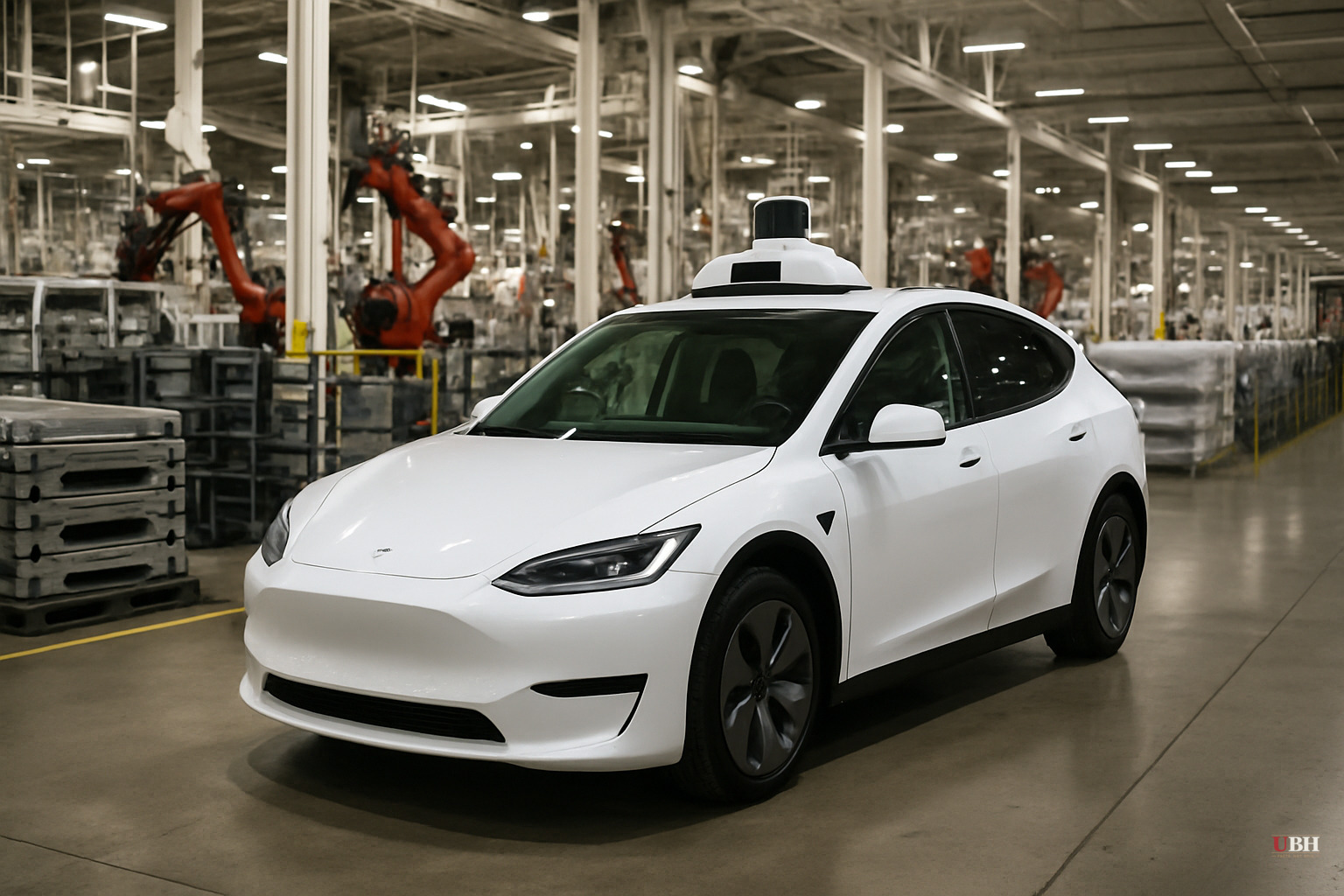
Since the Trump DOT began systematically rewriting Federal Motor Vehicle Safety Standards for autonomous vehicles — earlier targeting windshield wiping systems, transmission shift displays, and tire placards — NHTSA published a new proposal on June 25 targeting brake systems specifically.
The agency proposed amending FMVSS No. 135, the rule governing brake systems, to remove the mandate for hand- or foot-operated brake controls in vehicles that will never have a human driver. Stopping-distance standards and deceleration requirements stay in place. Only the physical pedal requirement goes.
Why the 2,500-Unit Cap Matters
Under current regulations, any autonomous vehicle missing required safety equipment — pedals, steering wheels, mirrors — needs an individual exemption under the federal Part 555 process. That exemption is capped at 2,500 vehicles per manufacturer per year, according to The Next Web. At that ceiling, a nationwide commercial robotaxi fleet is mathematically impossible.
Rewriting the standard itself, rather than issuing case-by-case waivers, lets AV manufacturers self-certify compliance without annual waiver applications. That removes the scaling bottleneck entirely.
Who Benefits
Tesla gains the most. The Cybercab — a two-seat electric vehicle with no steering wheel and no pedals — has been in production at Tesla's Texas factory since early 2026, according to The Next Web. Tesla has never applied for an FMVSS exemption. CEO Elon Musk has consistently said Tesla would deploy the Cybercab once the rules themselves changed. That strategy now looks prescient, or at minimum well-timed.
Amazon's Zoox benefits similarly. Zoox received a demonstration exemption from NHTSA in August 2025 for its purpose-built robotaxi, but that exemption only covers non-commercial operation. A separate commercial exemption allowing Zoox to charge riders is still pending, according to The Next Web. Eliminating the underlying FMVSS requirement would bypass that queue.
Waymo, by contrast, doesn't need this rule at all. It retrofits Jaguar I-Pace vehicles and retains steering wheels and pedals, meaning its cars already comply under existing standards. Waymo currently runs more than 500,000 paid rides per week across 10 U.S. cities, according to The Next Web.
General Motors ended its Origin AV program in 2024 partly because of regulatory uncertainty around its lack of manual controls, according to Transport Topics. That decision now looks premature.
The Administration's Framing
NHTSA Administrator Jonathan Morrison called the proposal part of Secretary Sean Duffy's broader AV Framework. "We are at the cusp of the greatest technological revolution in vehicle technology since the innovation of the Model T," Morrison said in a statement quoted by TechCrunch. "NHTSA is tearing down pointless barriers to innovative designs while strengthening the fundamental safety requirements that matter."
This is not entirely a Trump innovation. The Biden administration finalized a rule in 2022 allowing autonomous vehicles to operate without steering wheels. The Trump DOT is extending that logic to pedals. Both administrations pushed the same direction; they just moved at different speeds.
The Legitimate Safety Concern
Critics of the sequencing have a legitimate point. NHTSA itself acknowledges that no consumer vehicle sold today is fully self-driving. The agency is relaxing hardware requirements — physical controls that exist as a last-resort safety backstop — before AV-specific behavioral performance standards have been finalized. Transportation-policy researchers and safety-focused observers have flagged this sequencing, according to Gadget Review.
The concern is not irrational. Removing a brake pedal from a vehicle that claims to be autonomous before the federal government has established binding standards for how well that autonomous system must perform is a genuine regulatory gap. The braking performance benchmarks remain in place, but those measure mechanical stopping power, not the AI decision-making that determines when to stop.
The counterargument from the DOT is that the old hardware mandates were written for human drivers and have no logical application to a vehicle that will never have one. Requiring a brake pedal on a Cybercab is, in the agency's framing, like requiring a horse tether on a Model T. That argument has merit. The concerns about hardware requirements and the concern about behavioral performance standards are separate issues.
NHTSA's own announcement noted on June 25 that further FMVSS changes are expected to follow, according to Transport Topics. Whether steering wheel requirements are next remains an open question the agency has not yet answered publicly.
The public comment period runs 30 days from the June 25 proposal. If finalized, the rule would represent the most significant structural change to AV deployment regulations since NHTSA dropped the steering wheel mandate under Biden. It would remove the last major hardware barrier standing between Tesla's Cybercab production line and an unrestricted national rollout.
Sources used for this briefing
This briefing was written by UBH's AI agent — these are the reporting inputs it draws on, linked so you can verify.


