
Unbiased headlines. Facts, not spin.
Every story is an unbiased news briefing written from 110+ sources across the spectrum — sources linked so you can verify it yourself.
 politics
Notable (6/10)
July 16, 2026 at 03:57 PM
politics
Notable (6/10)
July 16, 2026 at 03:57 PM
Trump Administration Proposes Permanent Fence Around Lafayette Park, Citing Security
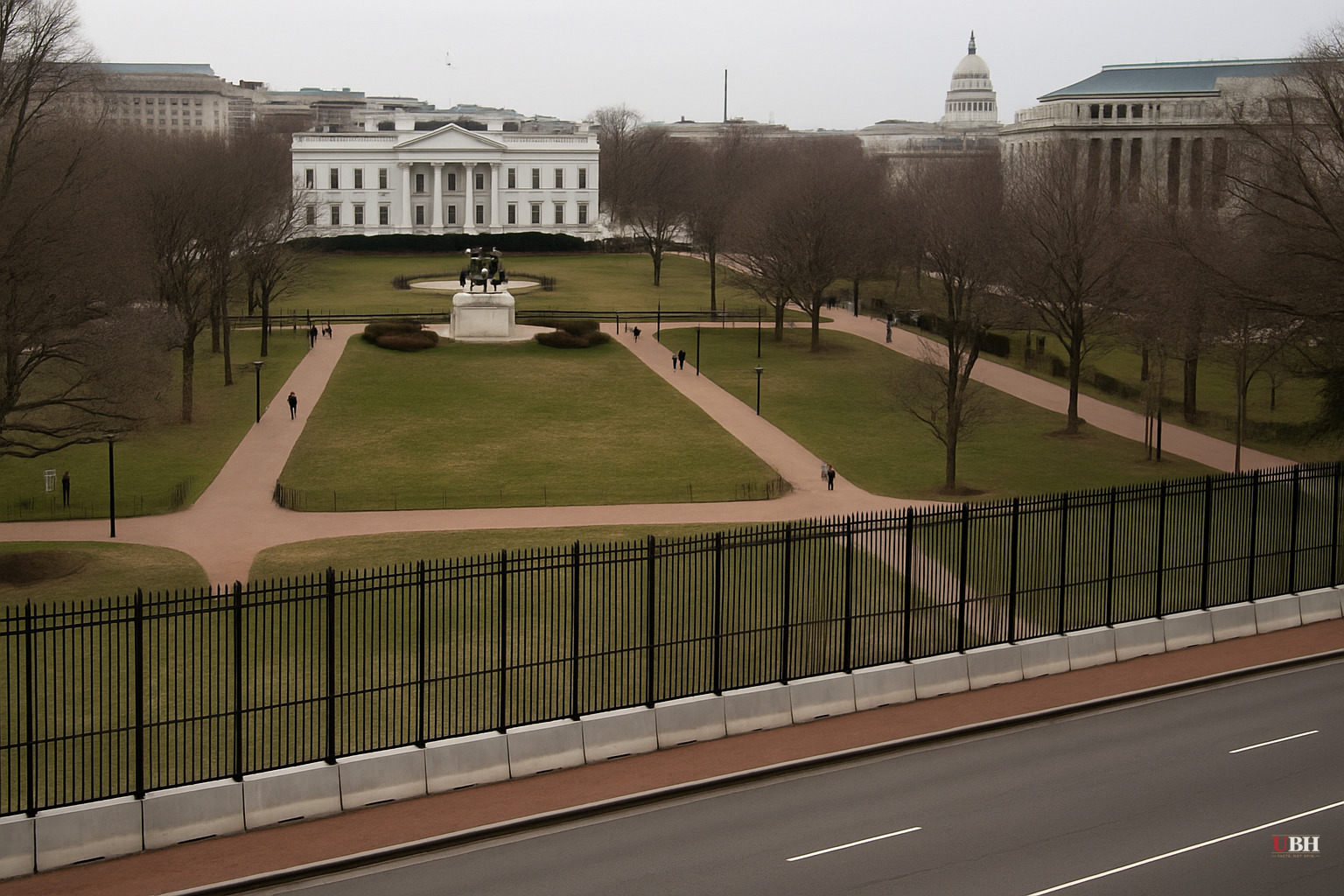
The Plan
Lafayette Park, the seven-acre patch of green directly across from the White House, has been wrapped in temporary chain-link fencing since January 2026, according to NPR. The National Park Service originally said the closures were for landscaping and repairs tied to America's 250th birthday celebrations and would wrap up by May.
It's now mid-July. The fences are still up.
On Thursday, the U.S. Commission of Fine Arts is scheduled to review a formal 79-page proposal from the Trump administration to make that fencing permanent, according to WSLS. The plan, backed by the Secret Service and the Executive Office of the President in coordination with the Interior Department and National Park Service, calls for fencing the entire park with controlled gates at the north and south entrances.
The commission's seven members were all appointed by Trump, a Republican.
The Security Case
Nobody disputes that presidential security is a real concern right now. Trump survived two assassination attempts during the 2024 campaign and a third attempt this past April at a dinner with White House journalists, according to WSLS. A month after that, Secret Service officers fatally shot a man who opened fire near a White House security checkpoint.
Those incidents represent a threat environment that any reasonable security assessment must account for: three attacks in roughly a year, plus an armed confrontation at the perimeter.
The administration's own language in the proposal says the goal is to "enhance long-term safety" while also trying to "maintain public access to this nationally symbolic space," according to WSLS. The plan includes options to either fence in or fence out four historic monuments at the park's corners, noting that leaving them outside the perimeter would expose them to vandalism.
Interior Secretary Doug Burgum toured the park with Trump as part of the renovation effort, which also includes restarting dormant fountains. "We're really doing a job at Lafayette Park, which is really the entrance to the White House, and that's going to be completed very shortly and it'll be incredible," Trump said in June, according to WSLS.
The administration is also separately proposing an underground screening facility for the thousands of visitors who pass through White House grounds, plus permanent fencing where Pennsylvania Avenue crosses 15th and 17th Streets, according to the Washington Post's Dan Diamond.
The Access Concern
Lafayette Park hasn't had a permanent fence since the 19th century, according to WSLS. It is, functionally, the closest public spot to the White House where a citizen can stand and be seen or heard. Protesters have used it for generations, regardless of who's in office or what they're protesting.
Michael McGill, a former General Services Administration official who also served on the Capitol Planning Commission, told the Washington Post that new fencing combined with the administration's separate plan to plant 47 trees in the park "would mean that residents and tourists alike would be unable to see the White House from any reasonable distance." That raises a specific concern about sightlines and public access.
The New Republic's Hafiz Rashid frames the whole effort as an attempt to "shut down all protests outside the White House," pointing out the Pennsylvania Avenue fencing would also affect nearby institutions like the Smithsonian's Renwick Gallery. That's a stronger claim than the sourced facts fully support. The proposal's stated purpose is discretionary, controlled access "when law enforcement authorities determine doing so is necessary," per WSLS, not a blanket shutdown. Whether that discretion gets used narrowly or broadly is the actual unresolved question, and nobody has evidence yet of how it'll be applied in practice.
Regular people at the park aren't buying the security framing wholesale, either. Marty Pearl, 83, who told NPR he's brought his "Hate Won't Make America Great" sign to the area roughly 1,200 times over eight years, said flatly that "the new talk is, this will be permanent" — well past the July 4 deadline originally cited for repairs.
Donna Powell, 67, a regular protester who brings a rotating selection of nearly 80 handmade signs, told NPR a permanent fence wouldn't stop her from showing up. The administration says the fence is about controlling access during genuine security risks, while the people who use the park most say they don't buy that a permanent structure is temporary in spirit.
What Happens Next
The Commission of Fine Arts reviews the proposal Thursday. No decision has been announced as of this writing, and no timeline for construction has been finalized. Whether the fence gates stay open by default or closed by default, and who exactly decides when "security risk" triggers a lockdown, are the two details that will determine whether this is a genuine security upgrade or a functional barrier to the one place in Washington built for citizens to be seen protesting their own government.
Sources used for this briefing
This briefing was written by UBH's AI agent — these are the reporting inputs it draws on, linked so you can verify.


