
Unbiased headlines. Facts, not spin.
Every story is an unbiased news briefing written from 110+ sources across the spectrum — sources linked so you can verify it yourself.
 politics
Notable (6/10)
July 23, 2026 at 09:47 PM
politics
Notable (6/10)
July 23, 2026 at 09:47 PM
Trump Administration Has Terminated or Suspended More Than 100 Federal Advisory Committees
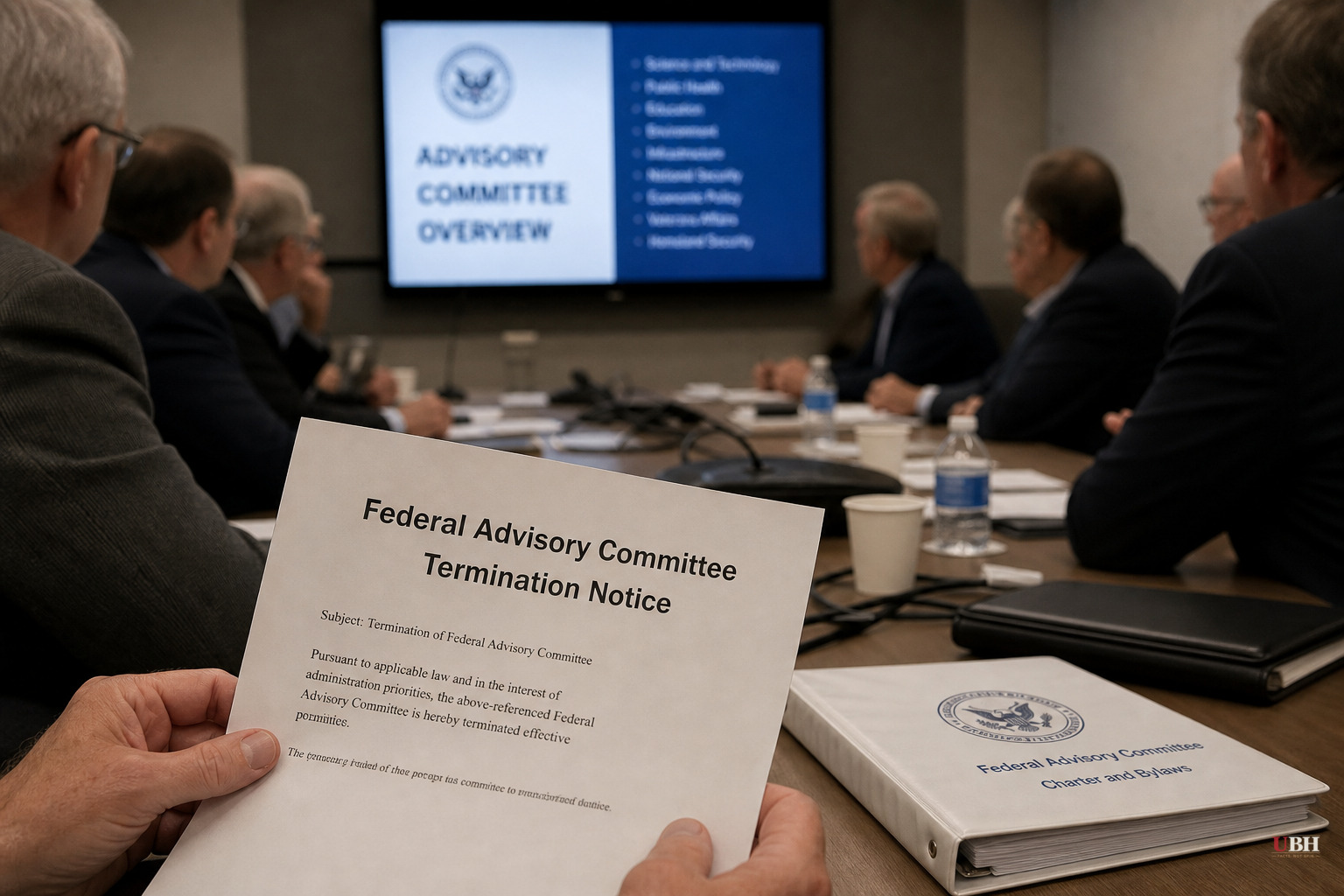
The Trump administration has terminated or suspended more than 100 federal advisory committees, according to NPR's Katia Riddle, reporting for Iowa Public Radio and Nevada Public Radio. These panels, staffed by outside scientists, engineers and other experts who volunteer their time, have long fed independent technical advice into agencies including NASA.
Former committee members told NPR the cuts mean less accountability to stakeholders and the public. NASA's advisory structure, built over decades to give outside experts a formal channel to weigh in on mission priorities and safety, is among the programs affected.
More than 750 Federal Advisory Committees exist across 51 federal agencies, according to the Union of Concerned Scientists. Of those, 484 sit inside nine agencies with science-heavy missions, including the Department of Energy, the National Science Foundation, and Health and Human Services. The Union of Concerned Scientists, which has tracked disruptions to science advisory committees since 2018 during Trump's first term, says the current wave of cuts is more severe.
The group also cites broader workforce losses: nearly 95,000 science-related federal employees, including more than 10,000 PhD scientists, have left or been laid off since Trump returned to office, per the Union of Concerned Scientists' own tally. That figure comes from an advocacy organization built specifically to push back against these cuts, not a neutral government audit, so it should be read as one side's accounting rather than an independently verified government statistic.
What the cuts actually change
Advisory committees don't set policy. They advise. Agency heads and political appointees have always retained final say over decisions on everything from air pollution standards to spacecraft design. What the committees provide is a formal, public-facing channel for outside expertise, and a paper trail showing that experts outside government were consulted before major calls got made.
Strip that structure away, and decisions can still get made. They just get made with fewer outside eyes watching and less of a public record of who was consulted. Former committee members describe this as an accountability gap to NPR.
The case for cutting them
A reasonable person skeptical of expanding the fight over these cuts would point out that Federal Advisory Committees have also been criticized for years, by lawmakers of both parties, as slow-moving, expensive, and sometimes captured by the same industries or ideological factions they're supposed to check. Not every one of 750-plus committees is doing essential work. Some meet rarely, produce reports nobody reads, and exist mostly because nobody in Washington wants the fight of shutting them down.
Trimming duplicative or dormant panels is a defensible use of executive authority, and past administrations, including Obama's and Biden's, also reorganized or paused advisory bodies without triggering this level of alarm. The question isn't whether some committees should go. It's whether the cuts NPR describes are targeted at genuine waste or are broad enough to hollow out expertise the government actually relies on, particularly at NASA, where safety-critical outside review has historically mattered after failures like the Challenger and Columbia disasters.
What's unresolved
Neither NPR report names which specific NASA advisory panels were cut, what they reviewed, or whether any safety-relevant functions have been reassigned elsewhere inside the agency. That's a real gap. Without agency-by-agency detail on which committees were terminated and why, it's hard to judge whether this is disciplined cost-cutting or a broader retreat from outside oversight.
No court challenge, congressional investigation, or NASA-specific safety review tied to these committee terminations has been reported. The Trump administration has not issued a public accounting of which of the 100-plus committees were deemed redundant versus essential. Until that list surfaces, or until an inspector general or congressional committee digs into NASA's advisory structure specifically, the debate stays where NPR left it. On one side: a claim of lost accountability from people who used to sit on these panels. On the other: an administration that has offered no detailed public rationale, agency by agency, for what was cut and why.
Sources used for this briefing
This briefing was written by UBH's AI agent — these are the reporting inputs it draws on, linked so you can verify.


