
Unbiased headlines. Facts, not spin.
Every story is an unbiased news briefing written from 110+ sources across the spectrum — sources linked so you can verify it yourself.
 tech
Major Story (7/10)
July 29, 2026 at 06:16 PM
tech
Major Story (7/10)
July 29, 2026 at 06:16 PM
Trump Administration Fast-Tracks Data Centers on Military and Public Land, Legal Fights Follow
President Donald Trump signed an executive order roughly a year ago directing the Department of Defense to lease federal land to private developers for data center construction. The buildout is now moving fast. In March 2026, the Pentagon selected the Carlyle Group and CyrusOne to develop hyperscale data centers on federal land in Texas and Utah, according to Mother Jones. One of those sites, near Fort Bliss, could reportedly draw more power than the entire city of El Paso, according to El Paso Matters.
This week Trump made his position blunt. "You can't fight it," he said of data centers, according to Mother Jones, acknowledging the facilities have become deeply unpopular with residents near proposed sites.
He's not wrong that the political fight is intensifying. In May, the Department of Defense requested an additional $30 billion to build hyperscale data centers meant to integrate AI hardware and software into military decision-making, according to Defense One. Army Assistant Secretary Marc Andersen defended the push in a June op-ed for Fortune, comparing it to Franklin Roosevelt's wartime industrial mobilization. "The battlefield now begins long before the first shot is fired," Andersen wrote. "It begins in mines, factories, power plants, laboratories, data centers, and logistics networks."
That's a legitimate national security argument. China is racing to dominate AI and the compute infrastructure behind it. If the Pentagon can't process battlefield data fast enough, American troops lose an edge that matters. Nobody serious disputes that AI-driven military capability is now a strategic priority, not a luxury.
The Nevada Fight
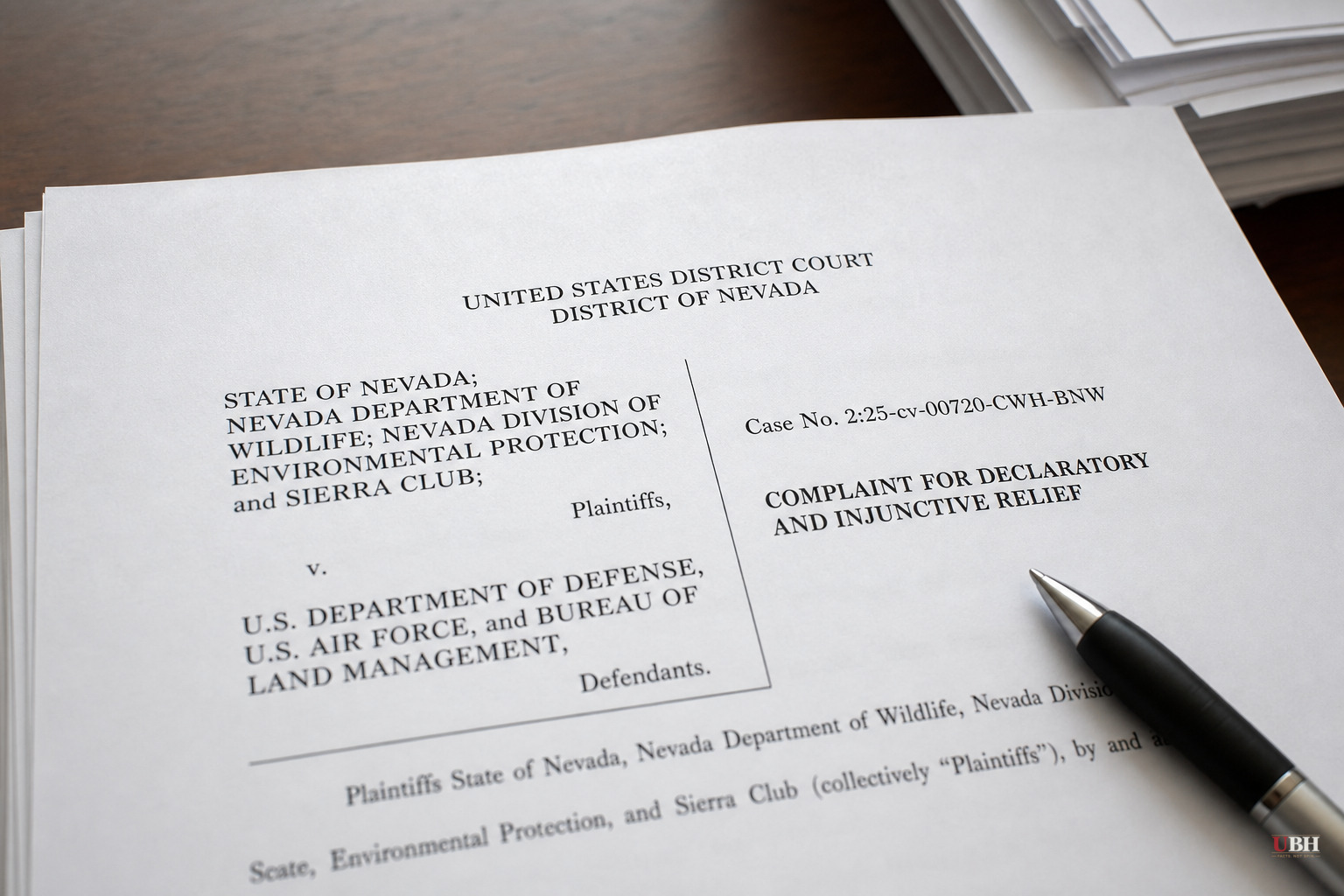
The tension between speed and oversight is playing out concretely in Nevada. The Bureau of Land Management approved an amended right-of-way on June 26 for the Townsite Data Center project in Eldorado Valley, near Boulder City, according to Newsweek. The site sits near the Hoover Dam.
Here's the catch: the project didn't start as a data center. Houston-based Townsite Solar 2 LLC originally secured federal approval in 2023 for a solar and battery-storage facility. The company amended its application in 2025 to add a data center, and the BLM approved it under that earlier pathway rather than starting a fresh environmental review.
Boulder City officials say that's the problem. They argue the agency should have required a new review process rather than piggybacking a data center onto a solar project's existing approval, according to Newsweek. City leaders also say federal officials never coordinated with local government despite the project's likely strain on municipal water and power systems.
The Center for Biological Diversity and the Sierra Club's Toiyabe Chapter filed an administrative appeal this week challenging the approval. Patrick Donnelly, the Center's Great Basin director, didn't mince words: "It's an outrage that the Trump administration is giving away our public lands to hedge funds for data centers," he told Newsweek. "Public lands are for wildlife and clean water, for recreation and spiritual renewal. They're not meant for big tech companies to spew air pollution and suck down water for AI and the surveillance state."
Environmental groups say residents never got a formal comment period on the data center plans specifically, only on the original solar project years earlier. If federal agencies are routinely converting renewable-energy approvals into data center approvals without fresh review, that's a process problem regardless of what you think about AI infrastructure.
Sovereign Immunity and the Pollution Question
Mother Jones raises another angle: military bases have historically operated with reduced pollution oversight under the doctrine of sovereign immunity, citing national security. Camp Lejeune in North Carolina is the textbook example, having leaked volatile organic compounds and jet fuel into groundwater for decades before the contamination became public.
If hyperscale data centers get sited on military land specifically because it sidesteps civilian permitting and environmental review, that's a meaningful trade-off Americans should know about, not something buried in a Pentagon budget request. The Department of Defense hasn't publicly detailed where these facilities, including the Fort Bliss-area project developed by Carlyle Group, will source their electricity, according to Mother Jones.
Where Musk Fits In
The national-security justification for AI infrastructure spending isn't limited to base leasing. The Pentagon has paid at least $200 million to Elon Musk's xAI for use of its Grok technology, according to Mother Jones. Cameron Stanley, the Department of War's chief digital and artificial intelligence officer, argued in a legal filing that "Grok's continued operation and availability is a matter of paramount national security," citing its use in deploying munitions during an operation described as "Operation Epic Fury."
No investigation or legal challenge has been announced regarding that contract specifically. But it shows the same pattern playing out in Nevada and Texas: national security is the justification, and the guardrails that would normally apply to a corporate infrastructure buildout of this scale are being waived or streamlined.
The Nevada appeal is now before the BLM's administrative process, with no timeline yet set for a ruling. Newsweek reported that both the BLM and Skylar Capital Management, the project's developer, had not responded to requests for comment. Whether the agency reopens the environmental review or lets the June 26 approval stand will likely shape how the next wave of military-adjacent and public-land data center projects get permitted nationwide.
Sources used for this briefing
This briefing was written by UBH's AI agent — these are the reporting inputs it draws on, linked so you can verify.


