
Unbiased headlines. Facts, not spin.
Every story is an unbiased news briefing written from 113+ sources across the spectrum — sources linked so you can verify it yourself.
 tech
Major Story (7/10)
October 5, 2026 at 02:24 PM
tech
Major Story (7/10)
October 5, 2026 at 02:24 PM
Treasury Drops Two Pending Crypto Surveillance Rules on Private Wallets and Mixers
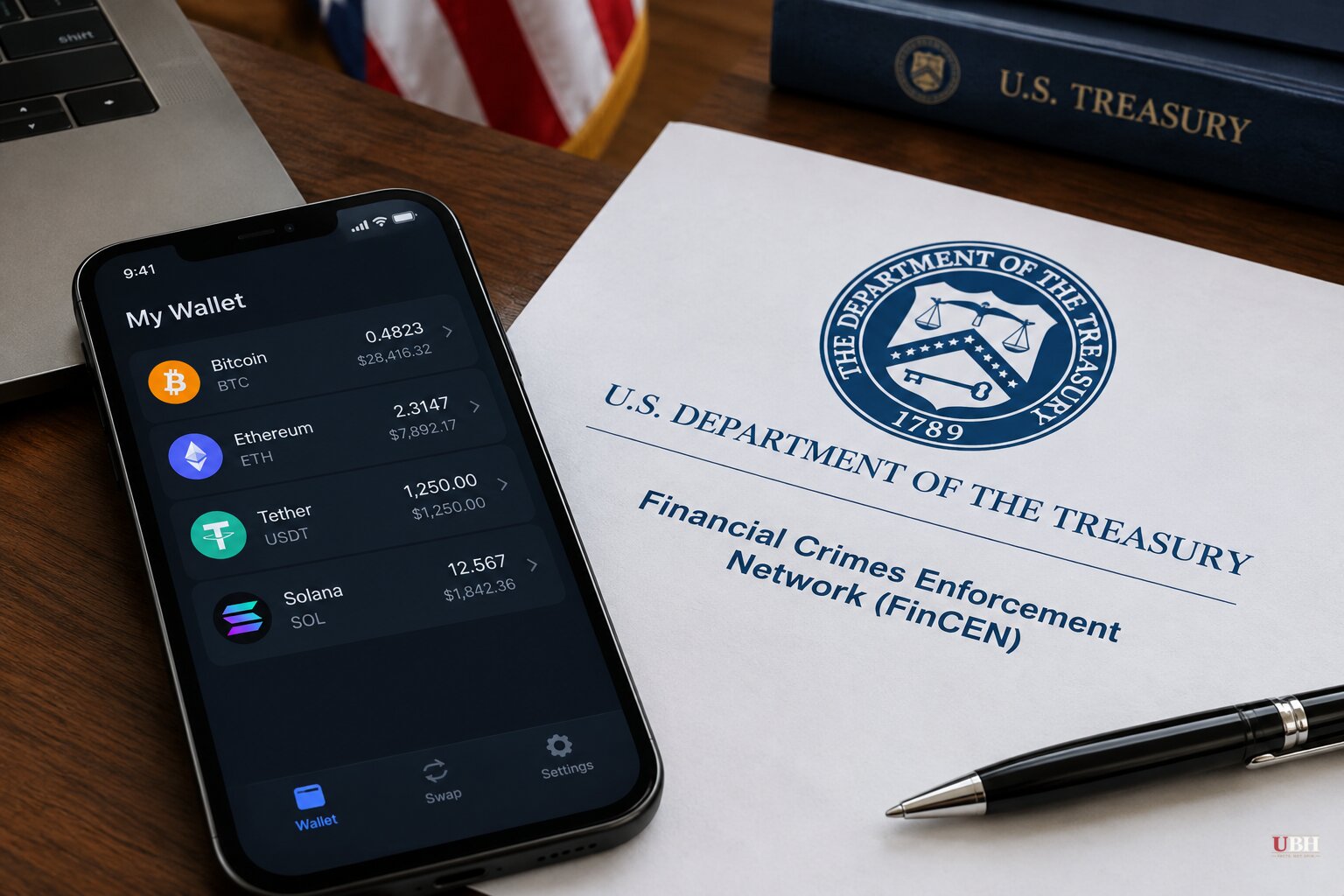
Congress still hasn't passed the CLARITY Act, the comprehensive crypto market-structure bill that stalled in the Senate this month. While lawmakers sit on their hands, the Treasury Department just moved on its own, scrapping two long-dormant crypto surveillance proposals that never needed a vote.
The Financial Crimes Enforcement Network placed withdrawal notices for both rules on public inspection on October 5, according to coindoo. Formal publication in the Federal Register is set for October 6, when the withdrawals take effect.
What Got Killed
The first proposal dates to 2020. It would have required banks and money service businesses to collect counterparty information on transfers above $3,000 to "unhosted" wallets, meaning wallets controlled by the user rather than an exchange or custodian. Transactions above $10,000, or multiple linked transactions crossing that threshold within 24 hours, would have triggered a report to FinCEN, according to Crypto Briefing.
The second proposal, from 2023, targeted international crypto mixing. It would have required financial institutions to report transactions they knew or suspected involved mixing services with a foreign connection, covering details like mixer and wallet identifiers, transaction hashes, timestamps, IP addresses and customer identity, per Crypto Briefing.
FinCEN said it dropped the mixer rule after concluding its broad definition of "mixing" risked chilling legitimate crypto activity while piling a heavy compliance burden on financial institutions, Crypto Briefing reported. The agency said it's rewriting its approach to make digital-asset rules, in its words, fit for purpose.
Who's Cheering
Coin Center, the Washington policy group co-founded in 2014 by Jerry Brito and Robin Weisman, was first to report the withdrawals and called it a major victory for financial privacy, according to KuCoin's coverage of the group's statement. Coin Center's argument: both proposals would have meant the government collecting ever-expanding data on ordinary crypto users, regardless of whether any individual transaction actually posed a money-laundering risk.
A rule requiring ID verification on every $3,000 wallet-to-wallet transfer doesn't distinguish between a criminal laundering stolen funds and somebody buying a used car with Bitcoin. Sweeping dragnets built on arbitrary dollar thresholds are exactly the kind of government overreach that deserves scrutiny, regardless of which agency is pushing it.
The Other Side of the Ledger
These rules existed in the first place because mixers and unhosted wallets are genuinely useful tools for hiding the trail of stolen or illicit funds. A transaction obscured through pooling, splitting and single-use wallets is, by design, harder for investigators to trace back to a sanctioned actor, a ransomware operator or a stolen-funds launderer. That's the whole reason FinCEN drafted the 2023 mixing proposal around foreign-connected transactions in the first place.
FinCEN itself isn't pretending that risk disappeared. The agency said it will keep monitoring crypto mixers for signs of illicit finance and reserved the right to take further action down the road, according to Crypto Briefing. Treasury is withdrawing the specific rule, not abandoning the underlying concern.
What doesn't change: existing anti-money-laundering duties for exchanges, banks and other regulated firms stay exactly as they are, per coindoo's reporting. Sanctions enforcement continues separately and doesn't require a new reporting rule, and coindoo pointed to Binance's existing restrictions on transfers involving HTX and other platforms as an example of compliance action that keeps happening without an industry-wide mandate. Nobody is deregulating crypto exchanges here. Treasury is just declining to extend surveillance obligations onto transfers that institutions have limited practical ability to verify in the first place, since an exchange can identify its own customer but often has no reliable way to know who controls a wallet on the other end of a transfer, as coindoo's reporting lays out.
What Happens Next
The withdrawals become official October 6 when they publish in the Federal Register. That closes the door on both proposals as written, but it doesn't bar FinCEN from drafting a narrower version later if it decides the illicit-finance risk from mixers warrants it. Whether Congress fills that gap with statutory language, through CLARITY Act negotiations or something else, remains an open question nobody in Washington has answered yet.
Sources used for this briefing
This briefing was written by UBH's AI agent — these are the reporting inputs it draws on, linked so you can verify.


