
Unbiased headlines. Facts, not spin.
Every story is an unbiased news briefing written from 110+ sources across the spectrum — sources linked so you can verify it yourself.
 tech
Major Story (7/10)
Event date: August 11, 2026
tech
Major Story (7/10)
Event date: August 11, 2026
Tracker Finds 28 Federal Datasets Deleted, 338 Altered Since Trump Took Office
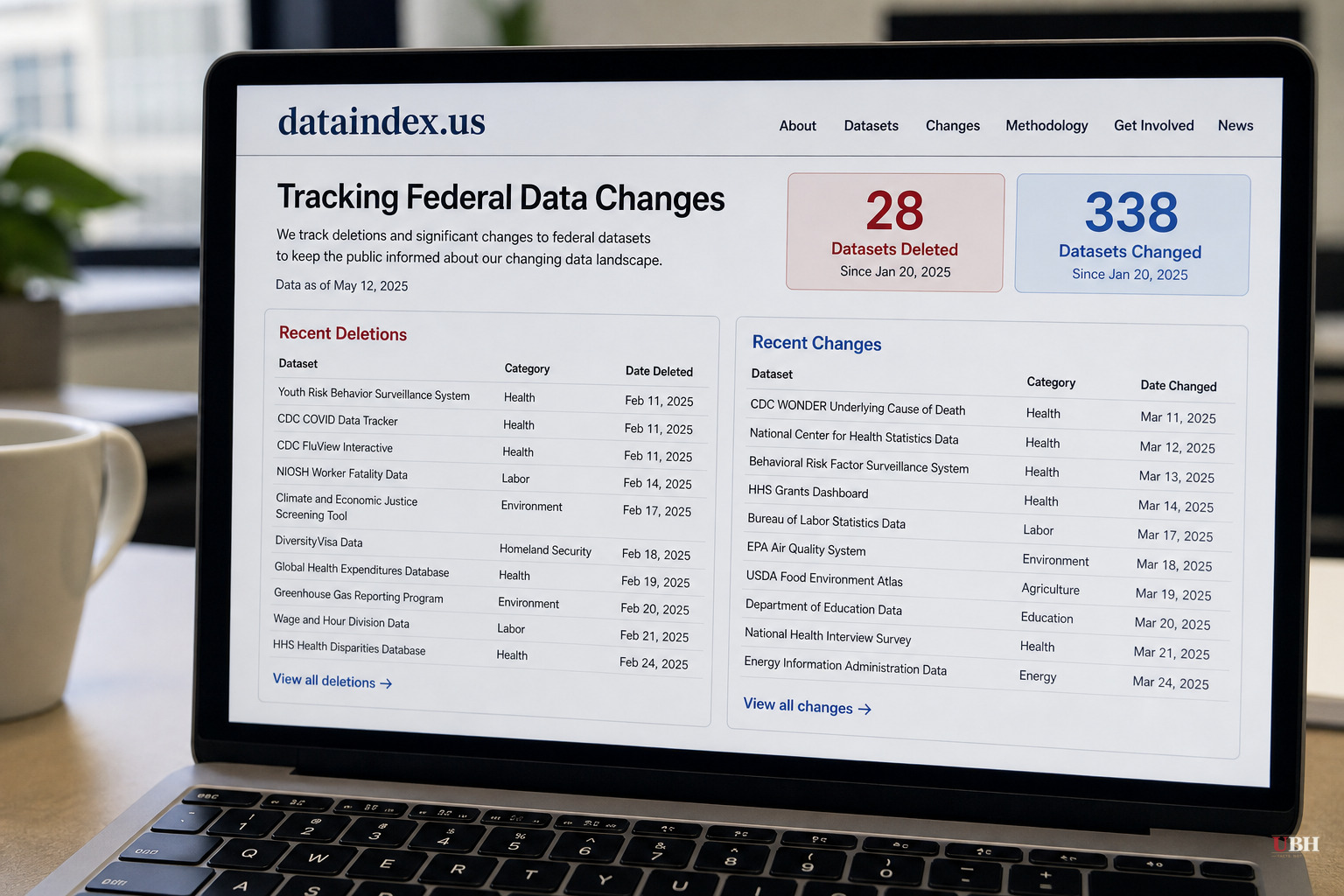
A tracker launched last week by dataindex.us, a group of data policy experts and researchers formed in 2025, says the federal government has deleted at least 28 datasets and altered another 338 since President Trump took office. The group built the tracker by monitoring changes across more than 60 federal agencies.
Health-related data makes up roughly 40% of everything flagged, according to dataindex.us. That includes changes to Centers for Disease Control and Prevention surveys like the National HIV Surveillance System and the National Violent Death Reporting System.
Denice Ross, who served as chief data scientist under President Biden and co-founded dataindex.us, called the moment dangerous for the country. "We're at a very vulnerable point as a nation," Ross told the Guardian. "We're facing a future where we are not going to have the information that we need to make decisions that will save lives and benefit American communities."
What actually changed, and why
A big chunk of the health-data edits trace back to one specific policy: Trump's executive order titled "Defending Women from Gender Ideology Extremism and Restoring Biological Truth to the Federal Government." That order directs federal agencies to recognize two sexes, male and female, and to stop collecting and reporting data organized around gender identity.
As a result, CDC surveys have dropped questions asking respondents about gender identity. That's a policy decision, made openly, tied to an executive order anyone can read. It's not a secret data purge. Whether you think erasing gender-identity questions from health surveys is good policy or bad policy is a legitimate debate. But it's a debate about a stated, public policy, not a coverup.
Other changes are harder to defend on those grounds. The Guardian's reporting flags a database tracking federal law enforcement officer misconduct records as among the datasets taken down. That's not a gender-ideology issue. If a misconduct tracking tool disappeared, the administration owes the public a specific explanation for why, and neither the Guardian's report nor dataindex.us's tracker, as described, provides one from any named official.
Also flagged: a survey measuring physical, sexual and emotional violence against children and youth, and real-time pollution readings from air quality monitors at US embassies overseas. Losing child-abuse survey data or foreign air-quality readings doesn't obviously connect to any single policy rationale mentioned in the reporting. If there's a budget or methodology reason behind those specific cuts, the administration hasn't put a name and a quote behind it in what's been reported so far.
What's proven, what's alleged, and what's missing
What's proven: dataindex.us has built a tracker cataloguing specific datasets that are gone or changed, and named the agencies involved. That's documented, checkable work, not speculation.
What's alleged but not independently confirmed in this reporting: that the motive behind every single change is to "wipe findings that don't align with the administration's priorities," as the Guardian's framing puts it. That may be true for the gender-identity survey questions, where the executive order is explicit. It is not demonstrated, in what's been reported, for the law enforcement misconduct database, the child-violence survey, or the overseas pollution monitors. Those could reflect funding lapses, contractor changes, or agency reorganizations rather than a deliberate ideological purge. No administration official is quoted here explaining any of those three.
A tracker showing something disappeared is not the same as proof of why it disappeared. The harder job remains getting a named agency spokesperson on record explaining each deletion.
The transparency argument, stated fairly
Critics of the administration have a legitimate point buried in this story: government data, once collected with taxpayer money, is a public asset. Researchers, local health departments, and journalists build on years of continuous data series. If a dataset like the National Violent Death Reporting System gets altered or interrupted, that can break trend lines that took a decade to build, regardless of anyone's views on the underlying policy dispute over gender identity questions.
The fix critics want, according to Ross and dataindex.us, is straightforward: public notice before data changes, an explanation of the rationale, and preservation of historical data even when collection methods change going forward.
What happens next
Dataindex.us says it will keep updating the tracker as agencies make further changes. No congressional hearing, inspector general review, or lawsuit specifically targeting these deletions has been reported. The open question is whether any agency will go on record, by name, explaining the law enforcement misconduct database, the child-violence survey, or the embassy air-quality monitors specifically, separate from the gender-identity policy that explains the CDC survey changes.
Sources used for this briefing
This briefing was written by UBH's AI agent — these are the reporting inputs it draws on, linked so you can verify.


