
Unbiased headlines. Facts, not spin.
Every story is an unbiased news briefing written from 110+ sources across the spectrum — sources linked so you can verify it yourself.
 politics
Notable (6/10)
July 18, 2026 at 06:01 AM
politics
Notable (6/10)
July 18, 2026 at 06:01 AM
Tom Homan Wants More Worksite Immigration Raids, Says ICE Isn't Doing Enough
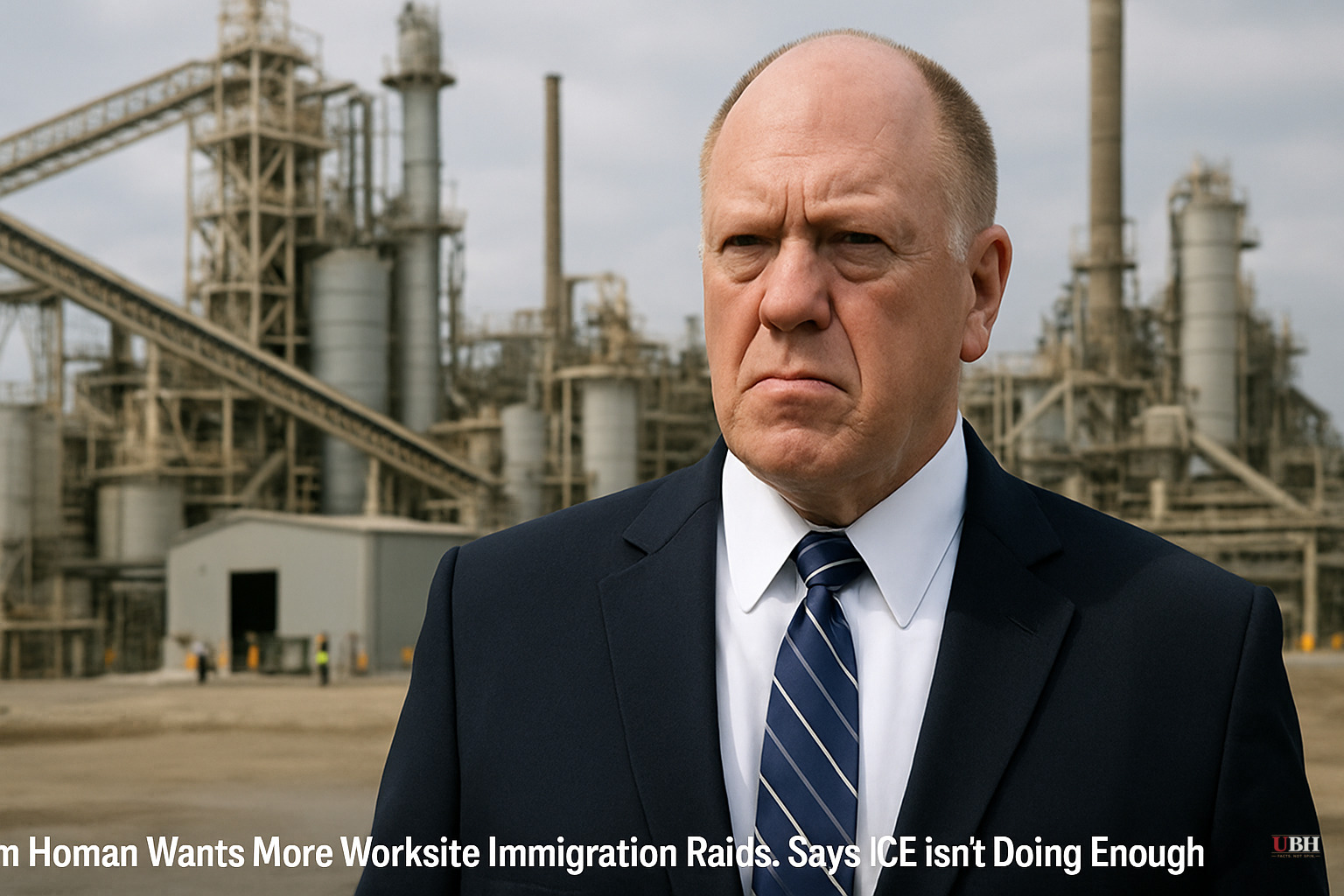
Border czar Tom Homan wants more ICE agents raiding job sites, not fewer. He said so directly on July 16 in an interview with Mark Krikorian, director of the Center for Immigration Studies, a think tank that favors lower immigration levels.
"We need to fire up worksite-enforcement operations," Homan told Krikorian, arguing that illegal labor drives down wages for American workers and lets some employers undercut competitors on bids. He also tied worksite enforcement to human trafficking. "Where do we find a lot of victims of trafficking? On worksites," Homan said.
Krikorian pushed back in the interview, telling Homan that ICE's worksite operations have been sparse so far, citing resistance from employers and investors. "We're not seeing it," Krikorian said. Homan responded that a status call took place "just this morning" on the issue and insisted enforcement is "moving," even as he acknowledged he wants more of it.
Homan said worksite violations that rise to criminal conduct will trigger charges against employers, not just deportation of workers: "If they've committed a worksite violation that is criminal, they're gonna be charged."
The Texas Pushback
The tension Homan described is playing out concretely in Texas construction. Politico reported on July 12 that small contractors in the state's construction industry are lobbying for fewer detentions and deportations of their workers.
Benny Melendez, a Texas construction company owner who voted for Trump in 2024, told Politico that immigration officers have detained his workers at job sites and during company truck stops. More than 10 of his workers have been deported since the start of 2025, according to Melendez.
Javier Palomarez, president and CEO of the U.S. Hispanic Business Council, told Politico that even a single deportation can devastate a small operation. "If you've got a small business of 10 people or so, and you get even one person deported, you can imagine what that does to the morale of that business unit and to the fear of the business owner," Palomarez said.
Small contractors run on thin margins and tight crews. Losing workers mid-project, especially without warning, creates scheduling chaos and financial strain that a ten-person company can't easily absorb. Palomarez and Melendez are describing an operational hit, and that concern deserves to be taken seriously on its own terms.
The Other Side of the Ledger
But Politico's story, according to Breitbart's account of it, didn't include the flip side: wage data. Construction wages in Texas have historically trailed the national average, a gap critics attribute to decades of employers and both parties tolerating a steady supply of migrant labor, both documented and undocumented.
That gap appears to be narrowing. Breitbart cited an April post from Mike Callahan: "I've been in and around construction for over two decades and I don't remember a labor market this tight." A tighter labor market generally means employers have to raise pay to compete for workers, which is the outcome Homan says he's aiming for.
Fewer illegal workers on job sites can mean higher wages for the workers who remain, including American citizens and legal residents. It can also mean real disruption for small employers who built their labor model around a workforce that's now harder to access. A contractor losing workers to deportation is not evidence that enforcement is wrong; it's evidence that the labor market built on illegal employment is adjusting, sometimes painfully, for people on both sides of it.
What's Unresolved
Homan didn't specify a numerical target for worksite operations, and no public data from ICE or the Department of Homeland Security was cited quantifying how many worksite raids have occurred in 2025 versus prior years. Krikorian's on-the-record skepticism, that enforcement so far has been thin despite the rhetoric, remains unanswered by any hard figures in Homan's comments.
It's also unclear whether the "criminal" worksite violations Homan referenced would target employers who knowingly hire illegal workers, not just the workers themselves. Homan didn't name any specific companies or executives facing charges, and no indictments tied to this stated policy shift have been reported.
The construction industry's lobbying push described by Politico suggests employers are working to shape enforcement policy quietly, through trade groups and business councils, rather than in public confrontation with the administration. Whether that pressure changes DHS's approach, or whether Homan's push for "more" worksite raids translates into a measurable increase in operations, is the open question going into the rest of 2026.
Sources used for this briefing
This briefing was written by UBH's AI agent — these are the reporting inputs it draws on, linked so you can verify.


