
Unbiased headlines. Facts, not spin.
Unbiased Headlines is an independently owned news organization. We bring you the facts, not opinions, written fresh from 110+ named sources. Sources linked so you can verify it yourself.
 tech
Notable (5/10)
TikTok Adds Must Eat Restaurant Guide, While Peer-to-Peer Payments Remain in Development
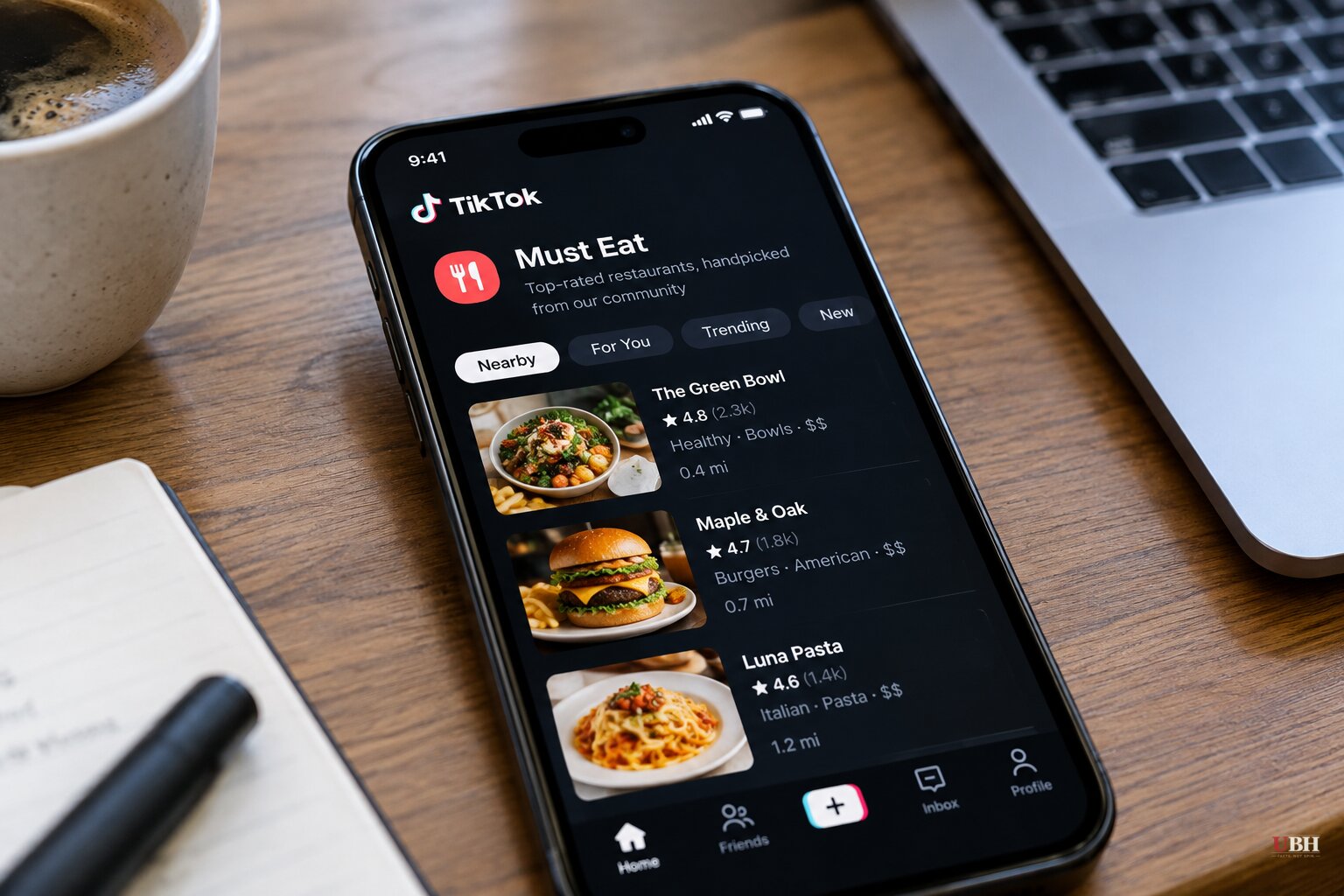
TikTok announced this week that it is adding Must Eat, an in-app restaurant guide. It is the latest in a string of features that push the app well past short video.
The guide draws on more than 40 million posts and comments to build restaurant recommendations and curated lists. Users can browse by city and narrow results by cuisine, price, rating and location.
That puts TikTok in more direct competition with Yelp and Google Maps. Viral videos have already been sending diners to local restaurants. Now the company wants to own the discovery step too.
Payments are the bigger swing
Bloomberg reported in August that TikTok is developing a feature that would let users send each other money through direct messages. If it ships, it would run on TikTok Pay, which is currently available in Southeast Asia for TikTok Shop purchases.
Reuters reported in March that TikTok had applied to Brazil's central bank for approval to operate as a financial technology company offering lending and payment services.
Neither feature is a general service for all users. TikTok has not announced a launch date for message-based transfers, and the outcome of the Brazil application has not been made public in the material on record.
Moving money is a different business from serving videos. It brings licensing, regulators and fraud liability, and the Brazil filing shows TikTok knows it needs a central bank's sign-off to play there.
The expansion so far
The restaurant guide follows a run of launches this year:
- TikTok GO: launched in the United States in May. Users can discover hotels, attractions and experiences, check availability and complete a booking inside the app.
- World Cup hub: launched in early June with scores, schedules, standings, trending videos and highlights. It uses TikTok GamePlan, a sports product for teams, leagues and broadcasters. TikTok also has partnerships with Major League Soccer and Major League Baseball.
- Other additions: local discovery and search tools, games, more detailed pages for places and restaurants, an in-app Minis section, and a standalone app for scripted microdramas. A feature also lets Apple Music subscribers play full songs in TikTok after finding them in their For You feed.
All of it comes after TikTok moved to new, primarily U.S. ownership in January.
TikTok Shop is the proof of concept
Commerce is where the strategy has worked best. TikTok began testing TikTok Shop in 2021 and launched it in the United States in 2023.
According to eMarketer, U.S. TikTok Shop sales grew 407% in 2024 and another 108% in 2025, reaching $15.82 billion. eMarketer also put TikTok at 18.2% of U.S. social commerce as of last year and projects 24.1% by 2027. Those are eMarketer's estimates, not company-reported figures.
TikTok has since added Shop gift cards and expanded into luxury retail.
The WeChat model and its limits
The goal looks like the one behind China's WeChat, which combines messaging, payments and an app store in a single platform. Nobody has shown that model working at scale in the West. TechCrunch's own write-up flags the question of whether a super app works outside China.
TikTok has its own cautionary example. It launched TikTok Music in 2023 and shut it down a year later, saying it would drive music listening through partnerships with streaming services instead. The Apple Music integration is the result of that retreat. It shows TikTok is willing to partner rather than build when building fails.
The restaurant guide faces a similar test. Yelp and Google Maps have years of reviews and business listings behind them. TikTok has attention and a huge pile of user posts, and Must Eat is the first look at whether that is enough to change where people go to find dinner.
What to watch
TikTok has not said when Must Eat reaches more cities, or whether the guide will carry paid placements for restaurants. The company has also not confirmed the direct-message payments feature or when it might launch. The Brazilian central bank's decision on TikTok's fintech application is the first concrete regulatory signal to watch.
Sources used for this briefing
7 links from 6 independent newsrooms (syndicated copies of the same report count once)
These are the sources it draws on, linked so you can verify.


