
Unbiased headlines. Facts, not spin.
Every story is an unbiased news briefing written from 110+ sources across the spectrum — sources linked so you can verify it yourself.
 politics
Major Story (7/10)
July 16, 2026 at 01:16 PM
politics
Major Story (7/10)
July 16, 2026 at 01:16 PM
Thune Says Reconciliation Could Revive SAVE America Act as House GOP Attaches It to Spending Bill
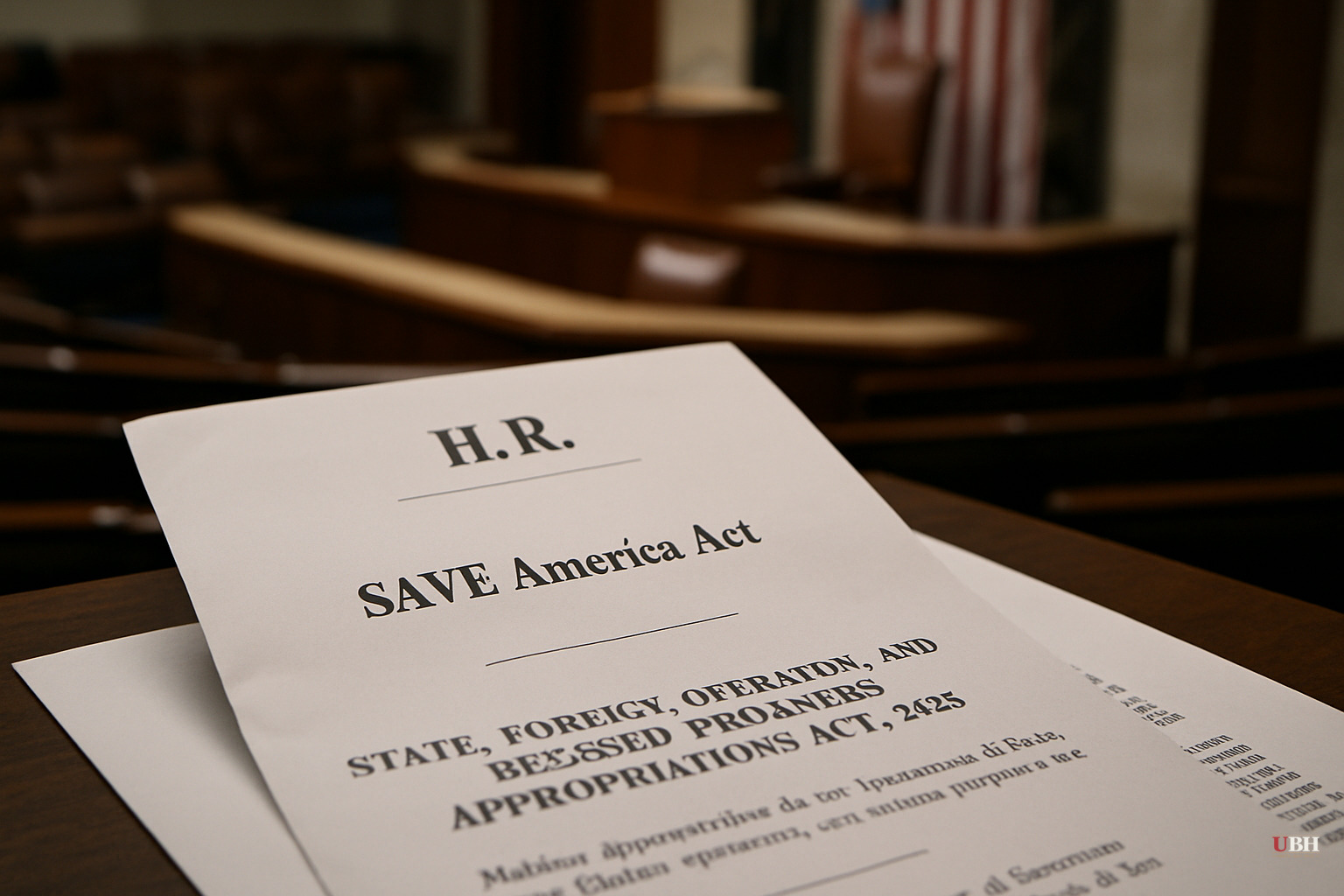
Since House conservatives shut down floor votes last month to pressure the Senate on the SAVE America Act, Speaker Mike Johnson has cut a deal with holdouts, and the chamber passed a new vehicle for the bill Wednesday, according to the Guardian and CBS News. The House voted 217-209, largely along party lines, to attach the SAVE America Act to the annual State Department appropriations bill.
The SAVE America Act would require documentary proof of citizenship to register to vote in federal elections and photo ID to cast a ballot. It would also end mail-in voting. President Trump has called it his top legislative priority, according to the New York Post, and has pressured Congress by refusing to sign an unrelated housing bill and tying the measure to a lapsed foreign surveillance law.
The House has now passed three versions of this bill since 2024, and all three have died in the Senate, according to CBS News. This one is headed the same direction. Senate Minority Leader Chuck Schumer said before Wednesday's vote, "I'll say it as many times as it takes: the [Save America] Act is dead on arrival here in the Senate. I don't care how Republicans try to package their plan to resurrect the old ghost of Jim Crow, we will kill it," as reported by the Guardian.
Thune points to reconciliation as a path
Separately, Senate Majority Leader John Thune told the New York Post that Republicans may have found an actual path around the filibuster: budget reconciliation, the process that let the GOP pass the One Big Beautiful Bill Act without Democratic votes.
Thune said he believes this is what the late Sen. Lindsey Graham (R-SC) meant when Graham told Trump in their final phone call, "We're all set for the SAVE America Act," a claim Trump made on Meet the Press. "Perhaps what Lindsey was talking to the president about, I don't know this for a fact, was whether or not there was an option for reconciliation, and there is a way in which I think you could," Thune said.
The catch: reconciliation bills must be primarily budgetary, not policy changes, under Senate rules enforced by the parliamentarian. "It's got to be principally budgetary, not policy-oriented," Thune said. "And if the budgetary impact is incidental to the policy impact, then you know it's usually ruled a violation. I'm not denying there's some level of subjectivity."
Thune floated one specific mechanism: using federal money to incentivize states to adopt photo ID requirements rather than mandating it directly. "Figuring out a way to incentivize states to pass or to implement photo ID in their states through financial incentives is something that's been talked about as a possible reconciliation option," he said, adding that "how you design or structure it matters a lot."
Sen. Bill Hagerty (R-TN), speaking on Fox Business's Mornings with Maria, confirmed Graham was steering this work as Senate Budget Committee chair before his death. Hagerty said "many elements" of the SAVE America Act "can be done through Reconciliation 3.0," alongside other provisions like indexing capital gains on housing and defense spending increases. The House Budget Committee released a $95 billion budget resolution Wednesday that would unlock that reconciliation process once adopted, according to the Post.
The legal backdrop and the real dispute
A core reason Republicans say the law is needed: the Supreme Court struck down Arizona's attempt to add a proof-of-citizenship requirement to federal voter registration forms in 2013, ruling states can't unilaterally alter the national form. The Court is scheduled to take up another Arizona case on the same issue in its next term.
Voting rights advocates cited by the Guardian argue there's no evidence of widespread noncitizen voting or election fraud that would justify the restrictions, and warn the ID and mail-ballot bans could disenfranchise eligible voters ahead of the November midterms. Proof-of-citizenship and photo ID requirements can create friction for voters who lack easy access to documents, particularly the elderly, rural voters, and lower-income Americans without a driver's license.
But the counter-argument Republicans make is straightforward: IDs are already required for banking, air travel, and most everyday transactions, and requiring proof of citizenship to vote in federal elections is a baseline integrity measure, not a novel burden. No verified evidence of widespread noncitizen voting fraud has been presented in these sources.
Rep. Chip Roy (R-TX), one of the House holdouts who relented Tuesday, said leadership also agreed to move a border security bill "next week in some form or fashion," though he declined to detail what was promised. Whether that promise holds, whether reconciliation rules actually permit a photo-ID incentive program, and whether Thune can find 51 votes for it are all still open questions. The Senate parliamentarian, not Congress, will likely have the final say on what survives.
Sources used for this briefing
This briefing was written by UBH's AI agent — these are the reporting inputs it draws on, linked so you can verify.


