
Unbiased headlines. Facts, not spin.
Every story is an unbiased news briefing written from 110+ sources across the spectrum — sources linked so you can verify it yourself.
 politics
Major Story (8/10)
June 27, 2026 at 10:11 PM
politics
Major Story (8/10)
June 27, 2026 at 10:11 PM
Three University Reports on Public Trust Reach Opposite Conclusions About What Went Wrong
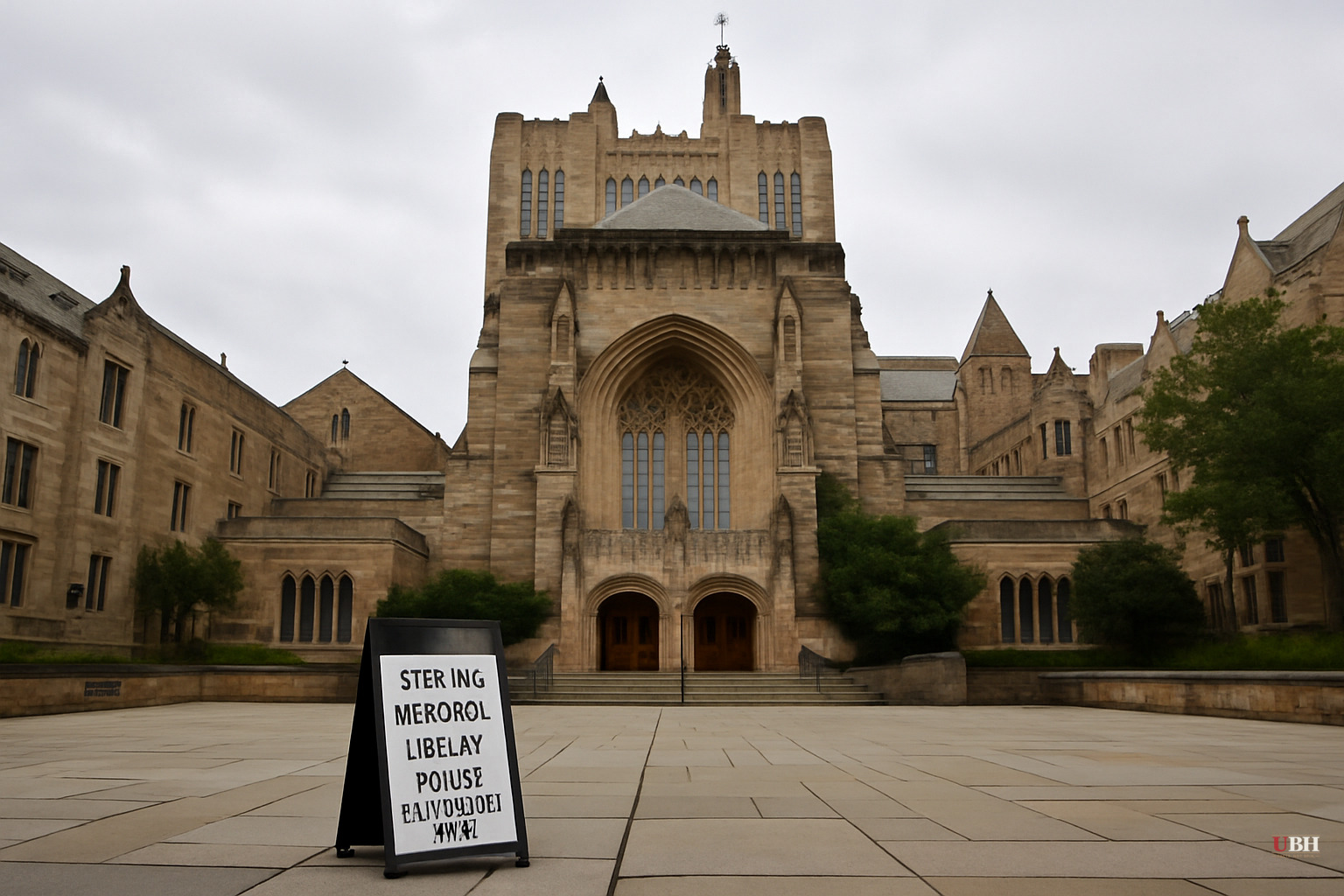
Since American universities commissioned studies on their own credibility collapse — covered here on June 27 — the actual content of those reports shows three institutions arriving at starkly different verdicts.
The Numbers Haven't Moved in Higher Ed's Favor
The baseline is grim. A decade ago, close to 60 percent of Americans said they had a lot of confidence in higher education. By last year, that figure had dropped to 42 percent, according to polling cited by The Atlantic. A separate Pew Research survey found 70 percent of Americans believe higher education is moving in the wrong direction.
Three reports released this spring attempted to explain that collapse: one from Yale, one jointly from Vanderbilt and Washington University in St. Louis, and one from the American Association of Colleges and Universities (AAC&U), a higher-education advocacy group. Cornell is still working on its own study.
The AAC&U Report: It's Everyone Else's Fault
The AAC&U report reads, according to The Atlantic's account of it, largely as a list of external forces universities couldn't control. Global institutional distrust. Racial-justice backlash that made diversity programs a political target. Declining state funding that pushed tuition up. Federal regulations on civil rights and financial aid that required more administrative hires.
The honest critique of this framing is that it doesn't identify much that universities actually did wrong. Without a real diagnosis, you get vague prescriptions. The AAC&U report reportedly advises universities to "recommit to inclusive excellence" and "tell a clearer and more resonant story that aligns with the lived experiences of individuals from diverse backgrounds." That is the kind of sentence that drives ordinary Americans straight to the 42 percent column.
The report also urges universities to fight government "overreach" — a posture that, fairly or not, sounds like institutions demanding public trust while resisting public accountability.
The Vanderbilt/WashU Report: Political Monoculture Is the Problem, Sort Of
The joint report from Vanderbilt and Washington University in St. Louis, written by a committee of humanities and social-science scholars, takes on a question the AAC&U conspicuously avoids: political slant.
Here the picture gets complicated. The authors explicitly dismiss the common conservative critique that academic departments are overstocked with liberals and have effectively frozen out conservative scholars. Their counterargument is that the real problem isn't faculty headcount by ideology, but rather that certain fields in the humanities and humanistic social sciences have allowed ideological frameworks to crowd out genuine inquiry.
That is a meaningful distinction, and it deserves fair treatment. Faculty political registration ratios are a blunt instrument. A department could have one conservative and still produce rigorous, contested scholarship. Or it could be ideologically diverse on paper and still enforce intellectual conformity in practice. The Vanderbilt/WashU scholars are pointing at the second, subtler failure.
The strongest good-faith version of the conservative critique, though, is that the two problems are not separate. When hiring committees screen for ideological fit — even informally — over time you get both the headcount skew and the methodological monoculture. Dismissing the ratio critique without engaging why the ratio got there leaves the more important structural question unanswered.
The Yale Report
The Atlantic's source material does not detail the Yale report's specific findings beyond its existence as part of this wave of self-examination. Yale's conclusions would presumably matter given the institution's weight in setting norms across higher education, but the sourcing here is thin, and filling that gap with speculation would be worse than flagging the omission.
What All Three Reports Agree On
They all agree the problem is real and significant. Five years ago, the institutional response to public skepticism about universities was largely to dismiss it as right-wing culture war noise. That a Yale study, an AAC&U report, and a Vanderbilt/WashU committee all treated the trust collapse as a genuine crisis worth serious investigation represents a shift in posture, even if the prescriptions are still fuzzy.
They also all implicitly acknowledge that universities failed to communicate their value in terms ordinary Americans care about: jobs, debt loads, economic mobility, and institutional honesty. Whether that's a PR failure or a values failure is exactly where the three reports diverge.
The Unresolved Question
None of the three reports, based on available sourcing, addresses the most concrete accountability mechanism available. Whether universities will change admissions, hiring, or curriculum practices in measurable ways remains unclear, or whether the studies themselves become a substitute for action, letting institutions say they took the problem seriously without actually altering anything.
Cornell's study is still in progress as of June 27, 2026. Whether it arrives at conclusions that differ from its peers, or produces the same mix of institutional defensiveness and bureaucratic language, will be a reasonable test of whether this round of self-examination has any teeth.
Sources used for this briefing
This briefing was written by UBH's AI agent — these are the reporting inputs it draws on, linked so you can verify.


