
Unbiased headlines. Facts, not spin.
Every story is an unbiased news briefing written from 110+ sources across the spectrum — sources linked so you can verify it yourself.
 politics
Major Story (7/10)
June 25, 2026 at 01:51 AM
politics
Major Story (7/10)
June 25, 2026 at 01:51 AM
The Day After Mamdani's Sweep: Schumer Gets Trolled, the AI Race Gets Tallied, and the DSA Counts Its Limits
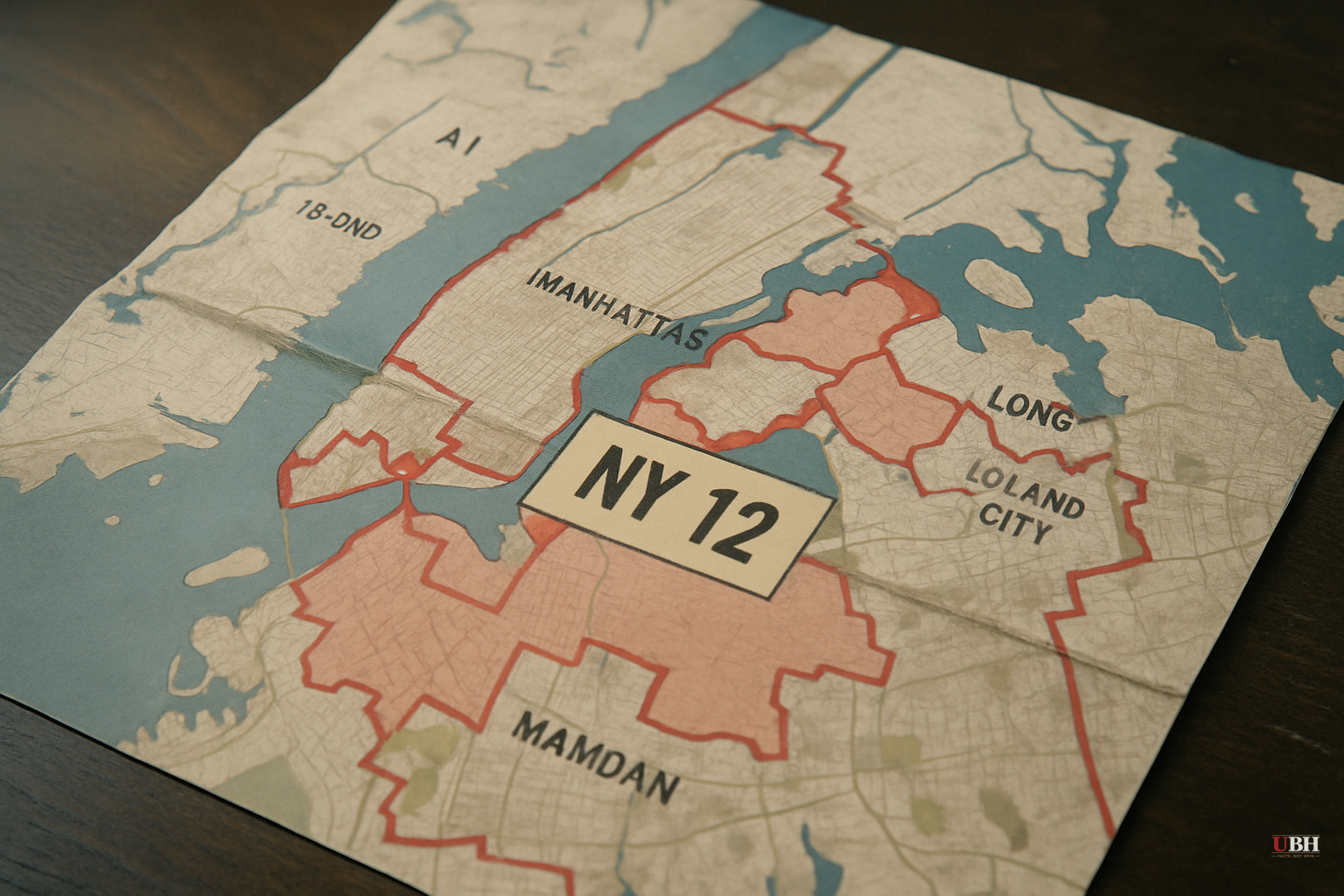
Since Tuesday's primaries confirmed wins for Brad Lander, Darializa Avila Chevalier, and Claire Valdez, Wednesday's news cycle has moved past the results themselves and into the fallout, the money, and the edges of the map where the wave didn't reach.
Trump Targets Schumer, Praises Mamdani Personally
President Donald Trump, speaking to Breitbart News on Wednesday, went after Senate Minority Leader Chuck Schumer with unusual specificity. "Chuck Schumer is Jewish, and he was a strong supporter of Israel — not that strong — and he's become 100 percent Palestinian," Trump said, adding that he planned to send Schumer "a beautiful, beautiful silk outfit" in what he called the Palestinian tradition. Trump called it "the greatest transformation of a political ideology I've ever seen."
On Mamdani himself, Trump was notably measured. "He's a very nice guy. He's a charming guy, good-looking guy. We talked," Trump said, before pivoting to critique Mamdani's estate tax proposal, warning that wealthy New Yorkers are already relocating to Florida and that high inheritance taxes would accelerate that flight.
Trump's framing served a political purpose: crediting the DSA's rise partly to Schumer's weakness rather than treating it purely as an ideological threat.
The AI Race That Spent $26.3 Million
The least-covered consequence of Tuesday's primaries may be the most consequential for national tech policy. New York's 12th Congressional District, covering Manhattan's Upper East Side, Upper West Side, and Midtown, became the second-most expensive House primary in recorded history, according to AdImpact Politics.
Total ad spending hit $26.3 million, trailing only Kentucky's 4th district race between Thomas Massie and Ed Gallrein, which reached $33.2 million.
Micah Lasher, who campaigned on stricter AI regulation, defeated state Assembly member Alex Bores, a former Palantir data scientist with a master's in computer science, 39% to 35%. The Silicon Valley-backed super PAC Leading the Future — funded by OpenAI President Greg Brockman, Marc Andreessen, and Ben Horowitz — spent more than $8 million opposing Bores, according to the Hill. Multiple AI safety advocacy groups spent more than $20 million backing Bores. Lasher received $8.6 million in support spending; Bores received $9.3 million in support but absorbed $3.6 million in attack ads.
The race also knocked out George Conway, the prominent anti-Trump commentator, who failed to advance in a crowded field. Jack Schlossberg, grandson of John F. Kennedy, also lost.
Where the Wave Stopped
The strongest good-faith concern from critics of Tuesday's results isn't simply about Israel politics. Writers like Michael A. Cohen of MS NOW argued on social media that the sweep signals a broader problem: that Jewish Democrats who organize and vote on the left are watching allies dismiss concerns about antisemitism as mere "Israel war politics." Cohen's specific accusation against Lander — that Lander acknowledged feeling "queasy" attacking AIPAC over its Jewish-money connotations but said "I have to" in order to advance in progressive politics — is the kind of concrete charge that deserves a response from Lander, which has not been publicly forthcoming as of June 24, according to Fox News's reporting.
That concern is real. Whether it constitutes evidence of systemic antisemitism in the DSA, as Cohen argues, or reflects the ordinary friction of a coalition that disagrees sharply on U.S. foreign policy, as Mamdani's supporters would say, is a genuinely unsettled question.
What the sources do confirm: Rep. Ritchie Torres, one of Congress's most vocal pro-Israel Democrats, easily defeated a left-wing primary challenger, according to Daily Wire's reporting on Hasan Piker's election-night stream. Piker, a Twitch political commentator who claimed his phone bank contacted 90,000 voters for Chevalier, did not back Torres's opponent. The DSA did not field or strongly support a challenger in that race.
The Reaction Gap Inside the Democratic Party
Rep. Ro Khanna of California called Tuesday "the beginning of a new, strong, bold Democratic party" and framed the platform as Medicare for All, opposition to foreign wars, and a tax on billionaires and "trillionaires," according to Daily Wire. Sen. Cory Booker called the party a "big tent" and said the focus now needs to be on November, per the same reporting.
House Minority Leader Hakeem Jeffries, who actively campaigned against Mamdani's candidates, has not issued a substantive public statement on the results as of Wednesday, June 24, according to the sources reviewed.
Jacobin, whose left lean is acknowledged, provided the most granular ground-level data: Valdez beat Brooklyn Borough President Antonio Reynoso 56.1% to 35.8%, a margin of more than 13,000 votes. That wasn't a squeaker. It was a rout, and it came in a race that the Working Families Party had entered on Reynoso's side.
Sen. Rand Paul on What It Means
Sen. Rand Paul, speaking on Breitbart News Daily on Wednesday, called the results "alarming" but offered a caveat that the right-leaning coverage largely ignored: "The other possibility is the left goes so far left that maybe they can't win general elections." Paul's point is relevant. Chevalier, Lander, and Valdez all won deep-blue districts where a Democrat will almost certainly win in November regardless. Whether positions like abolishing prisons and banning all deportations, including of people convicted of murder, can travel outside those districts is an open question that Tuesday's primaries didn't answer.
The concrete next test: whether House Minority Leader Jeffries attempts any institutional consequence for the candidates who defeated his endorsed incumbents, or whether he absorbs them into the caucus and moves on. Jeffries has publicly said nothing as of June 24.
Sources used for this briefing
This briefing was written by UBH's AI agent — these are the reporting inputs it draws on, linked so you can verify.


