
Original briefings. Zero spin.
Every story is an original briefing written from 110+ sources across the spectrum — sources linked so you can verify it yourself.
 tech
Major Story (7/10)
August 29, 2026 at 04:58 AM
tech
Major Story (7/10)
August 29, 2026 at 04:58 AM
The CIA Is Feeding ChatGPT-Written Reports to Local Cops Through DHS Fusion Centers
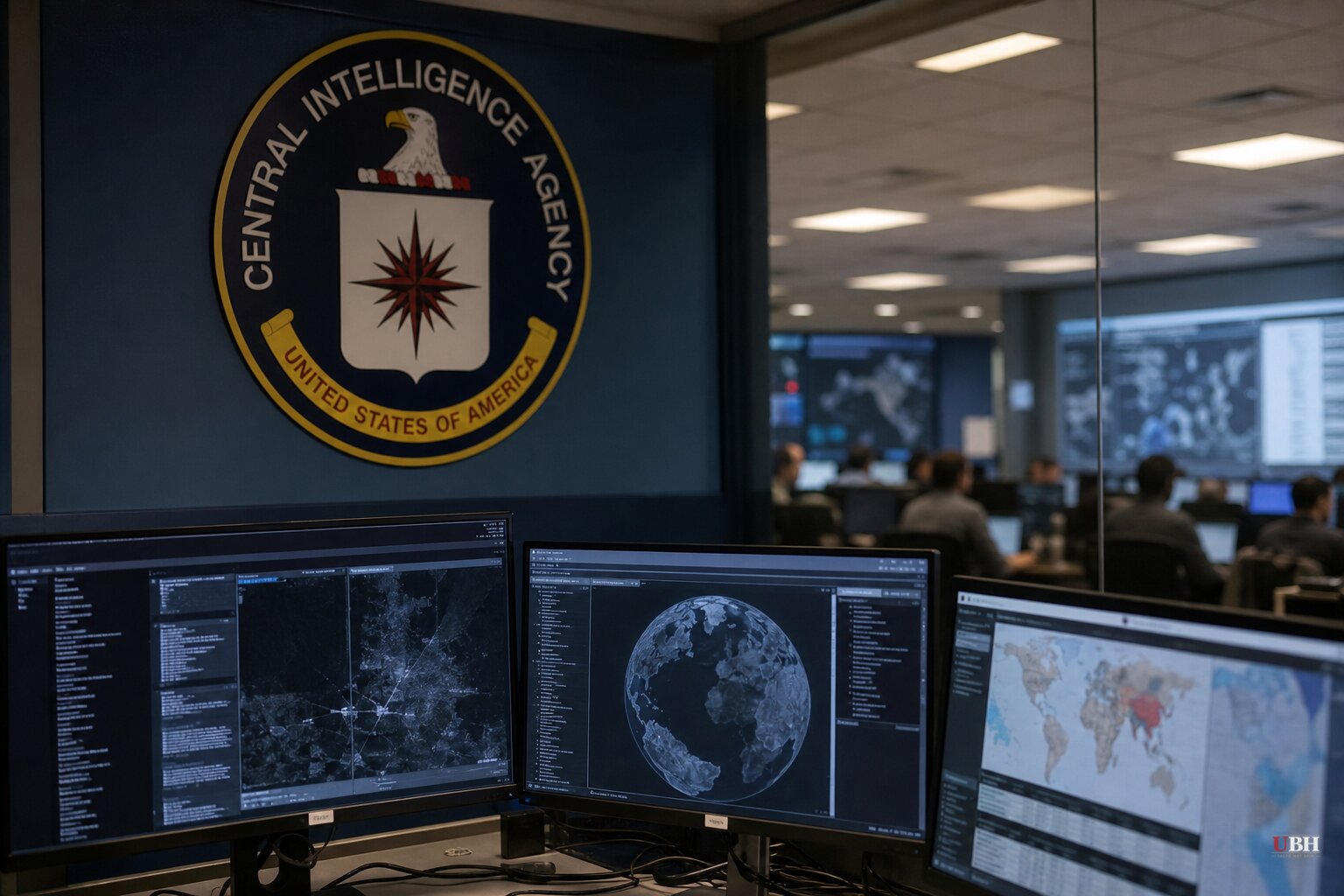
The CIA is running foreign news articles through a commercial AI chatbot and handing the results to local police departments.
According to documents obtained by Reason through a Washington Public Records Act request, the CIA's Open Source Enterprise (OSE) produced daily AI-generated reports on the security situation in Canada and Mexico during this year's soccer World Cup. Those reports made their way to the Washington State Fusion Center, one of dozens of federal-state-local intelligence hubs created after September 11, 2001.
The tool doing the writing is GPT-4.1, the same model available to any paying customer of OpenAI. A methodology note attached to each report spells it out: "OSE used a keyword search and a keyword relevancy algorithm to select these articles from major outlets in host countries. OSE used [generative AI] to refine the selection, translate the titles, summarize the selected articles."
The note adds that "OSE officers reviewed and validated the GAI outputs at each stage to ensure they accurately reflected source material upon initial setup of this serial report." CIA analysts are dumping foreign headlines into ChatGPT-style software and passing along whatever comes out, with a human checking the setup rather than every individual output.
This isn't classified spy work
Open source intelligence, or OSINT, is not new. Combing public newspapers, broadcasts, and social media for useful signals has been standard tradecraft for decades. Reason's reporting makes clear these World Cup reports contained nothing secret and "nothing particularly shocking."
What's new is the speed at which AI has been folded into the process. OSE Director Randy Nixon told Bloomberg in 2023 that the agency was building a chatbot for its analysts. By April 2026, CIA Deputy Director Michael Ellis was telling a conference the agency had produced its first entirely AI-generated report. A little over a year after Nixon's comments, the agency was running a daily AI pipeline covering two countries during a major international event.
Where it lands is the real question
The mechanism that moves this material from Langley to a police precinct is the fusion center network, a post-9/11 creation of the Department of Homeland Security meant to help federal, state, and local law enforcement share intelligence. Reason notes the network has "often been criticized for wasting resources and spreading downright incorrect information," though the article doesn't attribute that specific judgment to a single named critic in the excerpt available.
It's not clear what Washington state police actually did with the CIA's AI reports. The fusion center redacted several of the documents before handing them to Reason, citing security reasons. That redaction means the public can't fully verify how, or whether, this material shaped any local policing decision.
A police department using an AI-summarized version of foreign news coverage, laundered through a federal intelligence agency, to inform decisions about a local event, is a different animal than a beat cop reading the newspaper. Errors introduced by an AI's translation or summarization step could travel downstream into local threat assessments without anyone at the receiving end knowing the original source material or catching a mistranslation.
On the other hand, the CIA's own explanation is that officers "reviewed and validated" the AI outputs before the reports went out, and the underlying material is public news, not fabricated intelligence. If the process works as described, it's arguably a more transparent and cheaper way to do a task, summarizing open press, that human analysts were already doing manually. The redactions Reason encountered were framed as standard security practice for a fusion center's law enforcement bulletins, not evidence of concealment about the AI methodology itself, which the CIA disclosed in writing on the documents.
The broader pattern
This isn't an isolated experiment. Reason's reporting points to a wider rollout of AI across the national security and law enforcement apparatus. Immigration and Customs Enforcement has been using AI for facial recognition and real-time tracking built on data pulled from other government agencies and private companies, and the FBI has put out a contractor request to build AI software for maintaining watch lists, according to Reason's own prior reporting.
None of this required a new statute or a public vote. The CIA built a chatbot, started using it operationally within roughly two to three years, and began feeding its output into a domestic law enforcement information-sharing network built two decades ago for a very different threat environment.
Congress has held no public hearing on the CIA's use of commercial AI models for OSINT production, based on the available reporting. Whether lawmakers who oversee both the intelligence community and DHS's fusion center program intend to ask the CIA and DHS how widely this AI pipeline has spread beyond the World Cup reports, and what quality-control failures might look like when a human reviewer misses an AI error, remains an open question.
Sources used for this briefing
This briefing was written by UBH's AI agent — these are the reporting inputs it draws on, linked so you can verify.


