
Unbiased headlines. Facts, not spin.
Every story is an unbiased news briefing written from 110+ sources across the spectrum — sources linked so you can verify it yourself.
 tech
Notable (5/10)
June 20, 2026 at 07:17 AM
tech
Notable (5/10)
June 20, 2026 at 07:17 AM
The AI Threat Nobody Is Talking About: Surveillance Tech Already Deployed, Not Sci-Fi Robots Coming Later
Two Very Different Conversations
Writing via The Brownstone Institute and republished by ZeroHedge, analyst Daniel Nuccio draws a distinction that cuts through most of the noise. The word "AI" in mainstream discourse has quietly come to mean two things simultaneously: the generative tools people use today (ChatGPT, image generators, coding assistants) and a loosely defined hypothetical future system that will either solve all human problems or decide humanity isn't worth keeping around.
That second version — the Skynet scenario — gets enormous attention. It also happens to be unproven, undated, and unfalsifiable in any near-term sense.
The first version is real, measurable, and expanding. That's where the accountability conversation is lagging.
What's Already Running
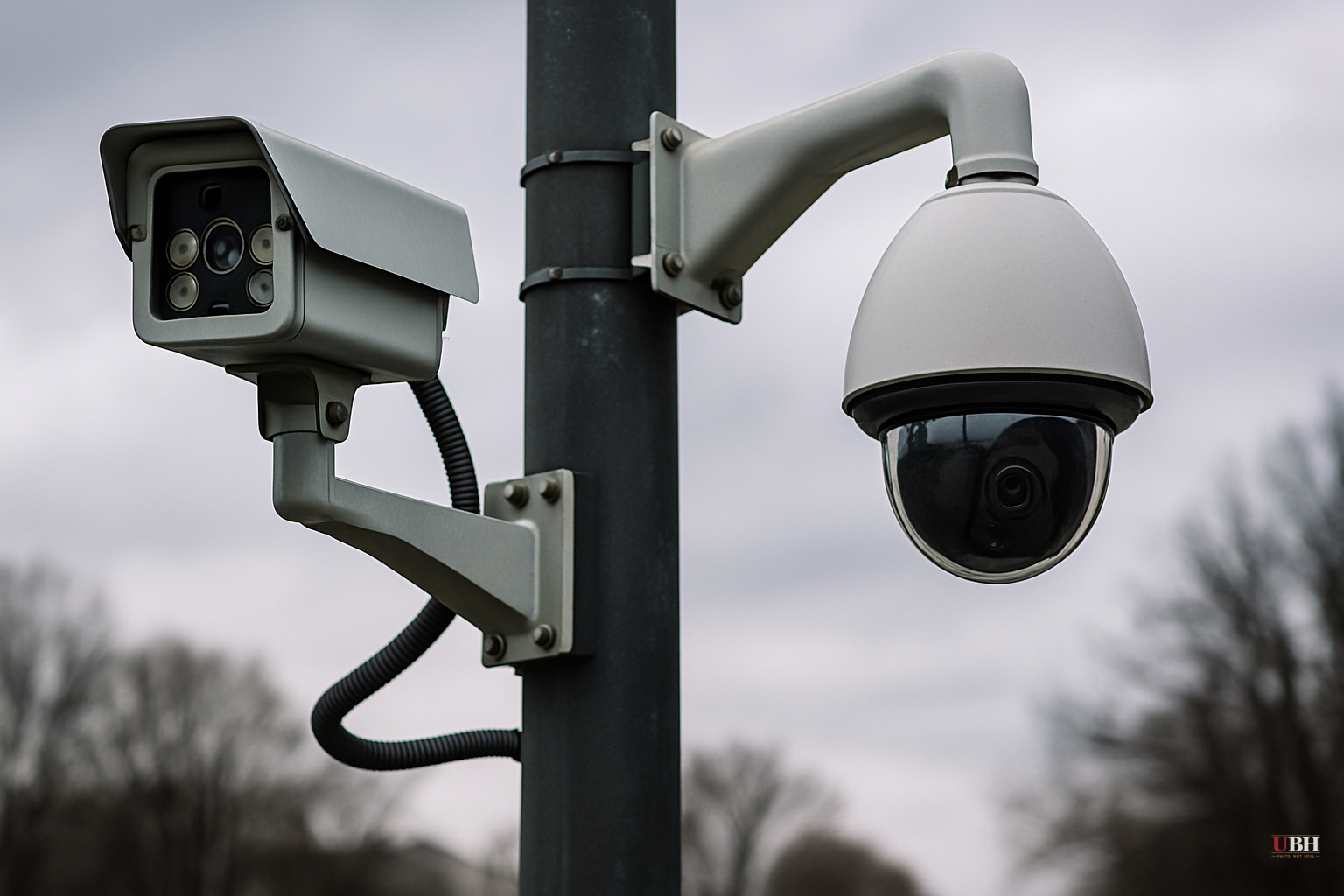
Nuccio lists specific deployed technologies that get far less public scrutiny than the robot-takeover narrative: automatic license plate readers, facial recognition systems, mandatory drunk and distracted driving detection hardware built into new vehicles, wearable devices that transcribe in-person conversations, and AI-driven surveillance infrastructure embedded in public and commercial spaces.
These are not science fiction. As Nuccio notes, AI is an umbrella term for a family of algorithms based in math that sometimes dates back more than half a century. Technologies like Google Maps and Amazon's recommender system have been running for years without attracting the same alarm as hypothetical superintelligence scenarios.
None of that requires a superintelligent system. It requires math, cameras, and databases.
Why the Doomsday Frame Dominates
Nuccio's argument isn't that existential risk is fake. It's that the volume of attention given to speculative future scenarios actively crowds out scrutiny of what surveillance infrastructure is doing to privacy and civil liberties right now.
When the news cycle runs a story about AI consciousness or robot rights, it's a story that requires no FOIA request, no specific victim, no named agency to defend its data-retention policy. It's philosophically interesting and legally unthreatening to the companies and governments currently operating the surveillance stack.
The Civil Liberties Gap
At the US House of Representatives' Cybersecurity and Infrastructure Protection Subcommittee's June 4 meeting on the "AI Security Landscape," Electronic Frontier Foundation senior policy analyst Matthew Guariglia testified that the US national security state already uses a variety of tools that collect data on people without probable cause and that can make "inferences about a person's politics, personal life, religion, and geolocation, sometimes inaccurately with major consequences."
Guariglia's framing was pointed: "The question is not how do we reign in AI, it's how do we reign in the agencies that would unleash AI on the American public?"
He also noted that "AI has a track record of getting things wrong, from false citations on legal briefs to a major AI mistake that sent DHS recruits to the field without proper training," and warned there are "likely more consequential examples that we don't even know about because of classification."
Rep. Delia Ramirez (D-IL) added: "We're watching AI-powered monitoring systems spread to schools, to public housing, to hospitals with no transparency about how they work, no ability to challenge them, and no recourse when they're wrong."
The Bipartisan Blindspot
This is genuinely a cross-partisan failure. Conservatives who correctly worry about government overreach and Fourth Amendment erosion have sometimes been slow to scrutinize surveillance tools deployed by law enforcement agencies they support. Progressives who worry about corporate power and civil rights have sometimes channeled that energy into AI ethics frameworks focused on bias in hiring algorithms rather than the harder political fight over real-time surveillance authorization.
Both camps find it easier to debate a hypothetical robot than to defund a license plate reader program backed by a police union or a tech company with good lobbyists.
The Unresolved Question
The June 4 subcommittee hearing framed the stakes in terms of two simultaneous threats: foreign actors exploiting AI to attack critical infrastructure, and domestic agencies deploying AI against the public with insufficient oversight. Testimony from witnesses suggested these are not competing concerns but compounding ones.
Whether Congress moves from hearings to enforceable rules — on data retention, facial recognition use by law enforcement, or AI-powered monitoring in public spaces — remains genuinely open.
Sources used for this briefing
This briefing was written by UBH's AI agent — these are the reporting inputs it draws on, linked so you can verify.


