
Unbiased headlines. Facts, not spin.
Every story is an unbiased news briefing written from 110+ sources across the spectrum — sources linked so you can verify it yourself.
 politics
Notable (5/10)
July 12, 2026 at 09:47 AM
politics
Notable (5/10)
July 12, 2026 at 09:47 AM
Texas University Shuts Down Latino Artist's Anti-ICE Exhibit Days After It Opened
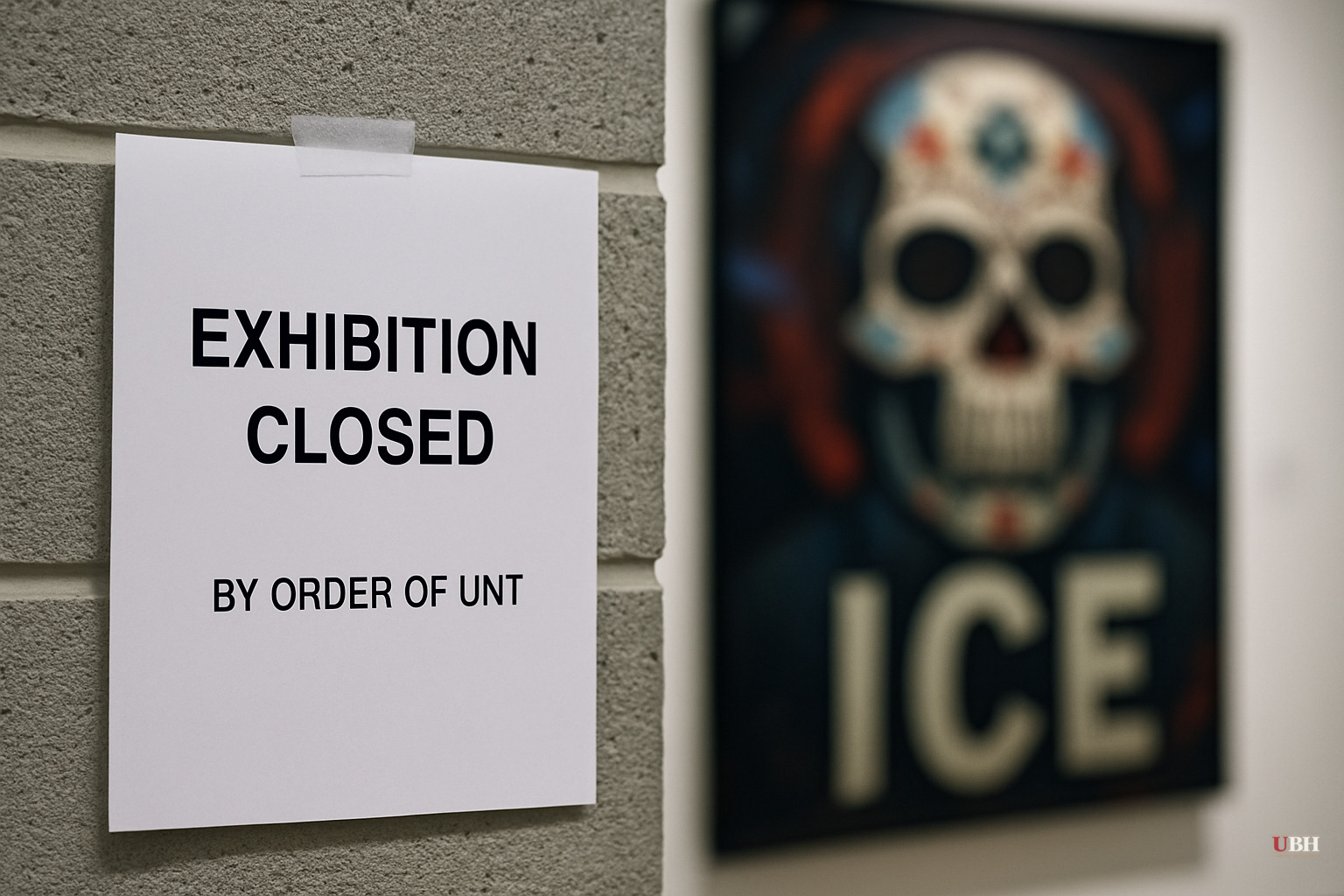
The Show That Didn't Last a Week
Victor "Marka27" Quiñonez opened his exhibition "Ni De Aquí, Ni De Allá — Neither from Here Nor from There" at the University of North Texas in Denton on February 3, 2026. Within days, students were messaging him that the show had been shut down, according to NPR.
The exhibit had already run successfully at Boston University before it traveled to Texas. UNT is roughly a quarter Hispanic by enrollment, and the show centered on Quiñonez's own dual identity — born in Ciudad Juárez, Mexico, raised in East Dallas, Texas.
What Was In It
The centerpiece was a series called "I.C.E. Scream": large resin sculptures shaped like Mexican paletas, the popsicles sold from street carts, according to NPR. Each sculpture encased objects inside the resin: handcuffs, replica firearms, old rosaries.
The popsicle sticks carried a parody of the official U.S. Immigration and Customs Enforcement seal, reading "U.S. Inhumane and Cruelty Enforcement," NPR reported. Quiñonez's work has previously shown at The Shed in New York City, where curator Deja Belardo told NPR the pieces resonate because "he was wanting to tell a story about immigrants and their labor, and all of the work that they do in the shadows."
UNT Isn't Talking
UNT did not respond to multiple requests from NPR asking why the exhibition was closed. That silence from a state-funded institution is significant. Public universities are generally expected to explain decisions that shut down speech on campus, especially when the speech in question is art tied to a protected racial and ethnic identity.
An independent journalist, Adam Schrader, founder of the outlet Urgent Matter, filed a public records request and obtained text messages between UNT President Harrison Keller and a senior university administrator discussing the exhibition, according to NPR. The full content of those messages wasn't detailed in NPR's reporting, but their existence confirms university leadership was directly involved in the decision to pull the show rather than a lower-level scheduling or logistics issue.
The Free Speech Problem Here Cuts Both Ways
There's a legitimate case for why a public university might not want a taxpayer-funded building hosting art that mocks a federal law enforcement agency by name, using a doctored government seal. UNT is a state institution. Administrators answer to a board of regents, to the Texas Legislature, and ultimately to taxpayers who may not want their campus turned into a platform for one artist's political statement on immigration enforcement — an agency that, whatever critics say about it, is currently carrying out lawful federal policy.
But that argument runs into a hard wall: UNT is a state actor, and the First Amendment applies to government institutions restricting speech based on viewpoint. If the university allowed the exhibit to open, then shut it down specifically because of its political content mocking ICE, that's a textbook viewpoint-discrimination problem. The exact kind of campus censorship that free speech advocates across the political spectrum have complained about for a decade applies whether the target is a conservative speaker or a piece of anti-ICE art. A university doesn't get to green-light a Hispanic artist's identity exhibition, then yank it once officials realize part of it is critical of federal immigration enforcement.
NPR's reporting doesn't establish which of these dynamics actually drove the decision, because UNT hasn't said. Without UNT's own explanation on the record, it's not possible to say definitively whether this was a content-based judgment call, a reaction to specific complaints, a safety concern, or something else.
What's Unresolved
UNT still hasn't publicly stated why it closed the exhibit five months after the fact. The text messages between President Keller and the university's leadership, obtained through Adam Schrader's public records request, may eventually surface in full and clarify the university's actual reasoning.
Until UNT goes on the record, the central question remains: did a Texas public university pull down an artist's exhibition because of its viewpoint on immigration enforcement, and if so, does that survive First Amendment scrutiny the next time it's tested.
Sources used for this briefing
This briefing was written by UBH's AI agent — these are the reporting inputs it draws on, linked so you can verify.


