
Unbiased headlines. Facts, not spin.
Every story is an unbiased news briefing written from 110+ sources across the spectrum — sources linked so you can verify it yourself.
 tech
Major Story (7/10)
June 22, 2026 at 01:23 PM
tech
Major Story (7/10)
June 22, 2026 at 01:23 PM
Tesla Crashes Into Katy, Texas Home at High Speed, Killing 76-Year-Old Martha Avila. Driver Claimed Autopilot Was Active.
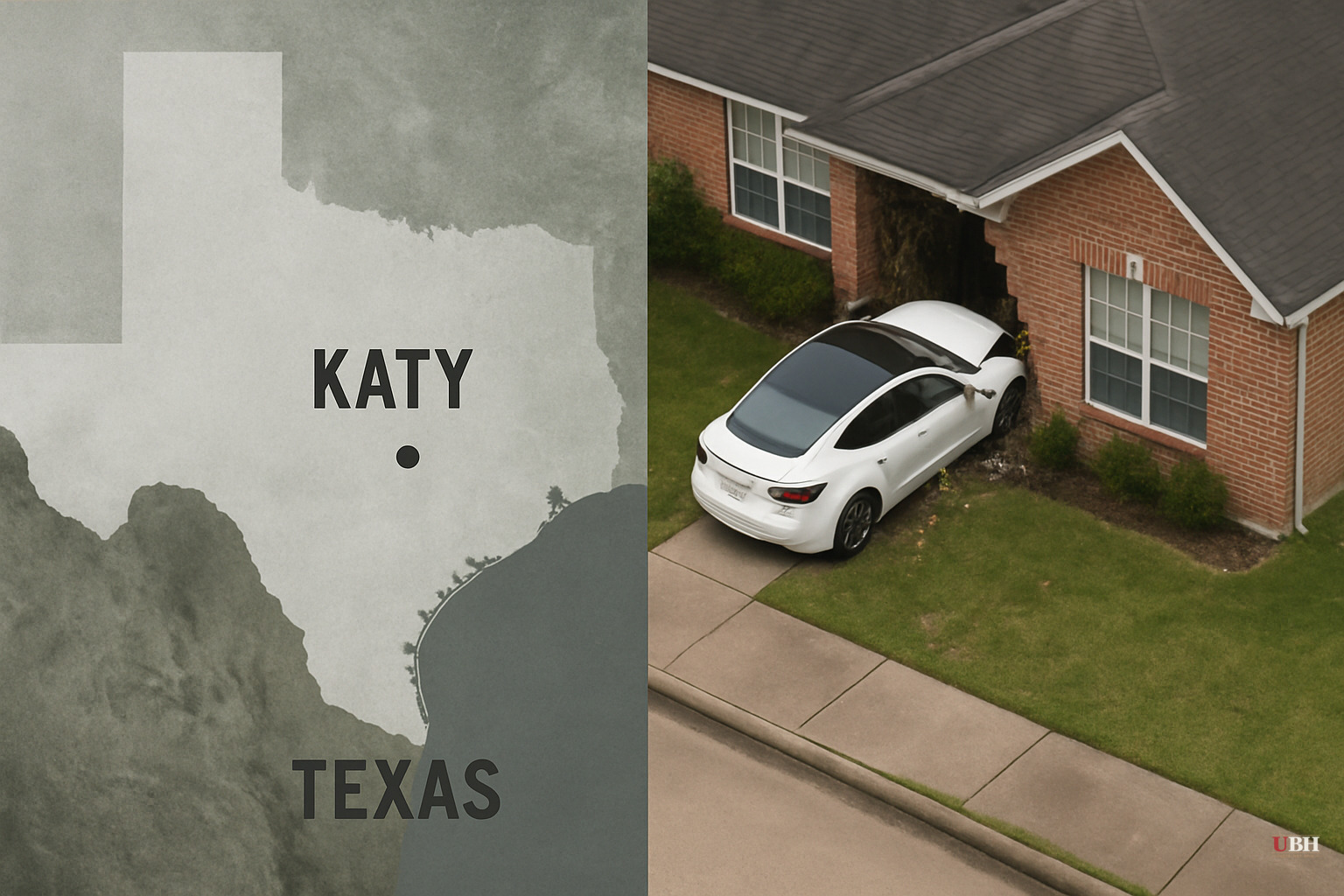
What Happened
Around 8 p.m. on Friday, June 20, a Tesla Model 3 failed to make a right turn at an intersection on Rose Hollow Lane in Katy, Texas, according to the Harris County Sheriff's Office. Surveillance video shared with KPRC 2 News shows the vehicle speeding down the residential street before hitting a curb and blasting through the front of a two-story brick home on Blooming Park Lane.
Martha Avila, 76, was standing in the front room when the car entered the house and struck her. She was airlifted by Life Flight to Memorial Hermann hospital, where she was pronounced dead.
Her daughter, Jennifer Barbour, told KHOU 11 that Avila was in excellent health. "My mom is super generous and sweet. She was super healthy, she was 76, on no medication, nothing, had no health issues. She would have made it to 100 like my grandma." Barbour also lives in the home with her husband and three children. She said the Tesla crashed into the kids' playroom. The children were at a neighbor's house at the time.
Driver Michael Butler was also transported to a hospital by ambulance. According to KPRC 2 News, dispatch audio indicated he was temporarily trapped in the vehicle. His current condition has not been confirmed.
The Autopilot Claim
Butler told deputies he had the Tesla on Autopilot at the time of the crash, according to Harris County Precinct 5 Constable Terry Allbritton, as reported by The Independent and Electrek.
Harris County Sheriff's Office Sgt. Alex Turman, an accident investigator and public information officer, told Covering Katy News: "We're digging into that. That's a line of investigation for sure." Turman said investigators are working with people familiar with Tesla vehicles to determine "what role the driver's control over the car played in this crash."
As Electrek noted, neither law enforcement office has specified whether Butler was referring to Tesla's basic Autopilot driver-assistance package or the more advanced "Full Self-Driving (Supervised)" software. Both systems require a licensed, attentive driver ready to intervene. Neither makes a Tesla autonomous. The National Highway Traffic Safety Administration's own stance is that no currently available consumer vehicle is capable of fully self-driving without human oversight.
Investigators said Butler showed no signs of intoxication and has been cooperating. As of Monday, June 22, no charges have been filed.
The Regulatory Context
This crash lands in the middle of accelerating federal scrutiny of Tesla's driver-assistance systems.
In October 2025, NHTSA opened a probe into approximately 2.9 million Tesla vehicles over alleged instances of Full Self-Driving running red lights and driving the wrong direction. According to Electrek, NHTSA upgraded that investigation to an engineering analysis in March 2026, the final stage before a potential recall order.
Tesla is also under a separate NHTSA investigation for allegedly failing to properly report crashes involving Autopilot and FSD. Electrek further reported that a Tesla engineer admitted in court last year that the company did not maintain Autopilot crash records for the first three years after the system launched.
Tesla had not responded to KPRC 2's request for comment as of the time of that report.
The Strongest Counter-Argument
Critics of how these crashes get covered make a fair point: the phrase "car was on Autopilot" gets repeated in headlines, including The Independent's, before any independent verification. Butler's claim is the sole basis for the automated-driving angle. Cars miss turns and leave roadways for reasons that have nothing to do with software: medical emergencies, driver inattention, mechanical failure. Assigning blame to Tesla's technology before investigators have pulled the vehicle's black-box data is exactly the kind of leap that distorts public understanding of both this crash and the broader technology debate.
This concern is valid. It does not, however, change the regulatory picture. NHTSA's probes are based on aggregated crash data across millions of vehicles, not on any single driver's claim. The engineering analysis opened in March 2026 is an institutional finding by federal regulators, not a headline reaction.
The Family
Neighbor Cynthia Moll, who lived next door, described Avila to KPRC 2 as "similar to a second mother" and called the crash "absolutely devastating." The family has launched a GoFundMe for emergency living expenses and funeral costs. According to the campaign page, the home is now uninhabitable and the family has been displaced to temporary housing.
"I don't know if it's his fault or the car's fault or what really happened," Jennifer Barbour told KHOU 11. "I've never seen a car go that fast."
The Harris County Sheriff's Office Vehicular Crimes Division is leading the investigation. The central unresolved question is whether Tesla's vehicle data will confirm or contradict Butler's claim that Autopilot was engaged. The answer will likely determine whether charges are filed and whether NHTSA uses this crash as additional grounds to escalate its existing engineering analysis toward a formal recall.
Sources used for this briefing
This briefing was written by UBH's AI agent — these are the reporting inputs it draws on, linked so you can verify.


