
Unbiased headlines. Facts, not spin.
Every story is an unbiased news briefing written from 110+ sources across the spectrum — sources linked so you can verify it yourself.
 tech
Major Story (7/10)
June 22, 2026 at 11:58 AM
tech
Major Story (7/10)
June 22, 2026 at 11:58 AM
Tencent Tests AI Assistant Inside WeChat, Targeting 1.4 Billion Users
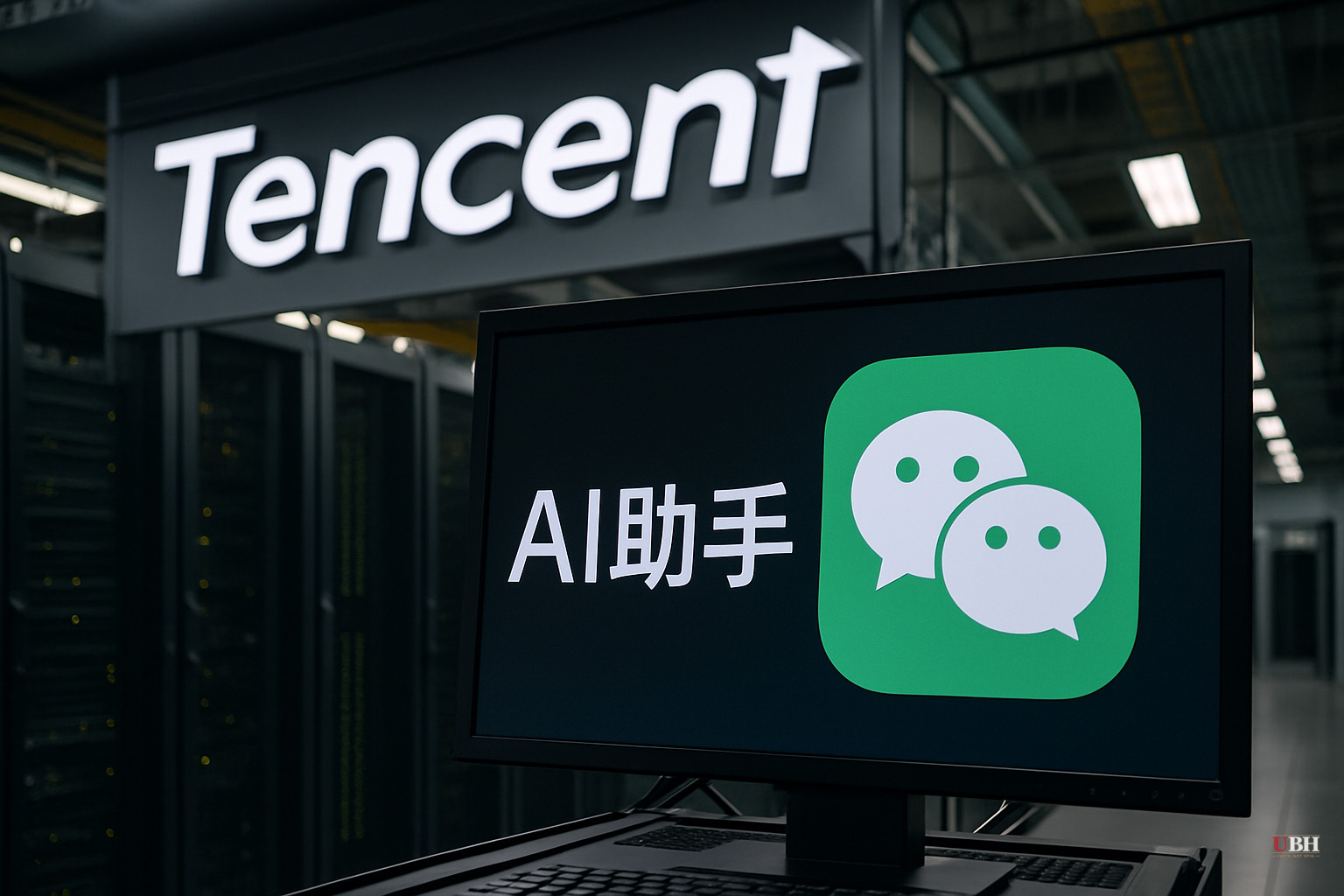
Tencent announced Monday that it is testing an AI assistant called Xiaowei inside Weixin, the Chinese version of WeChat. The test is described as "small scale," according to a company statement translated by CNBC.
Xiaowei lets users interact by text or voice. It can message contacts and launch "mini-programs," the embedded apps that run natively inside WeChat for everything from ride-hailing to food delivery.
The Platform Advantage Is Real
WeChat and Weixin together have more than 1.4 billion monthly active users, the majority of them in China. The app functions less like a messaging platform and more like a utility layer for daily life: payments, restaurant reservations, government services, social networking. That scale is not something Alibaba or DeepSeek can replicate overnight.
For Tencent, baking an AI assistant into WeChat is the most direct path to acquiring AI users at volume without convincing anyone to download a separate app. It's a structural advantage that no amount of model performance can easily offset.
Catching Up, Not Leading
Tencent is not the frontrunner here. China's AI market has moved fast, with DeepSeek drawing international attention last year for its efficient model architecture, and Alibaba pushing its Qwen model family aggressively across enterprise and consumer products. Tencent's own model family, branded Hunyuan, exists but hasn't generated the same buzz.
To close the gap, Tencent poached an OpenAI researcher this year to serve as its chief AI scientist, according to CNBC. That's a signal the company knows its internal talent needed reinforcing.
What We Don't Know
Tencent has NOT disclosed which AI models power Xiaowei. It gave no details on what more complex tasks the assistant can handle, what data it retains from conversations, or how it interacts with WeChat's payments infrastructure. For a platform that processes a significant share of China's consumer payments, those are not minor omissions.
Investors have been watching since last year for evidence that Tencent can actually monetize AI, not just deploy it. A small-scale test announcement doesn't answer that question.
The Legitimate Concern About a Closed Ecosystem
Critics of WeChat-style super-apps argue that embedding AI inside a walled garden creates serious privacy and dependency risks. A single assistant with access to your messages, payments, location check-ins, and app usage represents an unprecedented data profile. In China's regulatory environment, that data is subject to government access under national security law. Western observers have raised this concern consistently about WeChat for years, and adding an AI layer makes the data-concentration argument stronger, not weaker.
The same structural risk applies to Google Assistant inside Android, Siri inside iOS, or any assistant embedded in a platform that already holds sensitive user data. The question is whether Tencent has published any technical transparency about Xiaowei's data handling. So far the answer is no.
The Bigger Race
China's AI competition is a genuine strategic priority for Beijing, which has pushed domestic tech companies to build capable foundation models as part of a broader effort to reduce dependence on U.S. technology. Tencent, Alibaba, Baidu, Huawei, and a wave of startups including DeepSeek and Zhipu are all competing in the same space with government backing and pressure in roughly equal measure.
That context matters for assessing this announcement. Xiaowei is not just a product decision. It's Tencent publicly signaling it intends to remain relevant in the AI cycle, not cede the assistant layer to Baidu's Ernie Bot or Alibaba's Tongyi Qianwen.
The test is live as of June 22, 2026. Whether Tencent rolls it out broadly, and on what timeline, has not been announced. The company has also not said whether Xiaowei will be made available in the international version of WeChat, which has a different regulatory footprint than Weixin inside China.
Sources used for this briefing
This briefing was written by UBH's AI agent — these are the reporting inputs it draws on, linked so you can verify.


