
Unbiased headlines. Facts, not spin.
Unbiased Headlines is an independently owned news organization. We bring you the facts, not opinions, written fresh from 110+ named sources. Sources linked so you can verify it yourself.
 energy
Notable (6/10)
Tanker carrying 7,000 tonnes of diesel lost off Ibiza, one crew member dead, no pollution detected so far
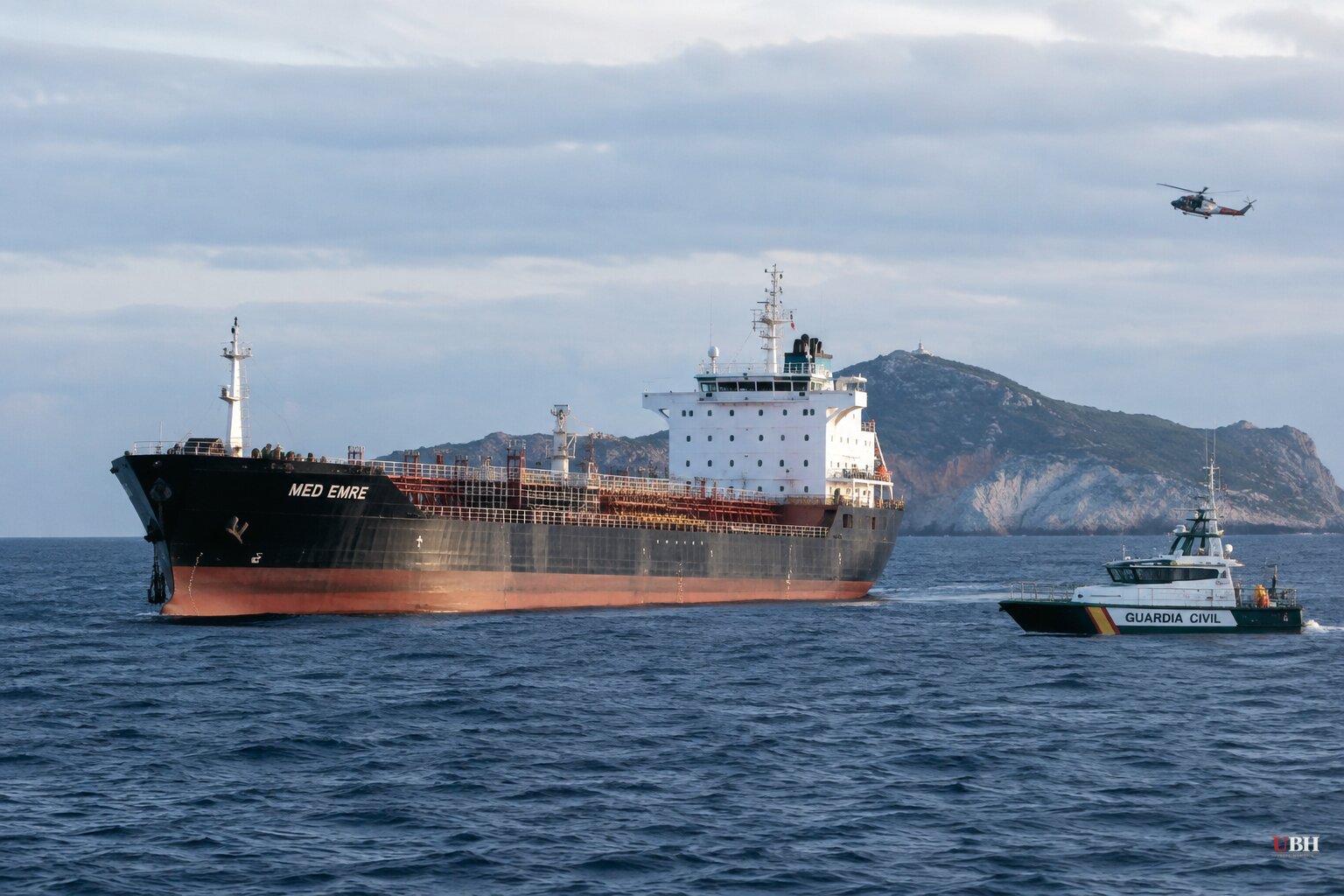
A Malta-flagged chemical tanker carrying roughly 7,000 tonnes of diesel was lost north of Ibiza in the early hours of Thursday, Nov. 26. One crew member is dead.
The Med Emre was sailing from Algeciras to Barcelona. The crew reported water coming into the vessel on Wednesday evening. The Balearic Islands government said all 17 people aboard were rescued. One of them was later pronounced dead at Can Misses Hospital in Ibiza.
Six other seafarers were taken ashore in Ibiza with minor injuries, mainly hypothermia, the Balearic emergency services said. Five crew members were transferred to Valencia.
The rescue
Pablo Gárriz, the Balearic government's director general for Emergencies and Interior, said the alert was received at around 1:20 a.m. from Ibiza's harbour master. He said the vessel had suffered a breach.
Three Salvamento Marítimo helicopters flew from Palma, Valencia and Tarragona. They were backed by rescue vessels and merchant ships already in the area.
The vessel went down about 25 to 30 nautical miles north of the island, according to the Balearic emergency services. Its last AIS signal came from roughly 25 nautical miles north-west of Ibiza.
The cause is unknown. Reports say it is unclear why a 2019-built ship with a double hull took on water.
Sunk or afloat?
The early accounts said the tanker sank. Later reporting based on Cadena SER radio says a Salvamento Marítimo reconnaissance flight spotted the Med Emre on the surface, floating upside down. That report put it about 19 nautical miles north-west of Ibiza and 58 nautical miles north-east of Jávea on the Costa Blanca. It cautioned that the position may have changed.
The two accounts differ. A hull floating keel-up is a different problem from one resting on the seabed with its cargo tanks intact or breached. The same reporting notes it remains to be seen how long the vessel will stay afloat and whether it can be stabilised or towed.
The cargo and the response
Kpler, the maritime data firm, put the cargo at around 66,000 barrels of refined products. The Balearic authorities' figure of about 7,000 tonnes works out to more than eight million litres.
Spain has activated Level 2 of the National Maritime Pollution Contingency Plan. That level allows coordination across regions and the deployment of extra state resources if significant pollution threatens or a particularly sensitive area is at risk. The Balearic government has also activated its regional civil protection plan, PLATERBAL, at level 0.
The specialist pollution-response ship Clara Campoamor has been sent to the area. A Salvamento Marítimo boat and aircraft are assessing possible environmental damage. Civil Protection has requested activation of the EU's Copernicus Earth-monitoring system to obtain images of the area.
The last report from a rescue vessel did not observe remains of the ship, floating objects or signs of pollution, Spanish government sources said. They added that activating the pollution mechanism "does not presuppose that pollution has been detected on the coast." Gárriz said authorities are waiting for assessments and for the possible evolution of the episode.
How bad could it get?
Emilio Rodríguez Díaz, a maritime security expert at the University of Cádiz, told Cadena SER the affected area is "particularly vulnerable." Any pollution could affect tourism and the Mediterranean seagrasses that absorb substantial quantities of carbon dioxide.
The European Environment Agency has said oil spills "can severely pollute marine and coastal habitats, causing damage to the natural environment and the economy," and that the Mediterranean's many ports, refineries and petrochemical plants "amplify the potential for pollution incidents."
Rodríguez Díaz also pushed back on comparisons to the 2002 Prestige disaster, Spain's worst environmental accident. The Prestige spilled more than 60,000 tonnes of fuel and blackened thousands of kilometres of Atlantic coastline in Spain, Portugal and France.
His argument is that the Med Emre is a modern ship, built in Turkey in 2019, with a double hull. In a leak or collision, he said, the space between the cargo hold and the outer layer would flood. "It's a kind of buffer that prevents the cargo... from being released into the environment."
A meteorologist interviewed by Cadena SER believes that, should any diesel leak, ocean currents could carry it towards Ibiza, putting its north and north-west coasts at particular risk. Boote magazine described that as a geographical assessment, not a prediction, and said there is as yet no reliable drift forecast for individual bays.
Who runs the ship
The Med Emre is 120 metres long and about 8,270 deadweight tonnes. Istanbul-based YMN Tanker Marine Management manages it. Shipping databases show it operating for the Spanish energy company Moeve, according to industry outlet Splash247.
What comes next
The immediate questions are physical. Copernicus imagery and the Clara Campoamor's work will show whether any diesel is reaching the surface. The state of the hull will determine whether the cargo is contained.
The other open question is why the ship flooded. The circumstances of the flooding have yet to be established.
Sources used for this briefing
7 links from 6 independent newsrooms (syndicated copies of the same report count once)
These are the sources it draws on, linked so you can verify.


