
Unbiased headlines. Facts, not spin.
Unbiased Headlines is an independently owned news organization. We bring you the facts, not opinions, written fresh from 110+ named sources. Sources linked so you can verify it yourself.
 energy
Notable (6/10)
Gasoline Falls to About $3.66 Ahead of Thanksgiving, but $5.94 Diesel Is Still Squeezing Small Truckers
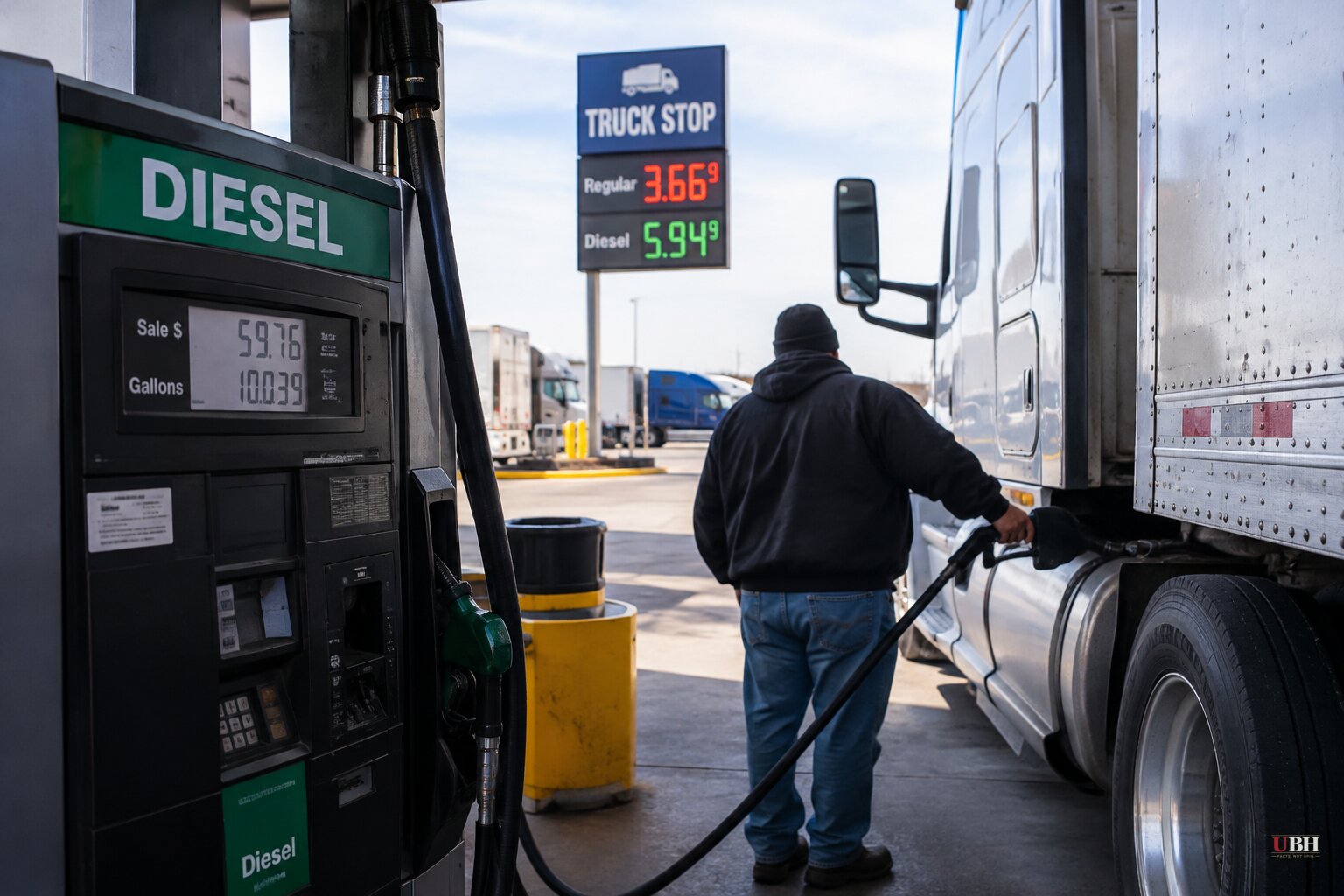
The national average for regular gasoline stood at roughly $3.66 a gallon on Nov. 21, a sharp drop from a month earlier. Diesel has not followed. The Energy Information Administration put on-highway diesel at $5.94 a gallon for the week of Nov. 16, against $3.81 for regular gasoline.
That is the gap holiday drivers on Thanksgiving, Nov. 26, are not seeing at the pump. Truckers see it every day.
Diesel is still far above pre-war levels
The EIA says diesel is about 56% higher than before the U.S.-Iran war began. Gasoline is about 30% higher.
Diesel hit a record national average of $6.53 in September, according to the EIA. It has eased since then, but only slowly. AAA's most recent figure in our notes put the diesel average at $6.15, down about 13 cents in a month, while gasoline fell 38 cents over the same stretch.
Patrick De Haan, petroleum analyst at GasBuddy, said diesel prices "will come down but they will still remain very elevated." He pointed to Russia, ordinarily a big diesel exporter, whose supply has largely dried up because of damage to its refineries.
Why gasoline fell and diesel did not
The drop in gasoline came from falling crude prices, refiners switching to a cheaper winter blend, and the usual seasonal slide in driving demand, NPR reported. De Haan said boats and RVs are done for the year.
Refiners have also been running hard on diesel. An EIA analysis published Nov. 5 found U.S. gasoline yields averaged below 45% of each barrel of crude from January through August 2026. Historically the figure runs 45 to 50 barrels per 100.
Gasoline yields were below the prior five-year low in every one of those months. Distillate yields ran above their five-year average. Jet fuel yields held at 12% or higher from March through August.
Refiners leaned toward the product that paid best. Cheaper gasoline does nothing to loosen that tight distillate market.
Small carriers carry the cost
Kevin Otto runs Otto Transfer, an 80-year-old Minnesota flatbed company with 16 drivers. When diesel first topped $4 a gallon early in the war, he told drivers to slow to 65 mph. He estimated that would save $7,000 per truck.
Prices kept climbing. After diesel passed $6 in September, Otto added a fuel surcharge to every job for the first time. It started at 5% and now sits at 12.5%, tied to the government's weekly Midwest diesel average.
"To me, it's drastic, but it's the only way to survive," Otto said.
Small operators are exposed because they often negotiate rates one load at a time. Freight data provider DAT Freight & Analytics says they absorb higher pump prices for three to four weeks while spot rates catch up. Big fleets tend to have larger cash reserves, bulk fuel discounts and long-term contracts with adjustable surcharges.
Even when a rate carries a fuel line item, carriers may wait 30 to 90 days to be paid. Alex Leslie, senior research associate at the American Transportation Research Institute, said those lags are harder on firms without a large company to carry the difference.
What it adds to freight bills
DAT reports spot rates paid by freight brokers were 44% to 48% higher in September than a year earlier, depending on trailer type. The company estimated diesel accounted for at least two-fifths of that increase.
The rest did not necessarily become profit. The American Transportation Research Institute says insurance, maintenance, equipment and tolls were also rising. The group put the average cost of operating a truck at a record $2.34 per mile in 2025, up 3.4% from the year before.
The war landed just as the industry was showing tentative signs of recovery from a yearslong freight recession of weak demand and depressed rates.
Mike Reid, an economist at RBC Capital Markets, said higher freight costs are starting to be passed through to consumers. Diesel's close cousin, heating oil, is also rising in the Northeast, De Haan said. Mild fall weather has held heating bills in check so far.
What comes next
De Haan had said that, barring geopolitical wild cards, the gasoline average could land near $3.75 by Thanksgiving. It has come in below that.
The open question is diesel. Spot rates trail fuel costs by weeks and carrier payments by up to three months, so small carriers are still carrying the September peak in their books. De Haan has warned that a blast of cold air could push heating oil, and with it diesel-linked costs, higher still.
Sources used for this briefing
7 links from 6 independent newsrooms (syndicated copies of the same report count once)
These are the sources it draws on, linked so you can verify.


