
Unbiased headlines. Facts, not spin.
Unbiased Headlines is an independently owned news organization. We bring you the facts, not opinions, written fresh from 110+ named sources. Sources linked so you can verify it yourself.
 energy
Major Story (7/10)
Shell and PDVSA Sign $400 Million in Service Orders for Venezuela's Carito-Pirital Oil and Gas Area
Shell is going deeper into Venezuela.
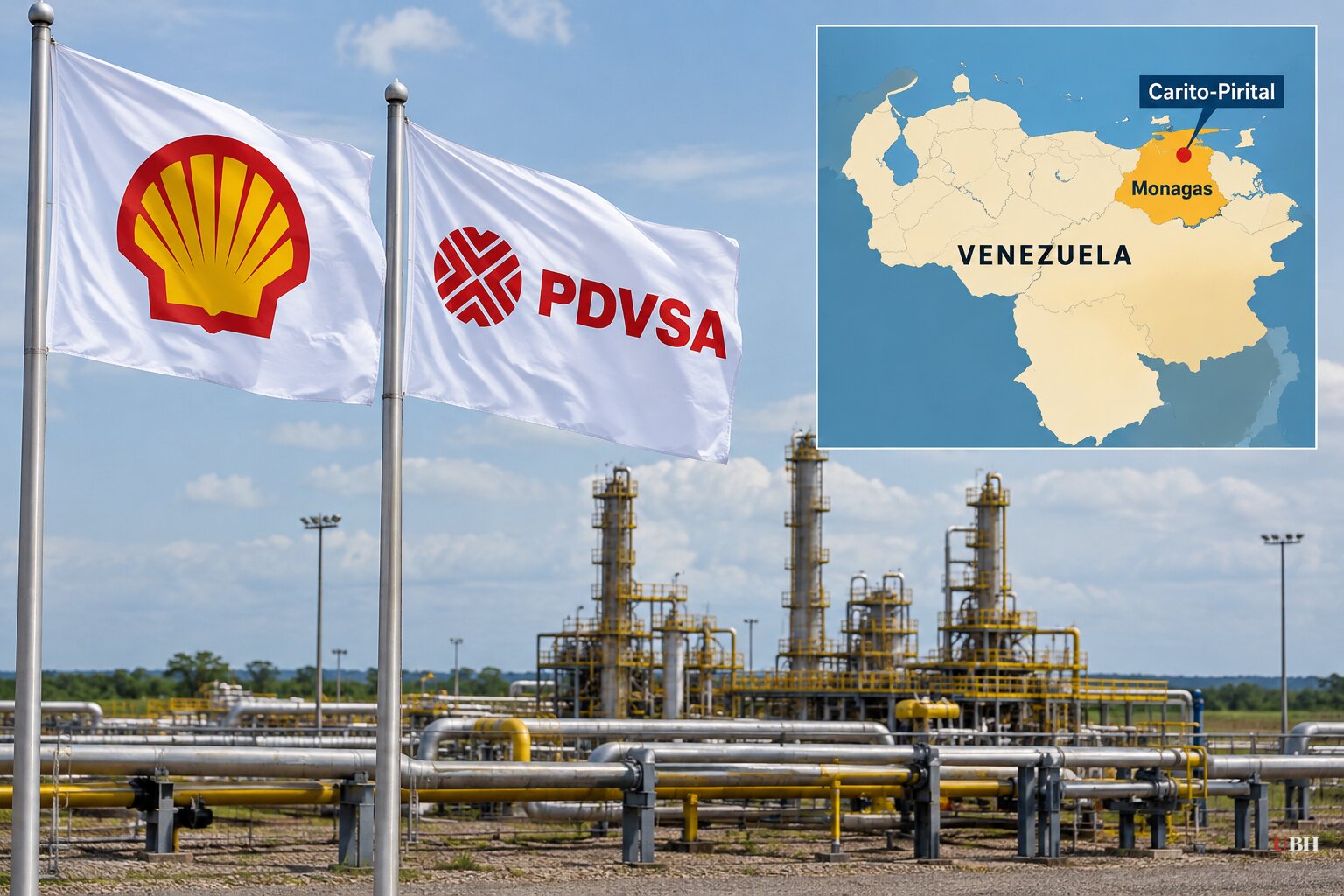
On Tuesday, Nov. 24, PDVSA president Héctor Obregón, Shell regional vice president Adam Lowmass and Shell's Venezuela vice president Elías Nucette signed new service orders covering the Carito-Pirital area in northern Monagas state. Acting President Delcy Rodríguez presided over the ceremony. The orders carry a stated investment of $400 million.
The goals, per PDVSA and Venezuelan state media: more crude and natural gas from Carito-Pirital, plus less gas flaring and venting. Those are described as steps to improve energy efficiency.
Five orders already this month
This is not a one-off. PDVSA and Shell signed five other service orders in Monagas earlier in November. The $400 million package is the largest of the batch.
It also follows a June license that let Shell begin the first phase of exploration and production at the offshore Loran gas field. Seven natural gas reservoirs are in that area, and six of them straddle Venezuela's maritime border with Trinidad and Tobago. Rodríguez has said Venezuela left Loran abandoned for 23 years.
Shell's March 2026 agreements, which Reuters reported on March 5, covered Venezuelan onshore and offshore hydrocarbon opportunities. They also involved Venezuelan engineering firm VEPICA and contractors KBR and Baker Hughes. Reuters reported on March 10 that Carito and Pirital were key targets.
Shell CEO Wael Sawan said in October that he sees gas, not heavy oil, as the company's main competitive advantage in Venezuela. He said Shell will keep looking at other opportunities in the country.
What the $400 million does and doesn't tell you
The headline number is a project figure. PDVSA's announcement does not say how much comes from Shell's own balance sheet. It also does not give a production target, a timetable, the payment terms or how the cuts to flaring will be measured.
The distinction matters for anyone judging the deal. A service order for a state oil company is not the same as Shell writing a $400 million check.
The Donovan–Shell Archive, which published an independent analysis on Nov. 25, welcomed the flaring component. It called unnecessary flaring "a waste of valuable resources and a significant source of pollution." Its caveat: "reducing emissions from the extraction of fossil fuels is not the same as reducing dependence on fossil fuels." It also noted that quantified methane and flaring targets and independent environmental verification have not been disclosed.
Why Venezuela is open for business
The backdrop is the U.S. raid that captured Maduro on Jan. 3. Since then, Washington has worked with Rodríguez's acting government on what both sides call a democratic transition. She has met nearly every U.S. demand, including releasing hundreds of political prisoners and making it easier for American companies to invest.
Venezuela's National Assembly, led by her brother Jorge Rodríguez, has rewritten the hydrocarbons laws and rolled back many of the strict limits on oil, gas and mining. Venezuelan officials count more than 80 oil and gas agreements signed in 2026.
The oil industry they are trying to revive was run into the ground. Decades of socialist mismanagement and infrastructure decay cut output far below where it once stood. Shell's pitch is that gas, long neglected, is where it can add value fastest.
The diplomatic shift runs well beyond oil. U.S. Defense Secretary Pete Hegseth traveled to Caracas on his first visit and announced an agreement to restore military ties. It would allow joint training and sharing of intelligence and equipment. "Venezuela has gone from our most aggressive regional threat to a compliant security partner," Hegseth said outside the U.S. Embassy. Rodríguez described the cooperation as aimed at common threats. The Pentagon has not answered questions about the timeline or scope of the deal.
Rodríguez presides over an acting government, and the Venezuelan state is the counterparty on every one of these contracts. Companies are signing with it anyway.
The open questions are specific. Shell's actual capital commitment, the barrels and cubic feet the orders are supposed to add, and the flaring benchmarks have not been published. The Loran project also sits on a border shared with Trinidad and Tobago, which has not yet been heard from in the sources on how it views Shell's license.
Sources used for this briefing
7 links from 6 independent newsrooms (syndicated copies of the same report count once)
These are the sources it draws on, linked so you can verify.


