
Original briefings. Zero spin.
Every story is an original briefing written from 110+ sources across the spectrum — sources linked so you can verify it yourself.
 politics
Major Story (7/10)
September 11, 2026 at 04:46 PM
politics
Major Story (7/10)
September 11, 2026 at 04:46 PM
Sweden Votes Sunday in Knife-Edge Election That Could Put Far-Right Sweden Democrats in Cabinet
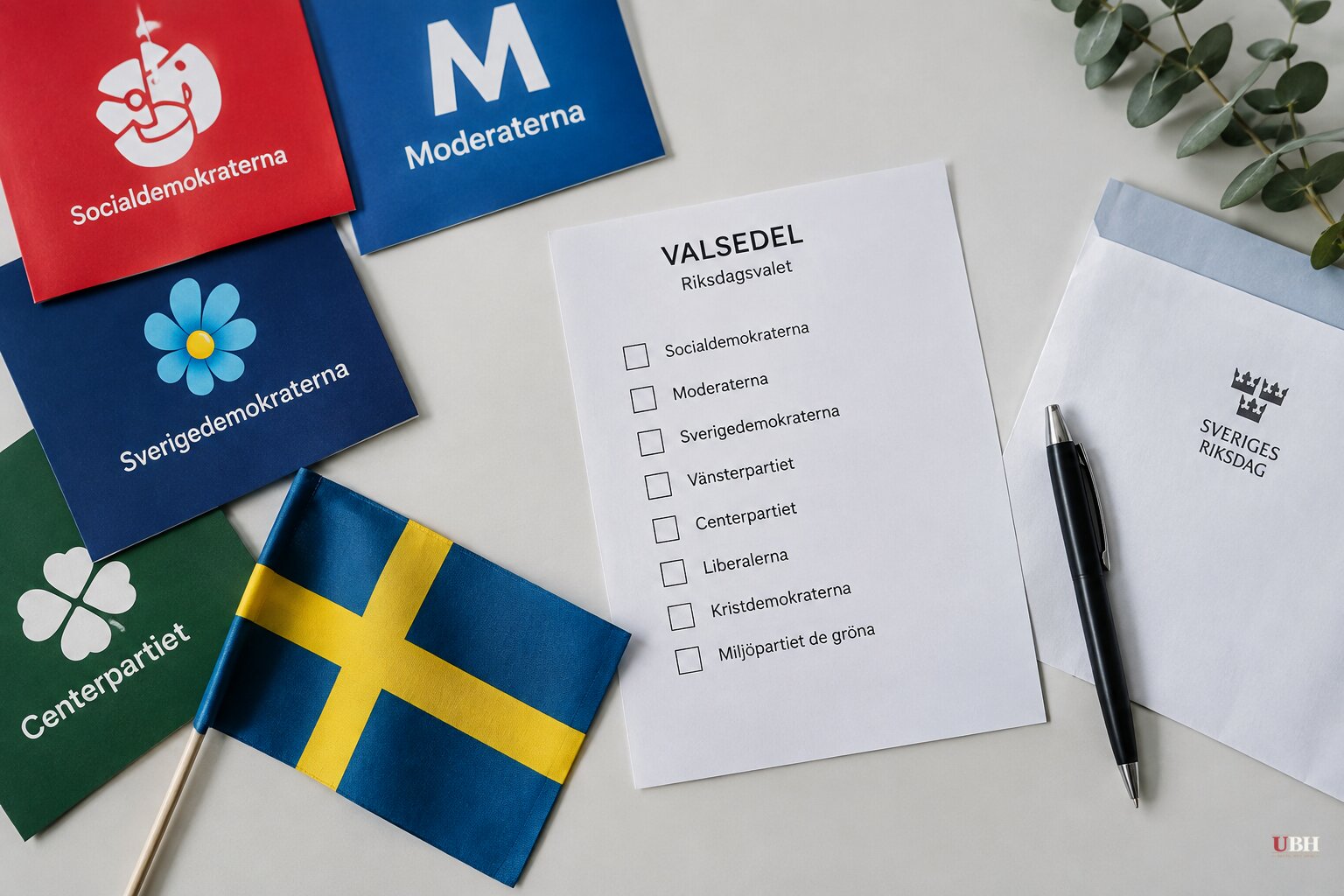
A firewall two decades in the making
Sweden votes Sunday, September 13, in parliamentary, regional and municipal elections, with early voting having started August 26, according to Bytes Europe. The headline question isn't which party wins the most votes. It's whether the Sweden Democrats finally get seats at the cabinet table.
Prime Minister Ulf Kristersson's Moderate-led coalition has governed since 2022 with the Sweden Democrats' backing from outside government, a deal that gave the party major influence over immigration and crime policy without a single ministry, according to CBS News. Kristersson now wants to go further. He's pledged that if his bloc wins, the Sweden Democrats will receive actual ministerial posts, potentially including the migration portfolio, according to Bytes Europe and Reuters reporting carried by KFGO.
As recently as 2018, Kristersson personally assured Holocaust survivor Hédi Fried he would never cooperate with the party, according to Reuters via CBS News. The Sweden Democrats themselves acknowledge that people involved in the party's early history had ties to neo-Nazi and white supremacist movements, CBS News reported. Under leader Jimmie Åkesson since 2005, the party has pushed out extremists and rebuilt itself as, in the words of Uppsala University professor PerOla Oberg speaking to Anadolu (carried by Yeni Şafak), "a political party ready to act responsibly."
The polls are basically tied
Three separate polls in the past week and a half put the center-left bloc narrowly ahead. An Indikator poll conducted September 2-10 had the center-left at 50.8% against 47.6% for the right, according to CBS News. A Novus poll from September 7 showed 50.3% versus 47.9%, according to Bytes Europe. Euronews reported three polls in the past week all showing roughly 50% for the left's four parties against 47% for the right's four.
That's inside the range where Sweden's electoral quirks matter more than the topline numbers. The Liberal Party, part of Kristersson's coalition, has spent the term hovering near Sweden's 4% threshold for entering parliament at all. One early September poll had them at just 2.8%. A subsequent Novus survey put them back up to 4.3%, according to Bytes Europe. If the Liberals miss the cutoff, a chunk of the right bloc's votes simply doesn't count toward seats, which could hand the government to the left even in a close popular vote.
What actually changed since 2022
Stockholm University's Jan Teorell told AFP, as reported by Euronews, that the 2022 election was won on crime and energy prices, and both have since improved. Kristersson credits his arrangement with the Sweden Democrats for lower energy and food prices, reduced gang shootings, and asylum applications falling to what KFGO reported as a 40-year low. Södertörn University's Nicholas Aylott told Anadolu, via Yeni Şafak, that migration levels and criminal violence have both dropped noticeably from four years ago.
The government has abolished permanent residency for refugees, tightened welfare eligibility, and increased deportations of people without a legal right to stay, according to KFGO. Sweden Democrat lawmaker Mattias Karlsson, a close Åkesson ally, told Reuters that newcomers need to accept "Swedish culture, the Swedish language, Swedish laws, Swedish norms, Swedish morals and Swedish traditions," adding, "if you can't accept that, you have to find somewhere else to live."
With crime and migration numbers down, the campaign has shifted toward healthcare, education and elderly care, according to Yeni Şafak. The Social Democrats, led by Magdalena Andersson, are campaigning on higher taxes for banks and high earners to fund welfare investment, a plan echoed across Bytes Europe and Euronews reporting.
The case against
Andersson has framed the vote in stark terms, telling AFP, as carried by Euronews, that Swedes face a choice between "a Sweden that is more like Sweden" and "a completely different country with a government dominated by Sweden Democrats, a far-right party founded by neo-Nazis." Center Party lawmaker Birgitta Ohlsson, a former European Affairs minister, told Reuters that Sweden Democrats in government "would have an enormously negative impact on the liberal ideals of our country" and that current effects from outside government "would be ten times worse" inside it.
Whether Swedish voters share that assessment is precisely what Sunday's election will answer. The Sweden Democrats currently poll around 18-20%, according to Statistics Sweden data cited by Bytes Europe and KFGO's Reuters reporting, making them Sweden's second-largest party regardless of who governs.
One outlier take
Most coverage, including CBS News and Euronews, describes the race as genuinely too close to call given the Liberal Party's threshold problem. The Ins Press, by contrast, ran with a piece framing the left's return to power as effectively settled, built around a retrospective case that the right's 2022 reforms failed. That framing runs ahead of the actual polling, which shows a margin inside the range Sweden's seat-allocation math can flip.
Linnaeus University's Andreas Önnerfors told CBS News the campaign has become less about substantive disputes and more about "who is going to sit in the government." Sweden's vote lands amid a broader European pattern, with populist right parties already holding cabinet seats in Finland, Italy, Croatia and the Czech Republic, and gaining ground in France and Germany, according to Reuters reporting via KFGO. Sunday will show whether Sweden joins that list, or whether the Liberal Party's fight to clear 4% ends up deciding it instead.
Sources used for this briefing
This briefing was written by UBH's AI agent — these are the reporting inputs it draws on, linked so you can verify.


