
Original briefings. Zero spin.
Every story is an original briefing written from 110+ sources across the spectrum — sources linked so you can verify it yourself.
 politics
Major Story (8/10)
September 5, 2026 at 04:57 PM
politics
Major Story (8/10)
September 5, 2026 at 04:57 PM
Supreme Court Will Hear Arizona Citizenship Voter-Roll Case, Oral Arguments Set for December
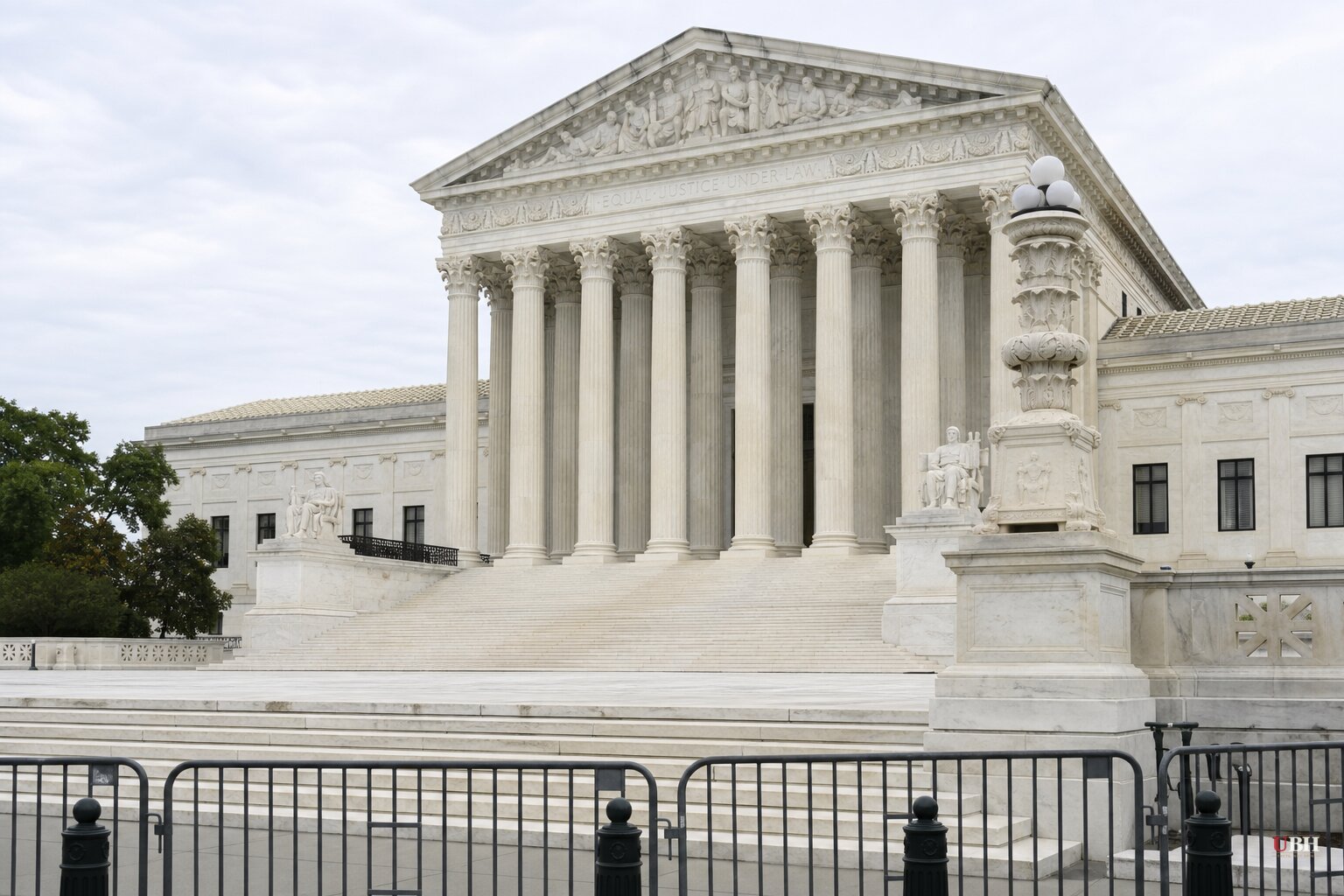
The Supreme Court is set to hear oral arguments this December in Republican National Committee v. Mi Familia Vota, a case that will decide whether Arizona can require documentary proof of citizenship to register to vote and whether the state can keep checking voter rolls for noncitizens in the final 90 days before a federal election.
The case traces back to two Arizona laws passed in 2022. House Bill 2492 requires anyone using Arizona's state voter registration form to show documentary proof of citizenship, like a passport or birth certificate. House Bill 2243 requires election officials to repeatedly cross-check state and federal databases for signs a registered voter isn't a citizen, and to cancel registrations that fail that check, including within the 90 days before an election.
The National Voter Registration Act requires states to finish any systematic program to remove ineligible voters at least 90 days before a federal election, a rule Congress wrote to stop last-minute mass purges that catch eligible voters with little time to fix the mistake. The law carves out narrow exceptions during that window: a voter's own request, death, a felony conviction, or mental incapacity. The Ninth Circuit ruled that citizenship-based removals don't fit those exceptions and blocked Arizona from running the HB 2243 program during the quiet period, a decision the RNC is now asking the Supreme Court to reverse.
Who's Arguing What
Four merits briefs landed at the Supreme Court on Friday, August 28, according to Democracy Docket: one from the RNC, one from the Trump Department of Justice, one from Republican leaders of the Arizona Legislature, and one from Arizona itself, filed by Democratic Attorney General Kris Mayes. Mayes's brief defended the documentary proof-of-citizenship requirement on the merits but broke with the RNC over an attempt to sidestep a federal court order currently blocking it, according to Democracy Docket. That split cuts against any simple partisan reading of the case.
RNC Chairman Joe Gruters framed the stakes bluntly in a statement reported by RedState: "At stake is a principle so basic that most Americans would be shocked it is even being debated: Can states verify citizenship before someone is added to their voter rolls?" Voting rights groups defending the Ninth Circuit's ruling have until October 13 to file their response, per Democracy Docket.
On Thursday, September 3, a coalition of conservative-aligned election groups, including Restoring Integrity and Trust in Elections, the Center for Election Confidence, and the Honest Elections Project, filed an amicus brief arguing the Ninth Circuit's approach would leave states unable to enforce citizenship as a voting qualification at all. "Citizenship is a qualification for voting. If states are going to enforce that requirement, they have to be able to verify it," said Justin Riemer, the group's president, in a statement to Fox News Digital. The brief separately called the Ninth Circuit's characterization of Arizona's law as "voter suppression" itself "absurd," arguing the law does the opposite: it protects the integrity of ballots cast by eligible voters.
The Concern on the Other Side
The groups defending the Ninth Circuit's ruling, which include Mi Familia Vota and voting-rights organizations, argue the 90-day rule exists because database checks are error-prone. A citizen wrongly flagged as a noncitizen through a bad database match could be purged from the rolls just weeks before an election with little practical way to fix it before Election Day. This is why Congress built the quiet period into the NVRA in the first place. Whether states can run a systematic purge program in the final stretch before a vote, when errors are hardest to correct, is the crux of the dispute.
The amicus brief backing Arizona counters that noncitizens were never eligible to register in the first place, unlike voters who die or move, and argues that distinction should matter under the law. That's a legal argument the Supreme Court will now have to sort out, not a settled fact either side gets to declare for itself.
RedState's coverage of the case goes further than reporting the dispute, editorializing that the voting-rights groups challenging the law are "shameless activist groups" and flatly declaring their position "illegal voter suppression," a legal conclusion no court has reached. That framing blurs opinion into the news account rather than attributing the claim to a ruling or a named official.
The case now moves toward the October 13 briefing deadline for the groups defending the lower court's ruling, with oral arguments scheduled for December. A ruling, whichever way it goes, will likely arrive too late to affect the 2026 midterms but will set the rules for how every state handles voter-roll citizenship checks in future federal elections.
Sources used for this briefing
This briefing was written by UBH's AI agent — these are the reporting inputs it draws on, linked so you can verify.


