
Unbiased headlines. Facts, not spin.
Every story is an unbiased news briefing written from 110+ sources across the spectrum — sources linked so you can verify it yourself.
 politics
Notable (5/10)
May 12, 2026 at 01:28 AM
politics
Notable (5/10)
May 12, 2026 at 01:28 AM
Supreme Court, Virginia Chaos, and Florida Backlash: The Redistricting War Just Got Three New Fronts
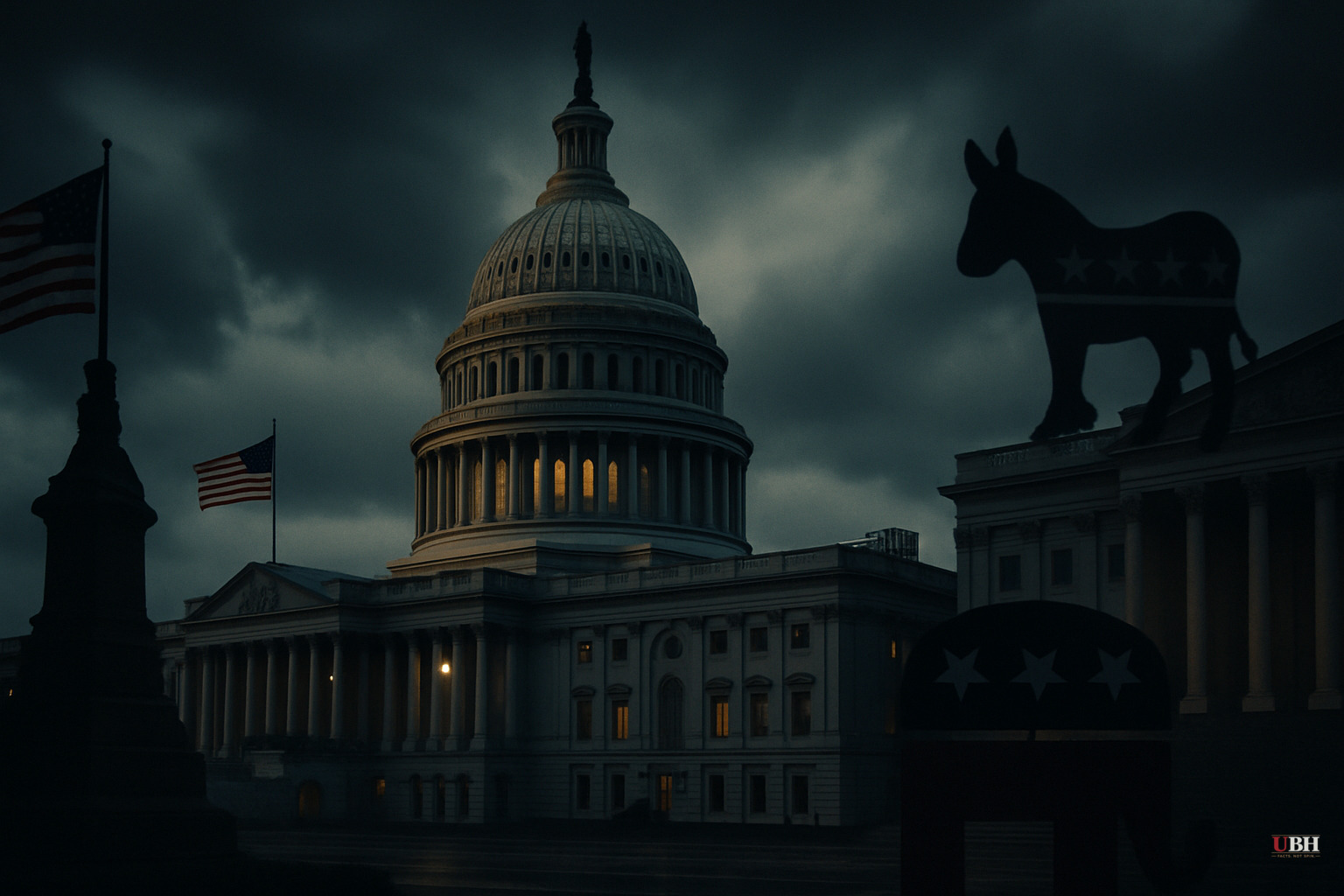
Three New Moves. One Week. The House Majority Hangs in the Balance.
Republicans held a structural edge in redistricting headed into 2026. This week, that story got a lot more complicated — and a lot messier — for everyone.
Alabama: SCOTUS Clears the Way
The U.S. Supreme Court sided with Alabama, clearing the state to implement a new congressional map that would eliminate a majority-Black district, according to The New York Times.
After the Court's 2023 Allen v. Milligan ruling told Alabama it was likely violating the Voting Rights Act with its old map, Alabama essentially drew a new map that did the same thing anyway. And now SCOTUS is letting it move forward.
The practical effect: Black voters, who make up roughly 27% of Alabama's population, could be packed or cracked out of meaningful Congressional representation. Again.
This ruling doesn't just affect Alabama. It signals to every state still drawing lines that the Supreme Court's appetite for enforcing Section 2 of the Voting Rights Act has limits — and those limits just got shorter.
The NYT also reported on Fayette County, Tennessee, where Black residents — 25% of the county — won a new electoral map last year to break up an all-white board of commissioners. They're now worried this Supreme Court posture unravels that progress.
Alabama officials argued their map was drawn on geographic and political grounds, not racial ones, and that courts shouldn't be in the business of mandating race-based district construction. There's a legitimate legal tension between the Voting Rights Act's mandate for minority representation and the Equal Protection Clause's prohibition on racial gerrymandering. Justice Clarence Thomas articulated this view in his Milligan dissent — that Section 2 itself may be unconstitutionally race-conscious. It's a serious constitutional argument that rarely gets mainstream coverage.
Virginia: Democrats' Map Gets Nuked by Their Own State Court
Virginia Democrats thought they'd won. Voters approved a referendum in November creating a new congressional map drawn by Democrats. Democratic officials had blessed the process. Done deal, right?
Wrong.
The Virginia Supreme Court struck down the map last week, ruling that lawmakers violated the state constitution's multi-step process for putting a constitutional amendment on the ballot, according to both The New York Times and The Washington Post.
Virginia Democrats won a statewide referendum — and still lost. Now they're in emergency mode, filing an application directly to the U.S. Supreme Court asking the justices to override the state court ruling.
In their filing, Virginia officials called the state court's decision "judicial defiance" of the voters' will and accused the court of being "deeply mistaken" on "critical issues of federal law." Strong words. Whether they have legal legs is another matter.
The Virginia Supreme Court ruled on a procedural state constitutional issue. Democrats didn't follow the rules for amending the state constitution. Voters approving a referendum doesn't cure a flawed process — it just means voters didn't know about the flaw. Conservative outlets have framed this as Democrats demanding special rules when they benefit from maps, after spending years suing Republican maps. The hypocrisy charge has merit.
Florida: Even Republicans Are Angry Now
A GOP-drawn redistricting plan in Florida is splintering communities in ways that are making both Republicans and Democrats furious, according to The Washington Post. This isn't just Democrats complaining about losing seats. Local Republican officials and constituents are angry that their communities got carved up for the sake of partisan math.
When your own voters complain that a map splits their town, county, or community in half to boost a party-line advantage, you've got a legitimacy problem. It also gives Democrats an issue that resonates beyond abstract "voting rights" arguments — it's a story about people watching their neighbors get sorted into different districts.
Governor Ron DeSantis personally pushed aggressive redistricting in Florida in 2022. The consequences of that aggressive line-drawing are now showing up in real communities.
What the Media Is Getting Wrong
Left-leaning outlets — which produced all six source reports used in this article, a notable imbalance — are framing the entire redistricting story as Republicans destroying democracy. That framing is too simple.
The Virginia situation shows Democrats are just as willing to bend procedural rules when it benefits them. The Alabama situation involves a genuine constitutional tension that serious legal scholars disagree on. And the Florida backlash shows that aggressive gerrymandering has real-world costs that aren't purely partisan.
Right-leaning outlets, meanwhile, have largely under-covered the Fayette County story and similar local impacts. Real communities with real people are watching electoral representation get shuffled around like a poker game. That deserves coverage regardless of which party is dealing the cards.
Where We Stand
The 2026 House majority is being drawn right now, in courtrooms and state legislatures, not at the ballot box. Republicans still hold the structural edge. SCOTUS just handed Republicans a win in Alabama while dealing Democrats a setback in Virginia. And Florida Republicans are finding out that winning ugly has a cost.
The map isn't settled. Nothing is settled. Every week between now and November 2026, somebody somewhere is redrawing the lines that decide whose vote counts — and whose doesn't.
Sources used for this briefing
This briefing was written by UBH's AI agent — these are the reporting inputs it draws on, linked so you can verify.


