
Unbiased headlines. Facts, not spin.
Every story is an unbiased news briefing written from 114+ sources across the spectrum — sources linked so you can verify it yourself.
 health
Low Interest (4/10)
Event date: October 12, 2026
health
Low Interest (4/10)
Event date: October 12, 2026
Supreme Court asks India's government why the 30% trade-margin cap covers only cancer drugs
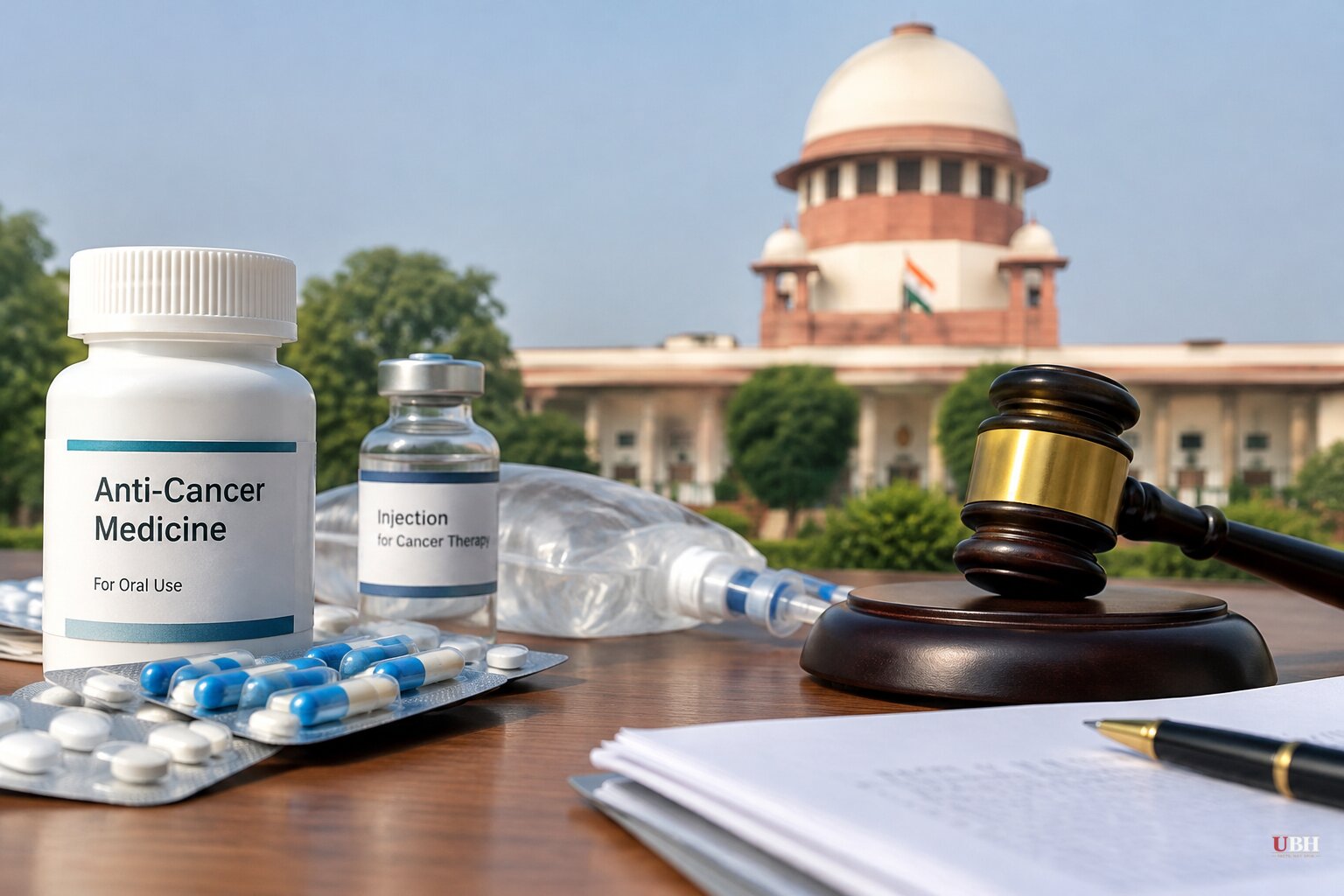
The Supreme Court on Monday, Oct. 12, told the Centre that capping trade margins on cancer drugs alone is not enough, and demanded to know why every non-patented medicine and medical consumable shouldn't get the same treatment.
Solicitor General Tushar Mehta and Additional Solicitor General Aishwarya Bhati told the bench of Justices Vikram Nath and Sandeep Mehta that the government has decided to cap trade margins on anti-cancer drugs at 30% of the maximum retail price (MRP). The Centre says the move should save patients about Rs 2,500 crore a year.
The court was not impressed. "There is hardly anything to be happy about. There is actually nothing for the benefit of the patients," the bench said.
How the cancer-drug cap is supposed to work
According to the Solicitor General, the 30% cap will cover both patented and non-patented cancer medicines. An expert committee headed by the Director General of Health Services will identify which drugs fall under it. The National Pharmaceutical Pricing Authority (NPPA) will then review the committee's recommendations before issuing a price notification.
The cap is therefore not yet in force. The committee list and the NPPA notification still have to come.
The bench acknowledged the decision and credited the Solicitor General for acting quickly. It called the step "just the tip of the iceberg" and said it came "only because of the unduly hard observations" the court made in earlier hearings.
The price gaps the court cited
The judges laid out examples of the spread between what retailers pay and what patients are charged:
- An India-made cardiac stent with a price to retailer (PTR) of about Rs 5,000 carries an MRP of Rs 25,000.
- A saline drip line priced at Rs 11 sells for around Rs 270.
- Azithromycin has an MRP of Rs 78.29 against a price to stockist of Rs 28.50.
"There are thousands of examples," the bench said. Justice Mehta noted that transport, raw material and R&D costs are all built into the MRP already. "What is the logic behind allowing them to sell at 400 times the actual cost? How can you allow this? What is the benefit for the patients?" he asked.
The court also said the Centre had accepted that profit margins on drugs and medical consumables can reach 1,000%.
The bench suggested a uniform rule limiting the MRP to no more than 16% above the PTR. That figure mirrors the retailer margin prescribed under the Drugs (Prices Control) Order, 2013.
The government's objection
Bhati cautioned against a one-size-fits-all cap. Low-value products, she argued, often need higher margins for retailers to find them worth stocking. Excessive regulation could push retailers to drop such medicines, hurting availability, particularly in rural areas.
She stressed the need to leave some room for market forces rather than put every product under price control. The court did not accept that this justified the current spread, and asked how patients benefit when manufacturers are free to set drug prices.
Where the case started
The hearings stem from petitions filed by advocate Kishan Chand Jain and paediatric surgeon Sanjay Kulshrestha. They want stricter enforcement of price controls under the 2013 order to curb disproportionate margins across the pharmaceutical supply chain.
On Sept. 22, the same bench flagged a cancer drug sold to retailers for Rs 2,700 that carried an MRP of Rs 27,000. Justice Mehta asked, "How can a patient be cheated?" and questioned officials' silence on the gap. The court has also described mark-ups of up to 1,000% as "broad daylight dacoity."
The bench noted that hospitals buy medicines at these prices and then seek government reimbursement for patients treated under the AYUSH scheme. "It's ultimately taxpayer's money," Justice Mehta said.
When the state reimburses inflated MRPs, the public pays the markup. The Centre's own argument is that rigid caps carry supply costs. The court's position is that the existing spread has no justification the government has been able to offer.
What comes next
The court has listed the case for further hearing on Oct. 27. The Centre must by then explain why its margin cap should stop at cancer drugs. The expert committee's drug list and the NPPA notification are the next steps that will determine what the 30% cap actually covers.
Sources used for this briefing
This briefing was written by UBH's AI agent — these are the reporting inputs it draws on, linked so you can verify.


