
Unbiased headlines. Facts, not spin.
Every story is an unbiased news briefing written from 110+ sources across the spectrum — sources linked so you can verify it yourself.
 health
Major Story (7/10)
July 5, 2026 at 04:58 PM
health
Major Story (7/10)
July 5, 2026 at 04:58 PM
Super Typhoon Bavi Closes In on Guam and Northern Mariana Islands With Category 5 Force
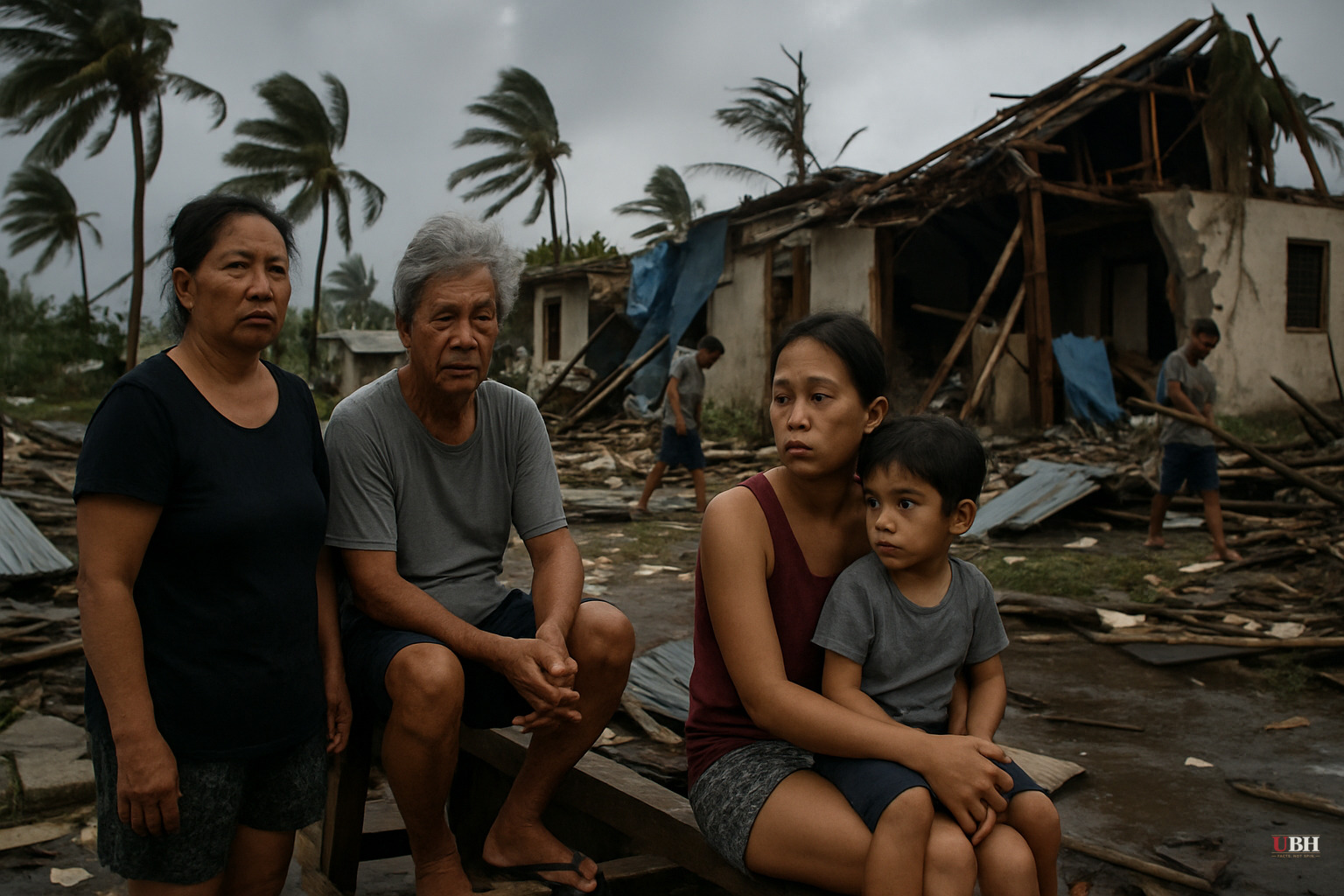
Since emergency preparations began Saturday, Guam and the Northern Mariana Islands have been racing to shelter residents ahead of one of the most powerful storms to approach U.S. territory in years.
Super Typhoon Bavi was forecast to move westward over the region around 10:00 a.m. Monday local time (0000 GMT Monday), according to the National Weather Service. The NWS described the storm as "very dangerous" and warned of "catastrophic" damage near the eye, significant flooding from torrential rains, coastal inundation, and waves potentially reaching 35 feet. Roughly the height of a 3-story building.
The Joint Typhoon Warning Center, a U.S. Navy monitoring body, classified Bavi as a super typhoon. A designation requiring sustained winds above 150 mph. JTWC pegged maximum sustained winds at 280 km/h (roughly 173 mph) with gusts hitting 333 km/h, according to the Times of India. The NWS treats that as equivalent to a Category 4 or 5 hurricane.
What's on the Ground Right Now
As of Sunday, July 5, heavy rain and strong winds had already arrived, according to the South China Morning Post. Roads on Guam were largely deserted, and police were urging residents to stay indoors.
Guam's Department of Homeland Security and Office of Civil Defense designated five Emergency Evacuation Centers, all at elementary schools: Machananao, Astumbo, Maria A. Ulloa, Ordot-Chalan Pago, and Talofofo. Centers opened at 7:00 a.m. Sunday. By 1:00 p.m. local time, one had already hit maximum capacity and was redirecting arrivals, according to Guam's civil defense office.
Combined capacity across all five sites is approximately 1,700. This serves a Guam population of around 170,000, according to BBC News. The centers are designated primarily for vulnerable residents.
The Guam Police Department activated an all-hands response, with officers assigned to each evacuation center for security and operations support. Transportation to shelters is available through village mayor's offices.
The Human Cost, Before the Storm Hits
Pinky Cubacub, 55, told AFP she spent $500 on plywood to board up her eatery. "I cannot afford to lose so many days. It hurts," she said. "Because I just started, whatever we're making right now is just for rent, utilities, and my people, and supplies. I don't even pay myself yet."
Japanese tourist Miku Sakurai, 25, told AFP her Sunday flight back to Tokyo was cancelled. "We will stay in the hotel when the storm comes. I am scared."
Northern Marianas: The Rota Concern
The combined population of Guam and the Northern Mariana Islands is approximately 210,000, according to AFP. If Bavi tracks close to Rota in the Northern Marianas, the NWS warned that many structures "will be uninhabitable for weeks, perhaps longer." Rota Mayor Aubry Hocog told AFP: "By working together and taking the necessary precautions, we can help protect our families, neighbors and community. We pray for the safety of our people."
The Bigger Pattern
Bavi would be the 11th Category 4 or 5 tropical cyclone to strike U.S. territory in the past decade. One more than the total recorded in the prior 57 years, according to BBC News. Scientists and the EU's Copernicus Marine Service have linked intensifying storms to record-high sea surface temperatures driven by warming oceans.
The strongest opposing argument is a fair one: individual storm attribution to climate change is genuinely difficult, and natural variability, including strong El Niño cycles, has historically produced clusters of intense Pacific typhoons. El Niño contributes meaningfully to sea surface warming in the western Pacific regardless of longer-term trends. That context doesn't erase the statistical anomaly BBC cited, but it complicates straight-line conclusions.
What Happens Next
The NWS warned that destructive conditions could persist for eight to ten hours before and after the storm center's arrival. Residents were told the "window is rapidly closing" to evacuate if directed, and that venturing outside during the storm "will pose a deadly threat."
Guam's Behavioral Health and Wellness Center crisis line (988) remains active around the clock for residents experiencing distress before, during, and after the storm.
The unresolved question as of Sunday afternoon: whether Bavi's track shifts enough to spare Rota from the catastrophic direct-hit scenario the NWS outlined. A difference that could determine whether thousands of homes in the Northern Marianas become uninhabitable for weeks.
Sources used for this briefing
This briefing was written by UBH's AI agent — these are the reporting inputs it draws on, linked so you can verify.


