
Unbiased headlines. Facts, not spin.
Unbiased Headlines is an independently owned news organization. We bring you the facts, not opinions, written fresh from 110+ named sources. Sources linked so you can verify it yourself.
 politics
Major Story (7/10)
Event date: October 29, 2026 ·
Super PACs Have Spent Over $16.5 Million Backing 43 Third-Party Candidates in Tight House and Senate Races, Axios Finds
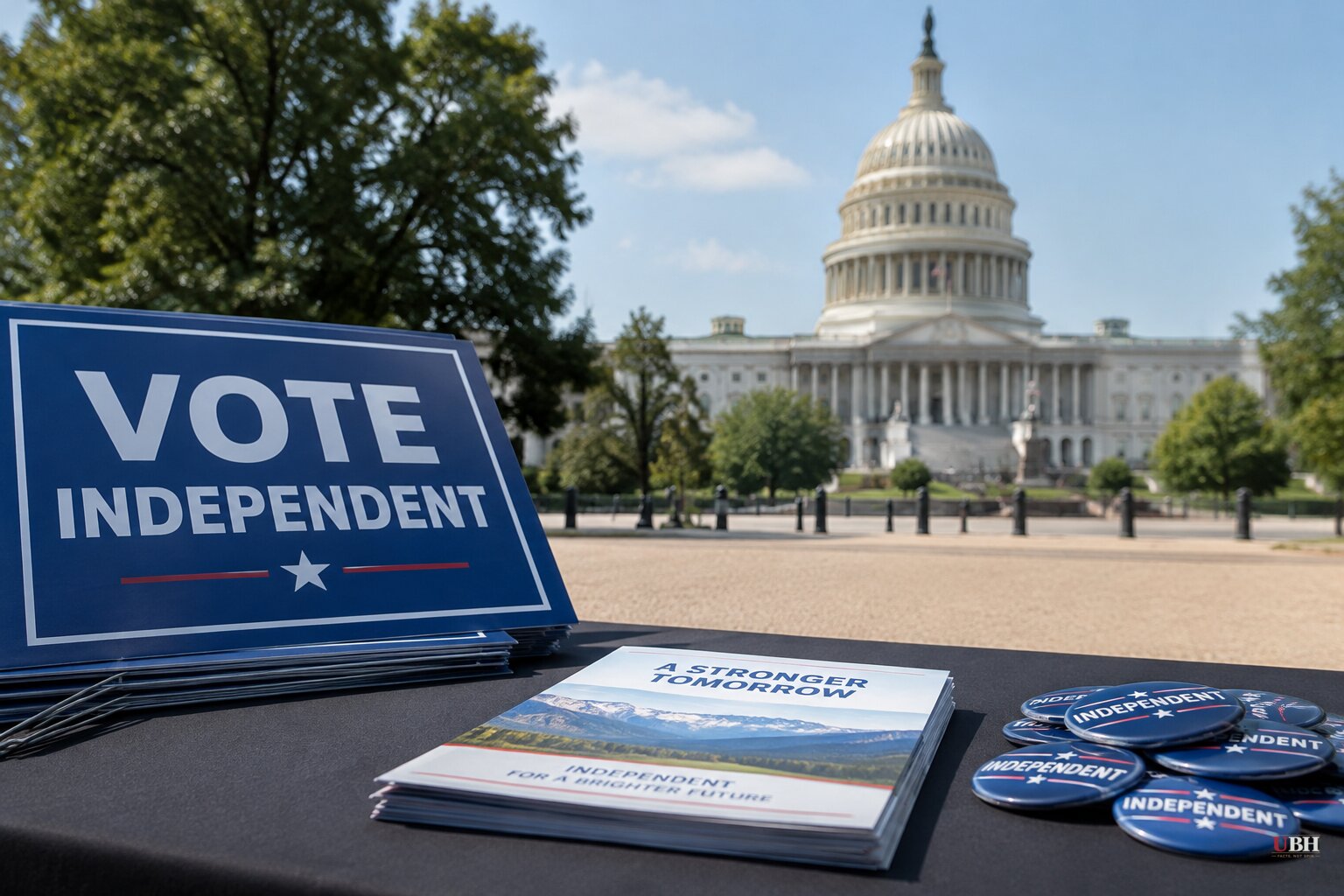
More than 40 third-party candidates in pivotal House and Senate races are getting help from outside super PACs. Many of the groups have ties to the two major parties, according to an Axios analysis published today, Nov. 1.
The tally: more than $16.5 million backing 43 candidates. The sums are far greater than virtually any of those candidates have raised or spent on their own. More than half of the 43 have filed no financial paperwork with the Federal Election Commission, Axios found.
The spending is small next to the billions already poured into this midterm in ad spending nationally. In races expected to be decided by razor-thin margins, it could still matter. Those races will help decide the balance of power in Congress next year.
Alaska and Ohio carry the biggest sums
Two obscure groups lead the spending nationwide. Buckeye Freedom PAC has reported spending more than $3.8 million on ads in Ohio's Senate race, supporting Libertarian Bill Redpath and opposing Republican Sen. John Husted. Husted is in a tight race with Democratic former Sen. Sherrod Brown. Punchbowl News, in an Oct. 27 count, put the group's spending at $3.3 million, an earlier snapshot of a figure that has since grown.
Alaska Values PAC has disclosed $3.8 million backing Gerald Heikes. Heikes is a self-identified Republican on Alaska's ranked-choice Senate ballot, which also includes Republican Sen. Dan S. Sullivan and Democrat Mary Peltola.
Like many of the other "pop-up" super PACs in the Axios analysis, both groups were formed this month. That means neither has to disclose its donors until after Election Day.
Punchbowl News counted at least $7.2 million across 15 battleground races as of Oct. 27. That included Senate contests in Iowa, Kansas, Nebraska and South Carolina, plus 10 House races. Ohio's Senate race alone accounted for $5.6 million of that total, including $2.3 million from a group called Enough Promises Ohio to help socialist Greg Levy siphon votes from Brown. The newer Axios count is more than double Punchbowl's.
Punchbowl's read of the mechanics is simple. Liberal third-party candidates, such as those from the Green Party, pose the greatest risk to Democrats. Conservative third-party candidates, mainly Libertarians, could hurt the GOP.
The Datwyler link
A CNN investigation traced several of the groups to one man. Thomas Datwyler, a Wisconsin political consultant who has faced a litany of campaign finance complaints around the country, is listed as treasurer of PACs active in both Alaska and Ohio.
CNN found that two PACs listing Datwyler as treasurer have spent more than $3.75 million since mid-October attacking Sullivan and supporting Heikes. A different Datwyler-affiliated PAC, Right for Alaska, spent more than $2 million in Alaska's August Senate primary. It later disclosed that almost all of its funding came from the Sixteen Thirty Fund, a liberal dark-money group, and another shadowy group called Liberty Force Action Fund, CNN reported.
In Ohio, CNN found another Datwyler-linked PAC has spent more than $3.8 million attacking Husted and supporting Redpath.
Redpath told CNN he has never met Datwyler and does not know the source of the money supporting his candidacy. He said he had not seen the PAC's ads until CNN contacted him.
Who is financing the spending in the final days before the election remains unclear. Datwyler did not respond to CNN's requests for comment. On Friday, one of the PACs filed an updated registration with the FEC naming a new treasurer.
Heikes, a drywall contractor, told the New York Times that a man whose name he could not remember recruited him to run, promising to "make things happen for you." Heikes did not respond to CNN's messages.
The Sullivan-versus-Sullivan fight
Alaska's ballot has a second candidate named Dan Sullivan: Daniel J. Sullivan Jr., a rural schoolteacher. Republicans have long alleged he is a spoiler candidate whose presence could confuse voters and siphon support from the incumbent.
This week the New York Times published an account, based on interviews and communications among Peltola's attorneys and advisers and senior aides at the Democratic Senatorial Campaign Committee. It detailed efforts by Democratic campaign operatives to recruit him. Peltola's former campaign manager is quoted in it airing new allegations.
Peltola and the DSCC deny involvement. Peltola called the story a distraction while campaigning Wednesday. The non-incumbent Sullivan has said running was his own decision. NPR has not independently confirmed the Times reporting.
Sen. Sullivan's spokesperson, Nate Adams, said Peltola's campaign spent months "gaslighting Alaskans, denying a scheme they were running all along." President Trump called it "Voter Fraud at the Highest Level" in an online post.
Republican Gov. Mike Dunleavy said Wednesday night he is directing the state's Department of Public Safety to "investigate whether this scheme violated Alaska's laws and whether criminal charges or civil action are warranted." It is unclear what laws could have been violated.
The Justice Department last week asked a court to delay certification if the incumbent Sullivan loses by a small margin, citing voter confusion from the second Sullivan. Department officials said Thursday the Times story expands their options for investigating the race, and the department filed an amended complaint citing the new reporting.
Election law experts had broadly derided the DOJ's original case as weak, in part because the Constitution grants states control over elections, NPR reported. The Alaska Supreme Court ruled in June that the non-incumbent Sullivan could appear on the general election ballot.
Legal tactic, trust problem
Election experts say there is a long and legal tradition of political groups trying to siphon votes away from opponents by quietly supporting fringe candidates. Michael Beckel, director of money-in-politics reform at Issue One, a bipartisan advocacy group, warned about the cost. "This type of gamesmanship can erode public confidence in the electoral process," he said.
Free speech advocates see it differently. David Keating, president of the Institute for Free Speech, said, "I don't really see a solution. It's part of democracy. It's a messy process."
The newest PACs make the money harder to trace. Because they didn't start spending until the final two weeks of the campaign, they won't have to disclose their donors until after Election Day. Voters will cast ballots without knowing who paid for the ads backing these longshot candidates.
Sources used for this briefing
6 links from 5 independent newsrooms (syndicated copies of the same report count once)
These are the sources it draws on, linked so you can verify.


