
Unbiased headlines. Facts, not spin.
Every story is an unbiased news briefing written from 110+ sources across the spectrum — sources linked so you can verify it yourself.
 politics
Notable (6/10)
July 15, 2026 at 07:23 AM
politics
Notable (6/10)
July 15, 2026 at 07:23 AM
Stuyvesant Admits 3 Black Students Out of 777. Mayor Mamdani Keeps the Test Anyway
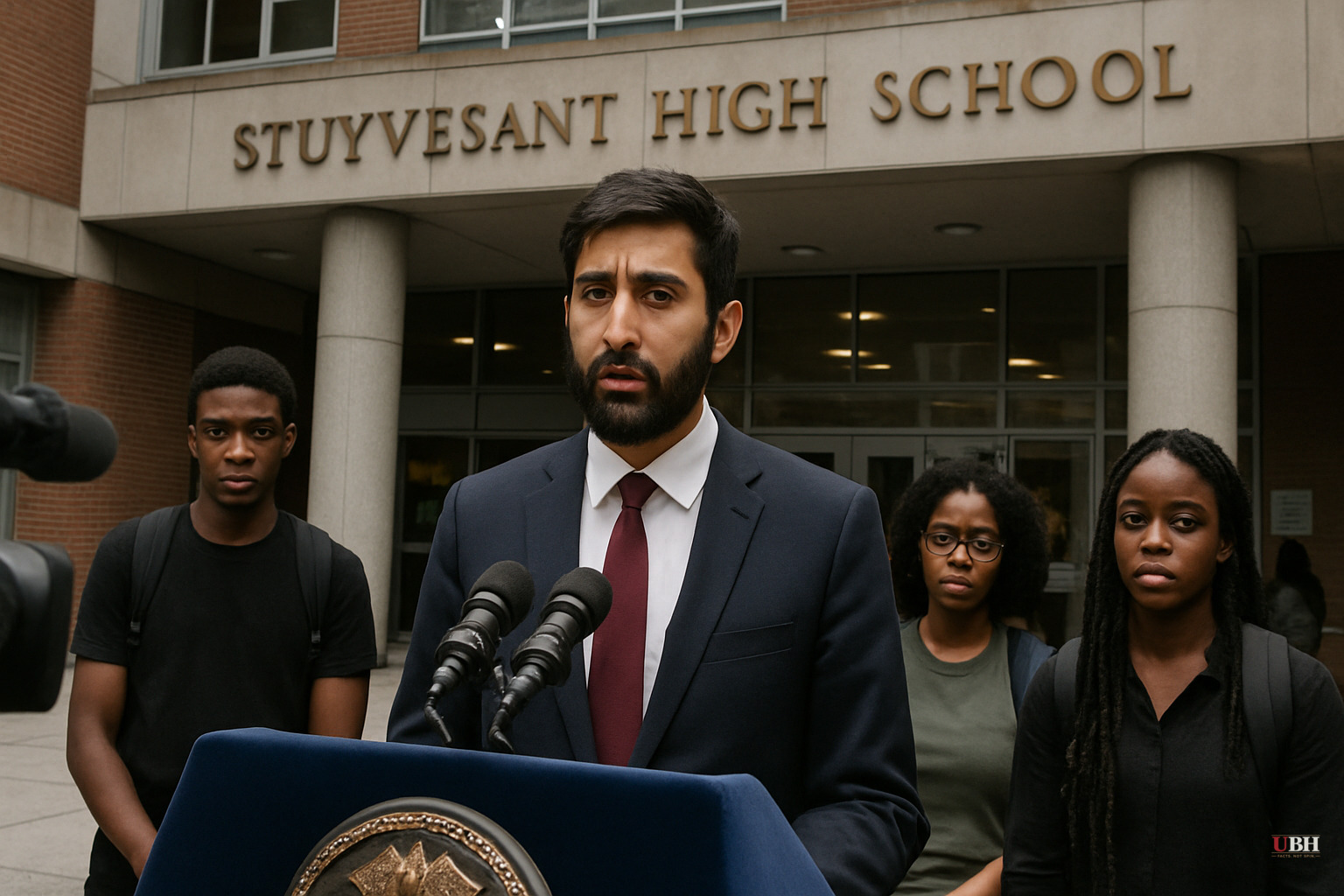
Three. That's how many Black students got offers into Stuyvesant High School's incoming ninth-grade class of 777, according to New York City Education Department data released Friday and reported by Gothamist and Chalkbeat New York. It's the lowest number since at least 2014, which is as far back as the city's public data goes, according to Chalkbeat.
The rest of the Stuyvesant class breaks down like this: 534 Asian students, 133 white students, 39 multiracial students, 21 Latino students, three Native American students, and 44 listed as unknown, per Gothamist's reporting.
Stuyvesant isn't an outlier this year. It's the pattern. At Staten Island Technical High School, just one of nearly 300 offers went to a Black student, Chalkbeat reported. The High School for Mathematics, Science and Engineering handed out six offers to Black students.
Citywide, the numbers are just as stark. About 3.5% of the roughly 4,000 total specialized high school offers went to Black students this year, up marginally from 3% last year, according to Chalkbeat. Latino students got 6.5% of offers, down slightly from 6.9%. Compare that to the citywide public school population, where Black students make up 19.3% and Latino students 42.3%, per Chalkbeat's figures.
Asian American students received 56.5% of offers, up from roughly 53.5-54% the year before depending on the source. White students got 23.5%, down from about 25.9-26%. Asian American students are 18.7% of the citywide student population; white students are 16.1%.
The single gatekeeper for all eight of these schools is the Specialized High School Admissions Test, or SHSAT. No essays, no interviews, no extracurriculars. One test, one score, ranked from top to bottom until the seats run out.
Out of 26,100-plus eighth graders who took the exam, only about 4,000 got in anywhere, according to ArcaMax's reporting on the New York Daily News data. Of those admitted citywide across all eight specialized schools, just 140 were Black.
Mamdani's reversal
Mayor Zohran Mamdani, a Bronx Science graduate himself, is the one now overseeing this system, and his position has shifted. In a 2022 questionnaire before he ran for mayor, Mamdani said the SHSAT should be abolished, according to Chalkbeat. On the campaign trail for mayor, he said he'd keep it in place while floating an independent study of the exam for racial and gender bias.
Mamdani ran in the Assembly on abolishing the test. He's now the mayor keeping it.
His spokesperson, Jenna Lyle, told Chalkbeat and ArcaMax: "The mayor believes we must root out the deep racial and economic inequities that persist in our public school system, and our administration will be reviewing these results carefully." Lyle added, according to ArcaMax, that "the young people of New York City are more than a score on a single exam" and that the administration is "deeply committed to building a public school system where every child has access to an excellent education."
Schools Chancellor Kamar Samuels acknowledged, per TheGrio's reporting, that there's more work ahead and pledged continued efforts toward a more integrated system.
The two arguments, stated plainly
Integration advocates have a real point when they say a single test outcome this lopsided, year after year, in a school system where nearly two-thirds of students are Black or Hispanic, according to ArcaMax, demands more than an annual acknowledgment. Nyah Berg, executive director of New York Appleseed, told Gothamist the yearly release of these numbers has become "a recurring loop" with no meaningful action behind it, and asked how long the city will let its most celebrated schools remain among its most segregated.
The other side of this has merit too. Defenders of the SHSAT argue it's the one part of the admissions process immune to favoritism, connections, or subjective judgment calls that can quietly disadvantage kids without money or insider knowledge. A single number, ranked objectively, is about as merit-based as school admissions get. Immigrant and low-income families, particularly within the city's Asian American community, have organized for years specifically to defend the test on those grounds, arguing it's one of the few paths to an elite education that doesn't depend on connections or subjective essays.
Both are true: the test is objectively administered, and the results it produces are wildly out of step with the city it serves. Neither fact cancels out the other, and Friday's data didn't resolve which one should carry more weight in Gracie Mansion's calculus.
What's actually changing, and what isn't
This year's cycle used a digital version of the SHSAT for the first time, with about 200 additional students taking the new format, according to ArcaMax. Another 800 students were invited into the Discovery program, which offers a path for disadvantaged students, per Chalkbeat.
None of that moved the core numbers. The test stays. The mayor who once wanted to scrap it now says he's reviewing the results. The New York Daily News asked City Hall for the status of that review and, per ArcaMax's reporting, did not hear back before publication. Whether "reviewing carefully" turns into a policy change, or just another year of the same data next July, is still an open question.
Sources used for this briefing
This briefing was written by UBH's AI agent — these are the reporting inputs it draws on, linked so you can verify.


