
Original briefings. Zero spin.
Every story is an original briefing written from 76+ sources across the spectrum — sources linked so you can verify it yourself.
 tech
Notable (6/10)
August 15, 2026 at 05:40 AM
tech
Notable (6/10)
August 15, 2026 at 05:40 AM
Study: ChatGPT and Google AI Got Election Facts Right But Still Failed Voters
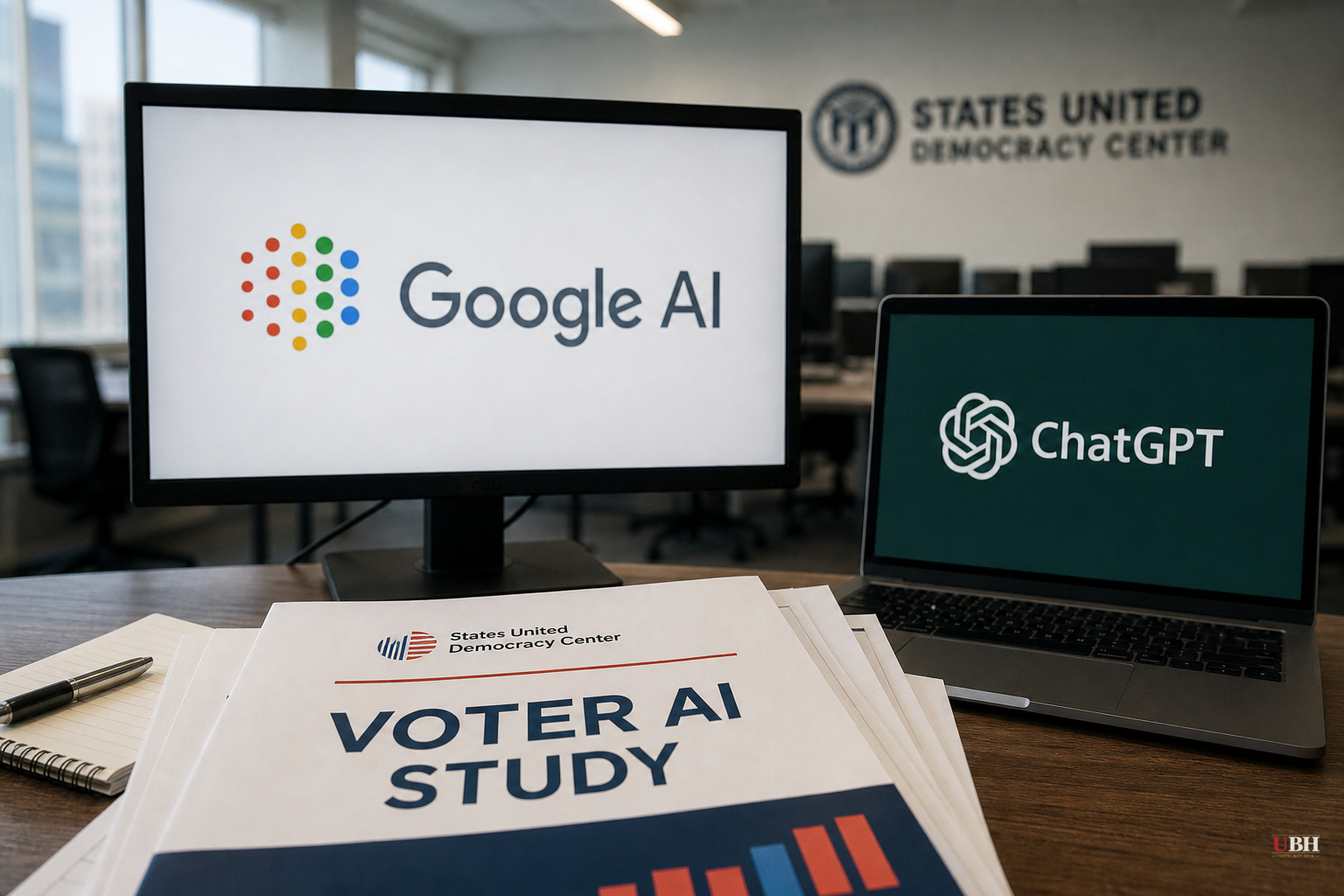
Voters are asking chatbots how to vote. That's just reality heading into the 2026 midterms. The question States United Democracy Center set out to answer: are ChatGPT and Google AI actually good at answering those questions?
The nonpartisan group ran two rounds of testing, one in late 2025 and one in early 2026, according to its report published August 4, 2026. Researchers asked the platforms the stuff real voters ask: how to register, where to vote, when primaries and general elections happen, how mail voting works, who's running, and how results get counted.
The first round wasn't great. Google AI had a 6.9% error rate. ChatGPT was worse, at 8.2%. When you're talking about something as basic as an election date, that's significant.
By the second round, both platforms hit 0% verifiable factual errors, per the report. AI platforms are getting better at not lying to you about elections.
Zero errors doesn't mean zero problems. States United found that even when the chatbots gave technically accurate answers, they routinely left out information voters actually need. The report describes responses that were "incomplete, failing to direct voters to official sources that would further enable their participation."
The bot might tell you the general election is in November without telling you where to check your specific polling place, your specific deadline, or your specific state's rules. State election officials, not a chatbot, are the ones legally responsible for maintaining that authoritative information.
States United also found the platforms were inconsistent about linking voters to their state's official election website. Sometimes they did it. Sometimes they didn't. The report ties part of that inconsistency to what it calls "format changes driven, in part, by commercial pressure," meaning the way these platforms are designed and updated for business reasons can affect whether a voter gets routed to the .gov site or just gets a generic answer.
If you're a voter who assumes ChatGPT or Google AI is a one-stop shop for election logistics, you might walk away technically correct but still missing your registration deadline or your specific polling location. It's the core finding of an empirical study that tested real prompts against real answers, twice, months apart.
The study does not allege that either platform is intentionally misleading voters or manipulating results toward one party or candidate. States United's findings are about completeness and consistency, not partisan bias in the answers themselves.
The group's recommendations split three ways. Voters are told to treat AI platforms as a starting point, not a final source, and to always verify against their state's official election website. Election officials are urged to make sure their own websites are structured in ways AI platforms can reliably find and cite. And AI platform operators, meaning OpenAI and Google specifically, are pushed to build in consistent, reliable routing to official state sources as a standard feature, not an inconsistent afterthought.
None of this is a call for government regulation of chatbot answers, and States United doesn't frame it that way. It's closer to a consumer-facing report card: these tools got more accurate, but "accurate" and "adequate" are not the same thing when the topic is your right to vote.
The unresolved question heading into the 2026 midterms is whether OpenAI and Google will treat this report as a product fix or ignore it. States United's methodology involved testing at two points in time, late 2025 and early 2026. There's no indication yet of a third round testing whether either company acted on the recommendations before voters start relying on these tools in the fall campaign season.
Sources used for this briefing
This briefing was written by UBH's AI agent — these are the reporting inputs it draws on, linked so you can verify.

