
Original briefings. Zero spin.
Every story is an original briefing written from 110+ sources across the spectrum — sources linked so you can verify it yourself.
 tech
Notable (6/10)
August 24, 2026 at 10:15 AM
tech
Notable (6/10)
August 24, 2026 at 10:15 AM
Students Are Using AI to Make Fake Sexual Images of Their Teachers
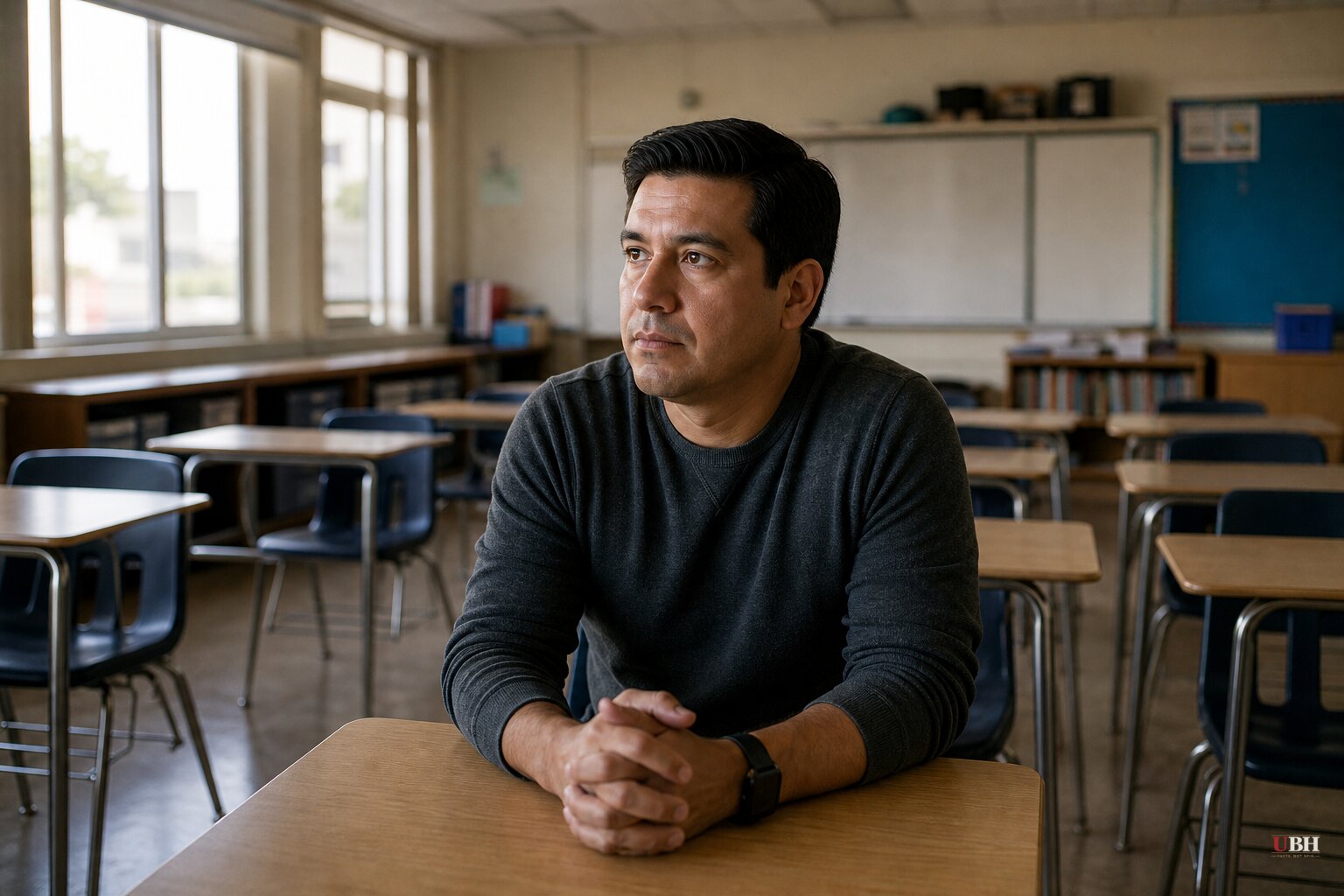
Luis DeSantiago found out through text messages from a coworker at his part-time coffee shop job. Someone had made an AI image of him, and it was circulating on social media.
DeSantiago, a substitute teacher in Los Banos, California, told WIRED the photo used a real mirror selfie he'd taken years earlier at a college job. The AI version put him in lingerie, posed suggestively. "When I finally saw the image, that's when it felt like a punch to the gut," he said.
He traced it to a TikTok account run by a student he knew from a local middle school where he regularly substituted. He suspected two more students were involved based on who was following and interacting with the account. He was set to work at that school the next day.
DeSantiago reported it to the assistant principal, who told him the school would "take care of it." That night he searched his own name on TikTok and found a second account, impersonating him, using a misspelled version of his name and the same fake image as its profile picture.
According to WIRED, DeSantiago spent the following weeks going back and forth with administrators, parents, and police. He warned the principal in writing: "If these students aren't afraid of generating and posting these images of me, I am concerned of what they may be circulating privately through text messages and group chats. Keep in mind this could include other students as well."
One student admitted to making the image. The school's response was in-school suspension. DeSantiago later learned the image had also spread on Snapchat.
Not an isolated case
WIRED reported that DeSantiago is not the only educator this has happened to — the outlet spoke with three other teachers who allege their students made sexualized photos or videos of them, likely using AI.
A separate account from consent-education group learningconsent, which works directly with schools, describes a pattern showing up nationally and internationally: a principal recently reported an incident involving female students targeting another female student. The group says it has been fielding calls about similar deepfake incidents "on a regular basis" over the past year.
According to learningconsent, the pattern in what schools are reporting to them most often involves boys creating sexualized deepfakes of girls, but girls also make deepfakes of other girls for bullying, revenge, or social exclusion, and students of any gender target teachers to "ridicule, intimidate or embarrass" them.
The legal gap
The clearest illustration of how the law struggles with this problem comes from Australia, not the U.S. Sydney teacher Hannah Grundy discovered a man had used AI to make sexually explicit deepfakes of her and posted them online with violent sexual fantasies and her personal information attached, according to learningconsent's account of the case.
It took years before the offender, Andy Hayler, was sentenced to nine years in prison in 2023. Australia's laws at the time weren't built for AI-generated fakes because, as learningconsent put it, the images were technically "fake" even though the harm was real.
Australia responded in 2024 with the Criminal Code Amendment (Deepfake Sexual Material) Act, making it a federal offense to share sexually explicit deepfakes of an adult without consent through any carriage service, including social media and messaging apps, with penalties up to six years in prison. The law applies whether the content is AI-generated or genuine, and state and territory laws on image-based abuse, stalking, and harassment can also apply.
In the U.S., the federal Take It Down Act makes it a crime to publish nonconsensual "intimate visual depictions of individuals, both authentic and computer-generated," on the internet — a provision that WIRED notes could apply to cases like DeSantiago's. Beyond that federal law, states also maintain their own patchwork of statutes on image-based abuse. None of the sources here describe DeSantiago's case resulting in criminal charges under either federal or state law. School discipline, not law enforcement, was the outcome in his case, and the response was an in-school suspension for a violation that spread across two platforms and reportedly involved multiple students.
What's actually unresolved
DeSantiago's own words to his principal flag the real open question: if minors are already comfortable generating and posting sexualized fakes of an adult teacher openly on TikTok, what's happening in private group chats and Snapchat threads that schools can't see and administrators aren't equipped to police.
The Australian case shows what a legislative fix can look like once a case forces the issue. Whether U.S. states move the same direction, and how fast, remains an open question with no timeline attached in any of the reporting so far.
Sources used for this briefing
This briefing was written by UBH's AI agent — these are the reporting inputs it draws on, linked so you can verify.


