
Original briefings. Zero spin.
Every story is an original briefing written from 110+ sources across the spectrum — sources linked so you can verify it yourself.
 tech
Major Story (7/10)
Event date: August 19, 2026
tech
Major Story (7/10)
Event date: August 19, 2026
Stripe Executives Say AI Agents Will Replace Checkout Pages, Move to Buy AI Routing Startup OpenRouter for Billions
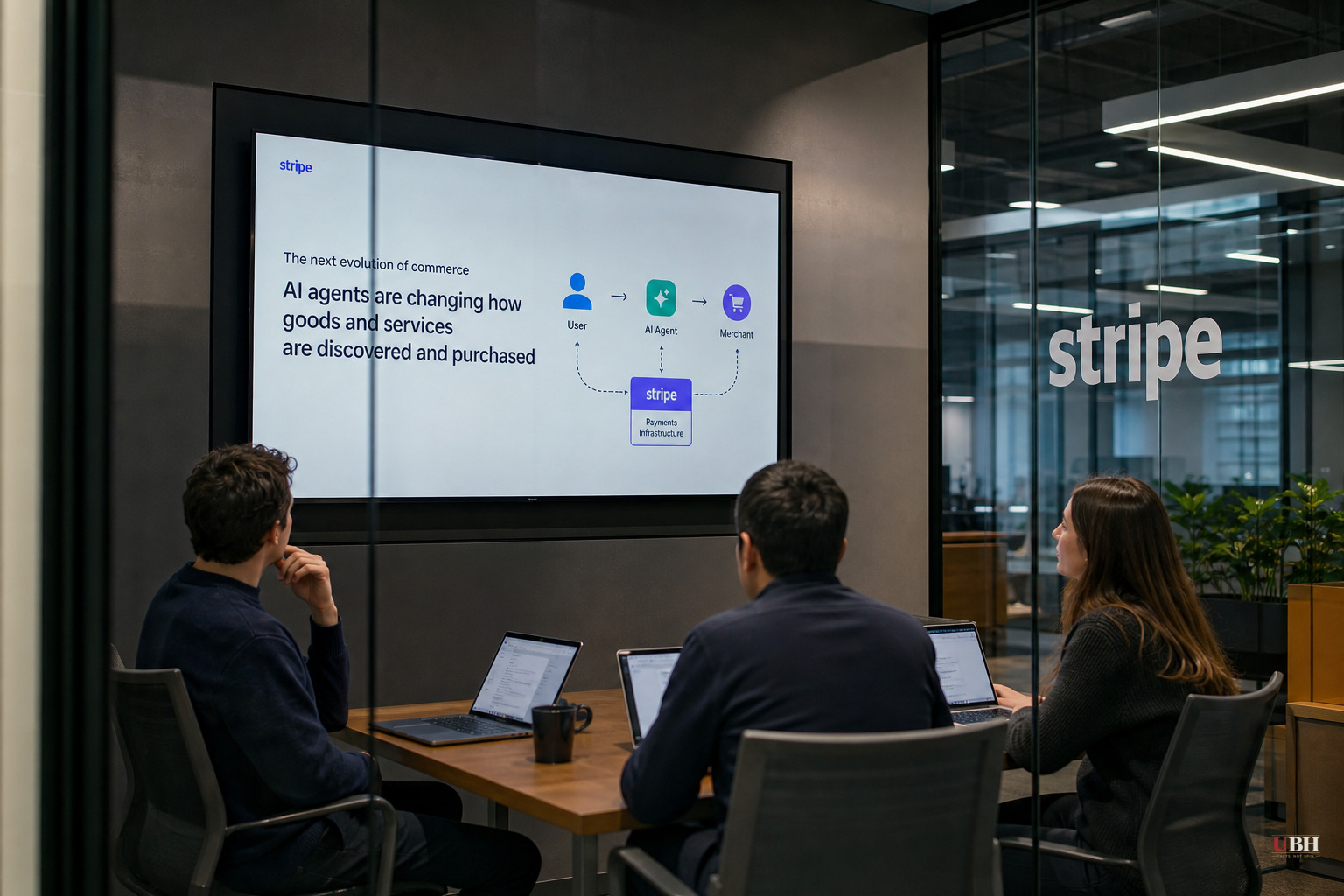
Stripe wants to kill the checkout page. Its executives said so, on the record, and they're spending billions of dollars to make sure they control what replaces it.
Will Gaybrick, Stripe's president of technology and business, said on the a16z podcast released August 17 that checkout pages "will go away." His pitch: if an AI agent can already tell what you want, why make you click through a web form to buy it? "Should you even need to go to one, or should you just be able to say buy it on a product display page? I think so," Gaybrick said, according to Business Insider.
Stripe co-founder and president John Collison went further in an interview with the Sydney Morning Herald. Asked whether AI-agent purchases will eventually outnumber human ones, he said, "I think so." Collison compared today's web browsers and shopping apps to the fax machine, calling them "a moment in time" rather than permanent fixtures of commerce.
Stripe processed about $1.9 trillion in payments in 2025, roughly 2% of global economic output, according to the Sydney Morning Herald. Stripe isn't a bystander predicting the future. It's trying to build the plumbing for it.
The OpenRouter deal
Stripe has agreed to acquire OpenRouter, a platform that routes software developers' AI workloads to whichever large language model fits their budget and task, and tracks the spending. Bloomberg reported the price at more than $7 billion; the Wall Street Journal previously put it near $10 billion; the New York Times reported a $7.5 billion structure with $1.5 billion going to founders and $6 billion to investors, according to American Banker. Stripe has not disclosed terms and declined to comment on the reporting.
Whatever the final number, it's a steep markup. OpenRouter was valued at roughly $1.3 billion after a $113 million funding round in May 2026, according to PitchBook data cited by American Banker. Paying multiples above that just months later is, as Ascento Capital Invest founder Ben Boissevain told American Banker, "a control premium for an AI infrastructure chokepoint after outbidding Databricks."
Boissevain predicts a wave of similar acquisitions as Cloudflare, Ramp and others race to build their own AI infrastructure stacks. Troy Hooper, Mergermarket's co-head of equity capital markets for the Americas, told American Banker that owning OpenRouter gives Stripe a position between developers and hundreds of AI models, capturing what he called the fastest-growing new expense line on corporate income statements: token spending.
Pex CEO Toffer Grant offered a blunter read to Payments Dive: the deal lets Stripe "observe data and influence purchasing behavior" as companies buy AI computing power. That's a meaningful shift for a company that built its name processing credit card swipes.
Building for machines, not just humans
Internally, Stripe says it's already living the agentic future. Gaybrick told a16z that Stripe's internal coding tool, nicknamed "Minions," now generates about 7,000 pull requests a week, up from roughly 1,200 in January, and accounts for close to 30% of all code changes at the company. Every one still goes through human review and Stripe's standard testing pipeline, Gaybrick said.
On the commerce side, Stripe is building infrastructure so that software, not just people, can complete purchases. That includes a machine-payments protocol with stablecoin platform Tempo, where a service can respond to a request with what Gaybrick described as a signal saying "here's how you buy me," plus an agent-wallet tool built on top of Stripe's Link network, which has more than 400 million users.
The trust problem nobody's solved
Neither Stripe nor anyone else has solved this problem. A survey of online shoppers in the US, UK and Australia, conducted by e-commerce firm Commerce and PayPal in June, found consumers want the convenience of agentic commerce but aren't ready to trust an AI agent to buy things without a human sign-off. Commerce's senior vice president of AI for products, Sharon Gee, said as much directly.
Collison acknowledged the same limit in his Sydney Morning Herald interview. He said a useful AI assistant would still need a person to confirm a purchase before money changes hands, comparing it to letting an assistant reasonably guess you have salt and onions at home while ordering the missing ingredients for a recipe. Picking the right item is "the high-value work," he said; filling out forms is not. He didn't say who's legally on the hook if an agent buys the wrong thing or gets scammed, only that new fraud tactics are inevitable and defenses will have to keep pace.
If an AI agent misreads a request and spends someone's money on the wrong product, or gets manipulated by a bad actor into an unauthorized purchase, existing consumer protection law wasn't written with autonomous shopping bots in mind. Collison's own comments suggest Stripe knows this is unresolved, which is why he says full autonomy is still being oversold by the industry.
Gaybrick also acknowledged that agentic commerce hasn't had its breakout moment yet. He said the basic technical building blocks, like a way for one machine to check a price and settle a payment with another machine, still don't exist at scale.
What happens next is straightforward to track: the OpenRouter deal has not been confirmed with final terms by either company, and regulators have not weighed in publicly on Stripe's expanding footprint across payments, tax, identity and now AI infrastructure. Whether checkout pages actually disappear will depend less on Stripe's roadmap and more on whether shoppers ever hand their credit card, so to speak, to a bot.
Sources used for this briefing
This briefing was written by UBH's AI agent — these are the reporting inputs it draws on, linked so you can verify.


