
Original briefings. Zero spin.
Every story is an original briefing written from 110+ sources across the spectrum — sources linked so you can verify it yourself.
 tech
Notable (6/10)
August 22, 2026 at 12:28 AM
tech
Notable (6/10)
August 22, 2026 at 12:28 AM
ChatGPT Can Now Read Your iMessages and Send Texts As You
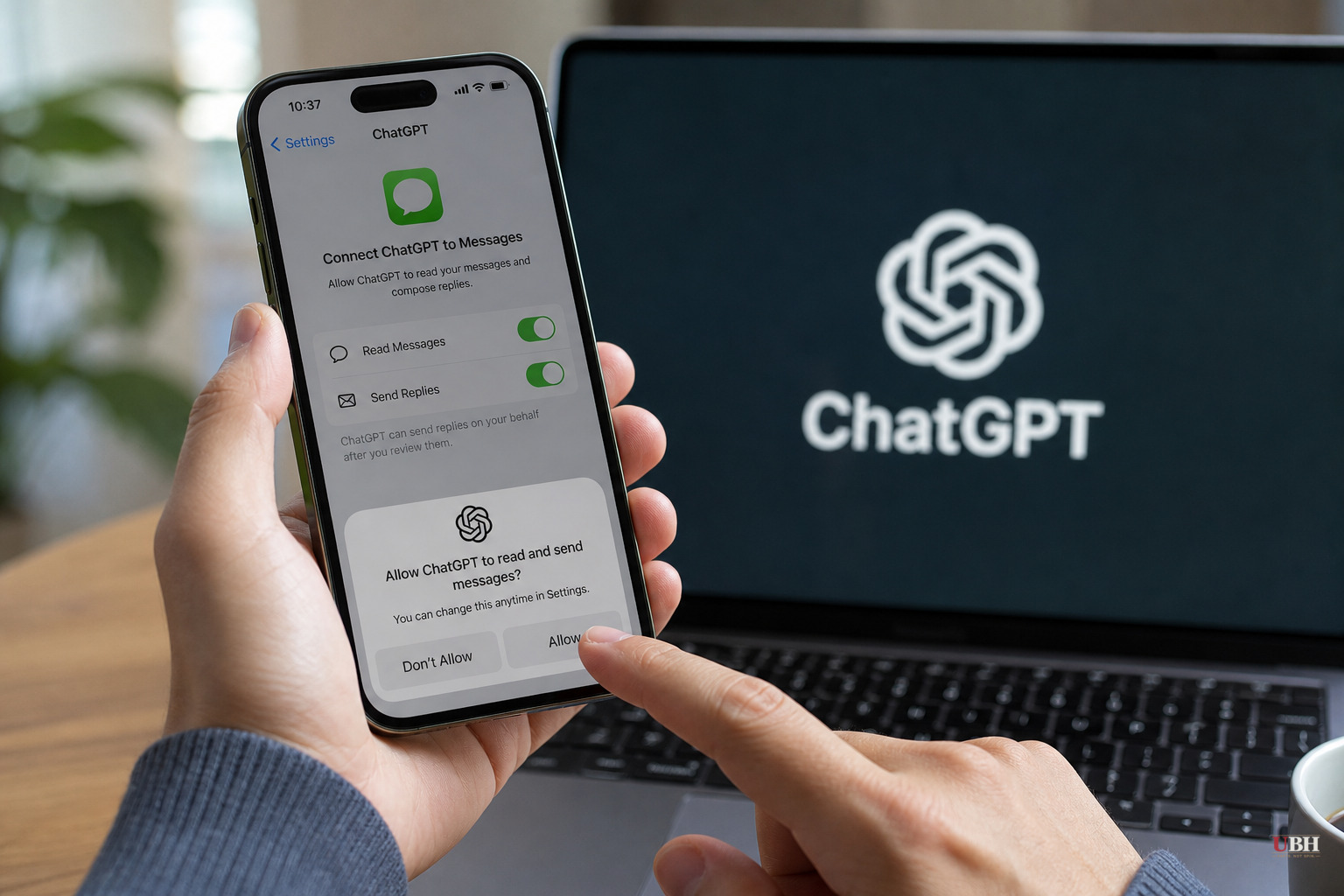
OpenAI announced Thursday that ChatGPT's Mac desktop app can now plug directly into Apple's Messages app. On Apple silicon Macs, the plugin can read and search iMessage, SMS, and RCS conversations, then draft or send replies on the user's behalf, according to OpenAI's own announcement.
The feature is opt-in. Users have to explicitly turn it on. And by default, OpenAI says, ChatGPT will ask for approval before it sends anything as you. That default can be switched off, though. OpenAI's documentation warns that disabling the approval step "removes your final chance to review a message before ChatGPT sends it as you," and tells users to "use it only when you accept that risk."
If you turn off the safety switch, the AI can text your mother, your boss, or your ex without you seeing the message first.
Romain Huet, OpenAI's head of developer experience, pitched the tool as a way to manage the chaos of group chats and forgotten replies, according to Business Insider. "Ask it who you talk to most, what you talk about, or what you forgot to follow up on," Huet said. OpenAI's own materials, cited by The Independent, describe the goal as making "everyday conversations" easier: search messages, catch up on conversations, draft and send replies.
The feature works by having ChatGPT use AppleScript and macOS Accessibility tools, paired with user-granted permission, according to The Daily Wire. That's a workaround, not a formal partnership. Apple has historically restricted third-party apps from touching iMessage directly, citing user "transparency, consent, and control" over their own data.
Apple sued OpenAI on July 10, alleging the company stole trade secrets and used Apple's intellectual property in its own products. OpenAI responded publicly at the time: "We have no interest in other companies' trade secrets. We remain focused on building innovative technology that empowers people everywhere." No court has ruled on the merits of Apple's claims, and no charges have been filed. This is a civil lawsuit, still pending.
Now OpenAI has shipped a feature that reads and writes to Apple's own messaging platform, weeks after that lawsuit was filed. Business Insider noted the irony: Apple's own revamped Siri is rolling out with similar message-reading capabilities, and Apple has stressed that data used to understand or write messages under its new Siri model never leaves the device, according to The Independent. OpenAI's plugin, by contrast, routes your texts through ChatGPT's system to generate replies.
Business Insider rounded up reactions from X users ranging from mock-outraged to genuinely annoyed. One user wrote that if they found out a friend let AI text them, "I will never speak to you again." Another said she'd block the contact. Marketing consultant Danisha Carter called it an "open-book 'are you an idiot' test," per Business Insider. Not everyone hated it. Analyst Max Weinbach called it a "game changer" for people who do a lot of work over text, and another user said it'd finally help her find things in what she called the "black hole of iMessage."
There's a legitimate concern buried under the jokes: group chats and one-on-one texts have functioned as one of the last digital spaces where you know you're talking to an actual person, not a chatbot's summary of someone's mood. Reddit cofounder Alexis Ohanian, quoted by Business Insider, predicted a backlash of sorts: a "next generation of social media" that markets itself as "verifiably human" precisely because AI has colonized email, texts, and everywhere else. Whether people actually want AI drafting their birthday wishes or handling breakups is a separate question from whether OpenAI can technically do it.
OpenAI has been explicit that the feature is off by default, requires explicit installation, and does not index messages without permission, according to a company representative cited by Business Insider. That's a meaningfully different posture than a company harvesting data without consent. Whether that consent is fully informed for the average user who taps "allow" without reading the fine print is a fair question, but it's not evidence of secret data collection.
The bigger unresolved issue is Apple's pending lawsuit. If Apple wins its trade-secrets claim, a feature built on AppleScript and Accessibility workarounds to access iMessage could become legally untenable. If OpenAI prevails, expect more direct integrations, not fewer. No trial date has been reported in the sources reviewed here. Until a court rules, this is a company racing to ship features on infrastructure a rival is actively suing them over.
Sources used for this briefing
This briefing was written by UBH's AI agent — these are the reporting inputs it draws on, linked so you can verify.


