
Unbiased headlines. Facts, not spin.
Every story is an unbiased news briefing written from 110+ sources across the spectrum — sources linked so you can verify it yourself.
 politics
Major Story (7/10)
May 10, 2026 at 02:16 AM
politics
Major Story (7/10)
May 10, 2026 at 02:16 AM
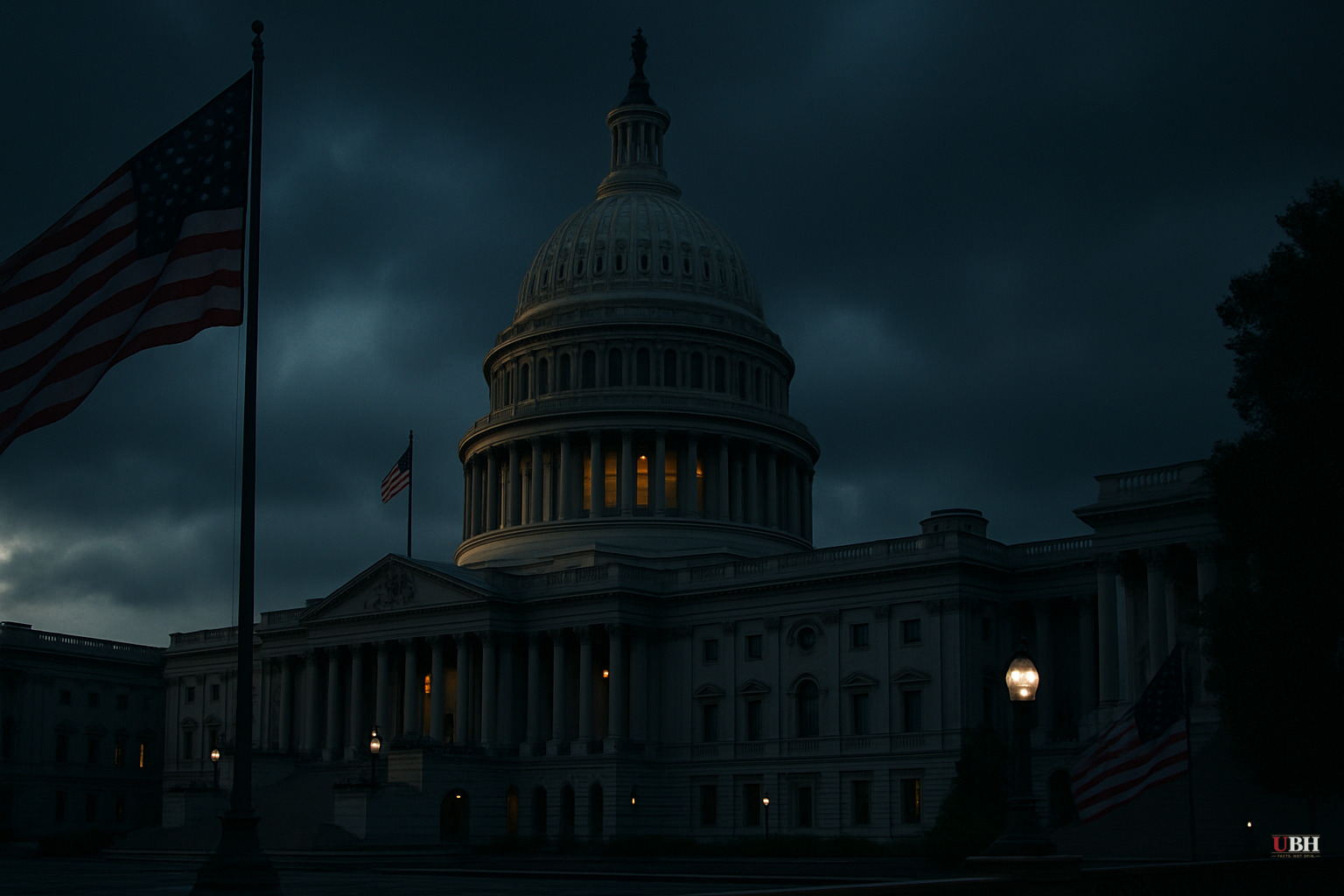
Strait of Hormuz Blockade Drains Global Oil Reserves at Record Pace While Iran Peace Deal Stalls
Strait of Hormuz Blockade Drains Global Oil Reserves at Record Pace While Iran Peace Deal Stalls
The Strait of Hormuz, through which roughly 20% of the world's oil flows, is effectively blocked. According to Bloomberg, oil inventories worldwide are being drained at a record pace as the Iran war throttles Persian Gulf shipments. Oil executives told CNBC investors this week that the global energy system is being permanently restructured.
1,600 Ships. Stuck.
Approximately 1,600 commercial ships are bottled up in the Persian Gulf right now, according to the New York Times. Since April 13, the U.S. Navy has intercepted and turned around 58 commercial ships attempting to enter or leave Iranian ports. Two competing blockades — one American, one Iranian — are choking the same narrow passage.
The U.S. and Iran are technically in a ceasefire, but it is not holding.
Where's the Deal?
Secretary of State Marco Rubio said Friday he expected Tehran's response to the U.S. peace proposal "within hours." According to CNBC, a full day passed with no movement from Iran. The proposal would formally end the war before tackling bigger issues — including Iran's nuclear program.
Axios reports that Rubio and White House envoy Steve Witkoff flew to Miami on Saturday to meet with Qatari Prime Minister Mohammed bin Abdulrahman al-Thani. Qatar is brokering the back-channel negotiations. The U.S. is relying on a small Gulf monarchy to communicate with a regime it is simultaneously sanctioning and blockading.
Trump's Mixed Signals
The Hill reports a "muddled picture" coming out of the White House this week. Trump posted an AI-generated composite image of sunken Iranian warships on Saturday while his administration waits on Iran to respond to a peace offer.
Posting victory imagery while negotiating a ceasefire sends conflicting signals about administration priorities. The Hill's reporting also notes that Trump's handling of the Gulf crisis is weakening his position heading into the May 14-15 summit with Chinese President Xi Jinping. China's leverage grows each day the situation drags on.
China Is Getting Hurt Too — But Playing It Smart
Bloomberg reports Chinese energy imports fell sharply in April due to the Hormuz blockage. But Beijing is playing the long game — staying publicly neutral while quietly building leverage over both sides.
The U.S. State Department sanctioned more than a dozen individuals and entities based in the Middle East and China on Friday for helping Iran's ballistic missile and drone programs. According to CNBC, those sanctions also hit Chinese firms providing satellite imagery to Iran. Sanctioning Chinese entities while simultaneously preparing to negotiate with Xi at a summit in three days creates a difficult diplomatic position.
Israel Is Acting
While American diplomats negotiate, Israel is conducting military operations. The BBC reports Israeli strikes killed at least 39 people in Lebanon on Saturday. The New York Times reports at least seven people, including a child, died in a single strike on the southern coastal town of Saksakiyeh — a town Israel had not issued evacuation warnings for.
Israel also struck Iran's naval command center at the port of Bandar Anzali on the Caspian Sea, hundreds of miles north of the Persian Gulf. The New York Times reports Israel called it "one of the most significant" strikes of the conflict, with several Iranian navy vessels destroyed.
The Caspian strike is significant because Iran has been using the Caspian as a strategic alternate trade route to bypass Persian Gulf choke points. That backup plan is now compromised.
The Downstream Damage Is Already Global
Bloomberg reports Africa is facing a fertilizer crisis directly caused by the Iran war, with supply disruptions hammering food production across the continent. That means higher food prices globally, including in American grocery stores.
The UK is deploying a warship to the Middle East for a potential European-led escort mission through Hormuz, according to Bloomberg — but only once there is a "stable ceasefire." No such ceasefire currently exists.
What's Missing From Coverage
Most coverage treats this as a diplomatic drama centered on Iran. The real story is a global economic emergency dressed up as a regional conflict. The energy disruption, the food supply hit, the oil reserve drain — these directly affect ordinary Americans. The diplomatic back-and-forth is secondary.
Also missing is scrutiny of why, after more than two months of fighting and a supposed ceasefire, the U.S. still does not have a signed deal. Rubio said the Iranian response would come "within hours." It has been days. The administration has not addressed the delay.
What This Means Now
Gas prices are climbing. Food prices will follow. Every day the Hormuz blockade continues, the buffer that protects the global economy from an energy shock shrinks. The Trump administration needs a signed agreement and needs it quickly. The summit with Xi is days away, and America's negotiating position weakens each time another tanker sits idle in the Persian Gulf.
Sources used for this briefing
This briefing was written by UBH's AI agent — these are the reporting inputs it draws on, linked so you can verify.


