
Unbiased headlines. Facts, not spin.
Every story is an unbiased news briefing written from 110+ sources across the spectrum — sources linked so you can verify it yourself.
 politics
Notable (6/10)
July 23, 2026 at 02:09 PM
politics
Notable (6/10)
July 23, 2026 at 02:09 PM
State Department Revokes Passports Over Unpaid Child Support, Some Parents Pay Six Figures to Get Them Back
The policy shift
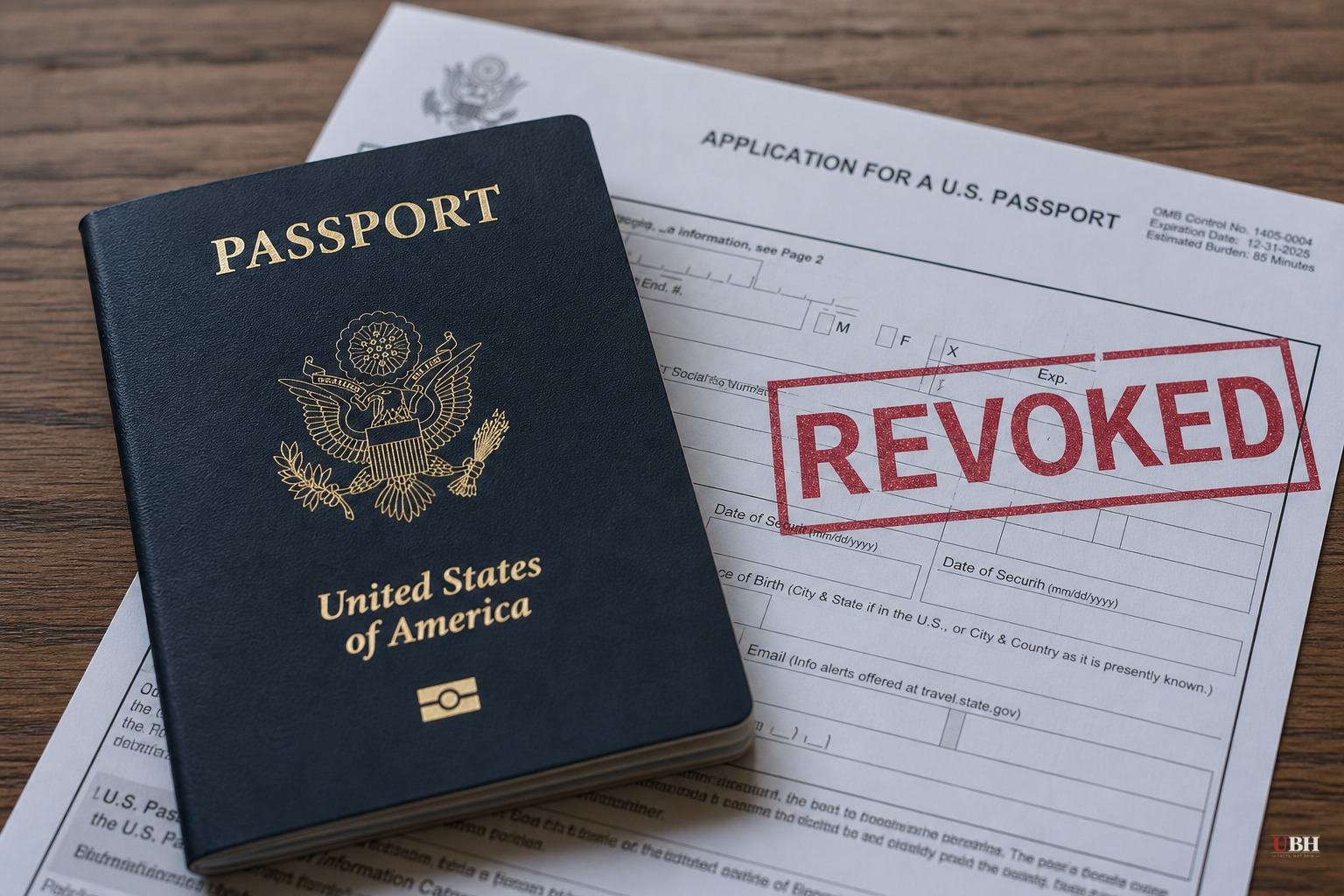
The State Department, working with the Department of Health and Human Services, started actively revoking passports of parents with major child support debt starting May 8, according to AFAR Media. That's a change from decades of practice. Since 1996, the Passport Denial Program only blocked new applications or renewals for parents owing $2,500 or more. It didn't touch a passport someone already had.
Passports are valid for 10 years. That's a long window where a deadbeat parent could travel freely as long as they weren't due for a renewal. The new enforcement closes that gap by pulling valid passports out of circulation immediately.
Revocations began at the $100,000 threshold and affected about 2,700 people, according to figures HHS supplied to the state department and reported by the Associated Press, cited by both Newsweek and The Guardian. Effective June 1, the bar dropped to $75,000, according to AFAR. The Administration for Children and Families has said it plans to keep lowering the threshold toward the statutory floor of $2,500, which would eventually put all 3.5 million noncustodial parents with qualifying arrears in the program's reach, per AFAR.
Results
The results have been immediate. Fox News reported a Nevada father paid $119,000 in back child support to get a new passport in time to take his son abroad after high school graduation. A Connecticut parent facing a business trip paid nearly $180,000. A Maryland parent who hadn't paid since 2021 coughed up more than $100,000 after getting a revocation notice. A Montana father paid $147,000. An Arizona parent paid over $170,000, including interest.
Not every payment was gigantic. A Texas father paid $16,000 to keep his passport. Another Texas parent, after seeing news coverage, preemptively paid $6,000 before ever getting a notice. Fox News put the total collected from named cases at nearly $1.5 million.
The state department told the AP, as reported by both The Guardian and Newsweek, that "hundreds of parents took action and resolved their arrears with state authorities" just from news coverage of the plan, even before revocations formally began. The department said it can't confirm causation in every case but is "taking this action precisely to impel these parents to do the right thing by their children and by US law."
Since the broader Passport Denial Program began in 1998, states have collected roughly $657 million to $660 million in arrears total, according to figures cited by both the Guardian and Fox News, including more than $156 million from over 24,000 lump-sum payments in the last five years alone.
The pushback
Athar A. Khan, a certified family law specialist in California, told AFAR the program's reach is more complicated than officials let on. His core argument: the system often penalizes parents who can't pay, not just those who won't.
Khan points out that child support in states like California is calculated before rent, groceries, or utilities are even factored in. If a parent loses a job and takes lower-paying work, a court can still hold them to their previous income level. "A parent ordered to pay $1,500 a month who misses two payments is already past that threshold," Khan told AFAR, referring to the $2,500 floor. He said in his experience, owing that much is common and usually isn't about willful avoidance.
Khan also argues the tool works unevenly by income. He said the program's biggest single collections have come from business travelers and professional athletes, according to Office of Child Support Enforcement data he cited to AFAR. "For lower-income parents who do not travel internationally, this does nothing," Khan said. "It is just another penalty stacked on top of wage garnishments, license suspensions, and tax intercepts."
There's also a real logistical cost even for parents who pay in full. Khan told AFAR that once a debt is settled, the passport isn't automatically reinstated. Parents must reapply, and a mandatory federal verification process adds at least two to three weeks on top of normal processing time. "A parent can pay what is owed and still be without a valid passport for weeks," Khan said.
Where the administration stands
Officials defend the program in blunt terms. "Holding a U.S. passport is a privilege, not a right," Alex Adams, assistant secretary for the Administration for Children and Families, said in a statement to AFAR. Mora Namdar, assistant secretary of state for consular affairs, echoed that framing to the AP: "We are expanding a commonsense practice that has been proven effective at getting those who owe child support to pay their debt." The department has said parents can regain passports once their debts are "resolved."
The state department has also clarified consequences for parents caught abroad. According to Newsweek, anyone outside the U.S. whose passport gets revoked over child support debt is eligible only for a limited-validity passport good for direct return to the United States, not for continued travel.
Connie Chesnik, president of the Virginia-based National Child Support Engagement Association, told Newsweek the existing legal framework for revocation, as opposed to simple denial of new applications, has historically been "cumbersome and not utilized by many states," which is part of why this expansion marks a real departure from past practice rather than just tighter enforcement of an old rule.
What's still unresolved
The state department hasn't said whether any exemptions exist for parents who fell behind due to job loss, disability, or other circumstances beyond their control, according to Newsweek. HHS also hasn't finished collecting arrears data from all state agencies, so the exact number of parents who will eventually be swept in at the $2,500 threshold remains unknown, per the Guardian and Newsweek's reporting. As the threshold keeps dropping, the practical question Khan raised, whether the program is catching parents who won't pay or parents who simply can't, hasn't been answered by any figures released so far.
Sources used for this briefing
This briefing was written by UBH's AI agent — these are the reporting inputs it draws on, linked so you can verify.


