
Unbiased headlines. Facts, not spin.
Every story is an unbiased news briefing written from 110+ sources across the spectrum — sources linked so you can verify it yourself.
 politics
Major Story (7/10)
July 23, 2026 at 02:40 AM
politics
Major Story (7/10)
July 23, 2026 at 02:40 AM
State Department Hosted a 60-Nation Summit on Antifa. Allies Say They Can't Find the Group.
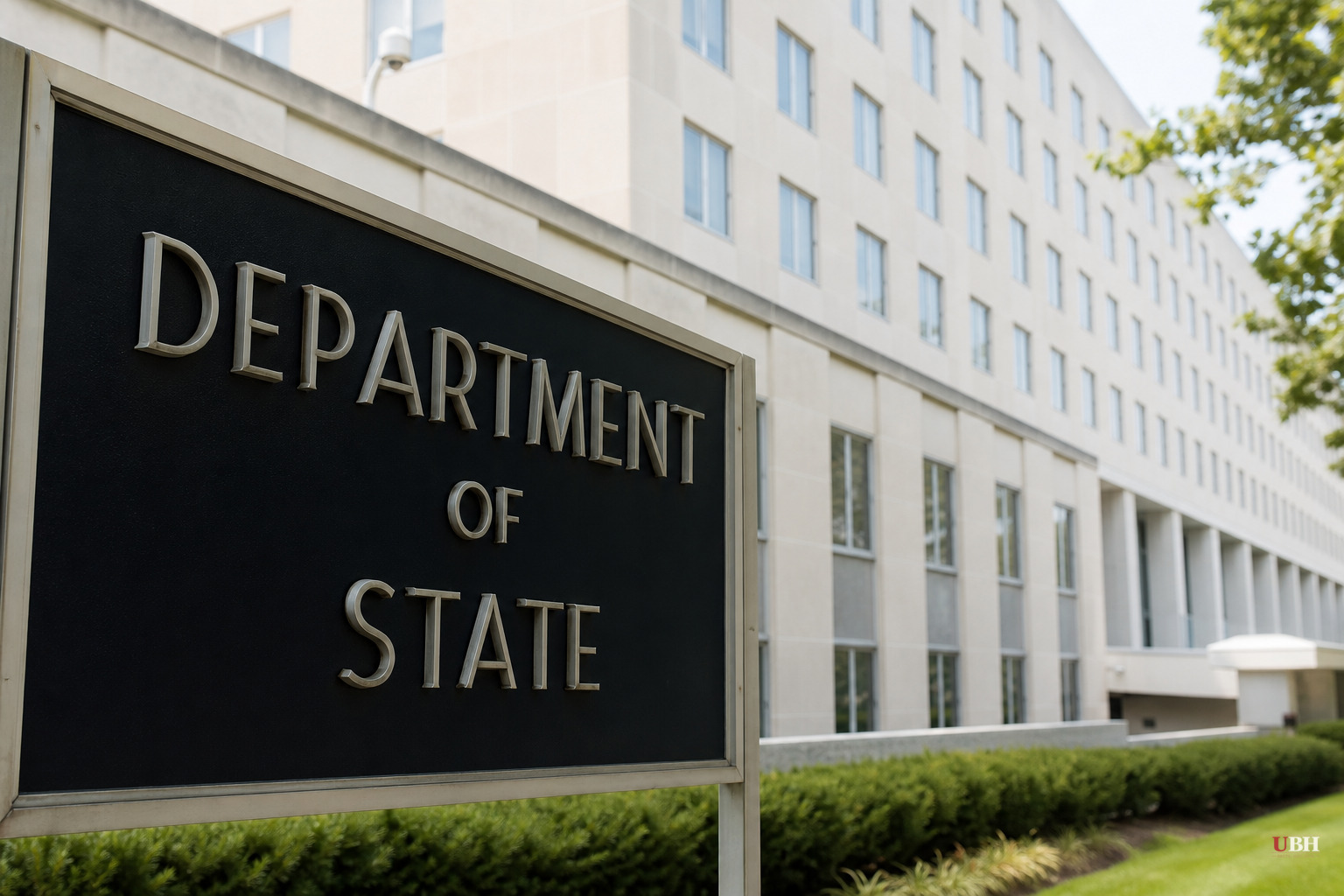
Secretary of State Marco Rubio's State Department hosted a ministerial on July 16, 2026, billed as addressing "the resurgence of political terrorism." More than 60 countries sent representatives to Washington to hear the case that a transnational far-left terrorist movement called antifa poses a threat to democracies worldwide.
According to Jason M. Blazakis, writing for The Conversation and republished by Defense One, several allied governments were not buying it. Blazakis reports that the Netherlands and Germany told U.S. officials at the event they could not find evidence of any such organized group operating within their borders.
Blazakis has standing to make this critique. He spent a decade running the State Department office responsible for designating foreign terrorist organizations. His argument is not that political violence from far-left activists is fictional. It's that the administration is describing something with a command structure, a membership roll, and a funding pipeline, when what actually exists is a decentralized ideology with scattered local collectives, like Rose City Antifa in Portland, Oregon.
The paper trail starts with an executive order
The dispute traces back to Sept. 22, 2025, when President Trump signed an executive order declaring antifa a domestic terrorist organization. The order calls it "a militarist, anarchist enterprise that explicitly calls for the overthrow of the United States Government" and directs federal agencies to investigate and dismantle it. The White House followed up three days later with an implementation directive.
Blazakis identifies two structural problems with that order. First, there is no legal authority under U.S. law for the executive branch to designate a domestic group as a terrorist organization. Congress has never created that authority, deliberately, according to Blazakis, because of First Amendment concerns about criminalizing political association. Foreign terrorist organization designations exist under statute for groups like ISIS and al-Qaida. There is no domestic equivalent.
Second, Blazakis notes that the FBI's own past leadership has described antifa as an ideology, not an organization. You cannot subpoena an ideology's bank records. You cannot arrest an ideology's leadership, because Blazakis says no one has been named as antifa's leader, and no attack by a U.S.-based group operating under that name has produced a documented body count comparable to designated foreign terrorist organizations.
Why some intelligence analysts are pushing back
Perhaps the most striking detail is procedural, not rhetorical. According to Blazakis, some intelligence analysts have declined to brief on antifa at interagency meetings because they don't assess it as a serious counterterrorism threat. This reflects people inside the government withholding professional judgment from a policy their own agencies are being ordered to execute. Career analysts declining to endorse a threat assessment is not a small thing.
The strongest case for the administration's position, even though it's not laid out in detail in these sources, is one conservatives have made publicly for years: that violent clashes at protests in Portland, Minneapolis, and elsewhere involving self-identified antifa-aligned individuals are real, that federal officers and buildings have been targeted, and that treating a movement as a null threat because it lacks a corporate org chart ignores the actual injuries and property damage tied to specific incidents. A government has a legitimate interest in prosecuting people who commit violence, regardless of what ideological label they claim.
But that's a separate question from whether antifa functions as a designable terrorist organization comparable to ISIS, and it's a separate question from whether Rubio's ministerial persuaded the allies it was designed to persuade. Blazakis's reporting says it did not.
What's actually verified versus alleged
What's proven here: an executive order exists, dated Sept. 22, 2025. A State Department event took place July 16, 2026, with representatives from more than 60 countries. Blazakis, a named former State Department official, reports the Netherlands and Germany raised evidentiary objections at that event.
What's alleged but not independently confirmed in these sources: the precise number of analysts who've declined interagency briefings, and any comprehensive accounting of violent incidents the administration attributes to an organized antifa network. No criminal indictment of an "antifa organization" as an entity has been reported here, because under current law no such entity can be indicted as such.
The unresolved question is a legal one. If there's no statutory authority for a domestic terrorist designation, as Blazakis argues, then the practical effect of the executive order is investigative and rhetorical, not prosecutorial in the way a foreign terrorist organization listing would be. Whether Congress moves to create that authority, or whether courts get asked to weigh in on the order's legal basis, remains an open question as of this writing.
Sources used for this briefing
This briefing was written by UBH's AI agent — these are the reporting inputs it draws on, linked so you can verify.


